ADVERTISEMENT

The snail mail revival

Local snail mail artist shares her intentional journey toward building her community

Published Mar 2, 2026 01:34 pm
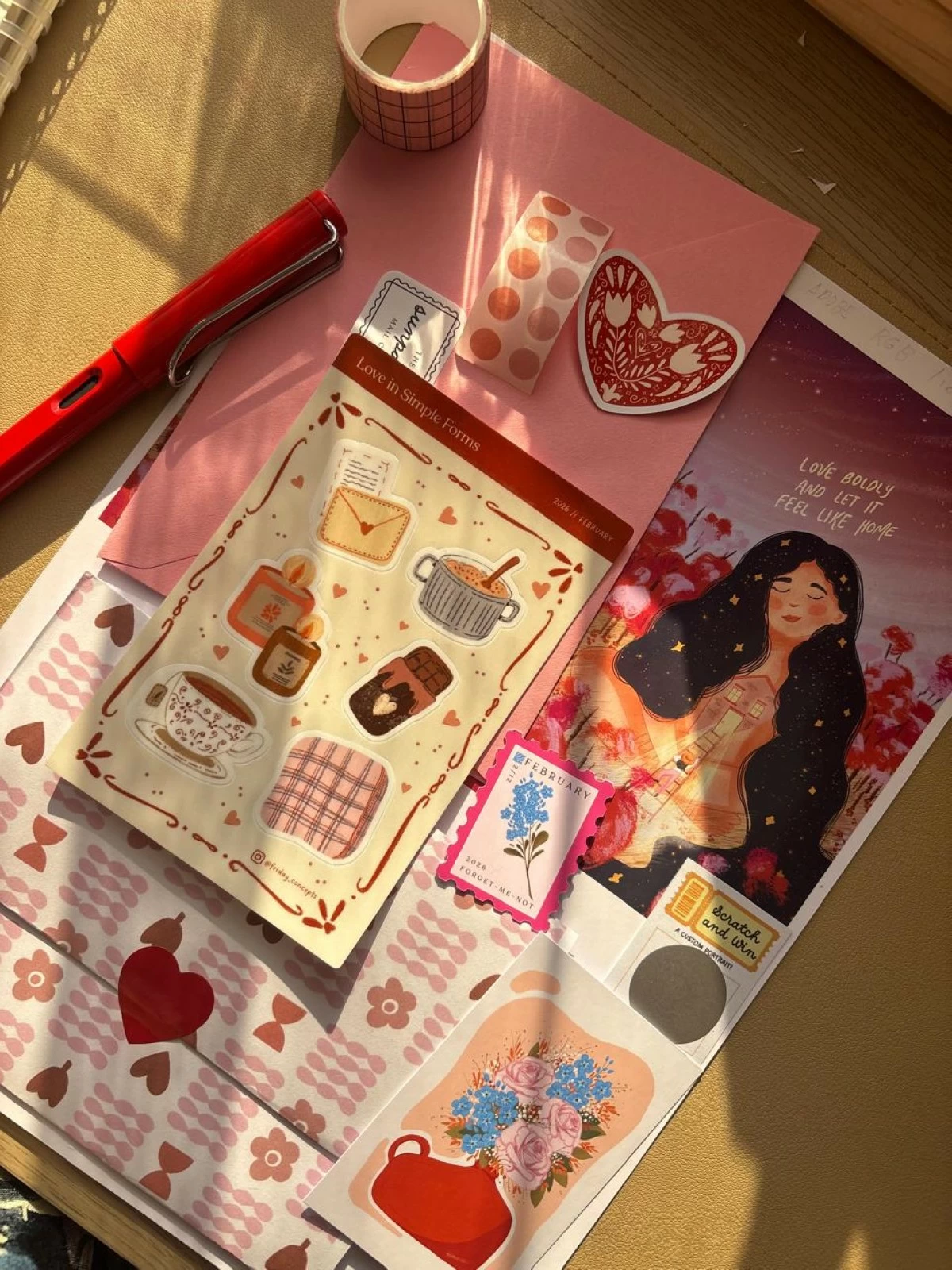
Yasmin's Snail mail for the month of February
Recent studies point to a growing sense of digital fatigue among young people, particularly Gen Z. After years of constant notifications, endless scrolling, and life lived on-screen, many are choosing to log off, even temporarily. The result is a quiet cultural shift: digital detoxes, weekend workshops, journaling sessions, and a renewed appreciation for slow living.
In the middle of this movement is an unlikely comeback. Snail mail, once considered outdated, is finding new life among the youth. Handwritten letters, postcards, and carefully curated envelopes are becoming more than nostalgic gestures. They are now statements of intention, reminders to pause, and in some circles, even a form of self-care.
Locally, Manila Bulletin Lifestyle found an artist who has a growing community of snail mail lovers, Yasmin Atienza Kamus. Yasmin is a sustainability consultant and architect, through a small but growing mail club, she sends art, reflections, and gentle reminders to subscribers who crave something tangible in a largely digital world.

Why snail mail?
Growing up, Yasmin was always drawn to art. Although she pursued architecture and now works in sustainability, creativity has remained her constant refuge. “I’m proud of my profession,” she shares, “but making art and exploring different forms of creativity is what truly fulfills me.” Over time, art shifted from being something she had to produce to something she chooses for herself. It became her quiet space to slow down and think less.
The idea for her snail mail community, however, was born from love.
“My husband and I have been sending postcards to each other ever since we started dating,” she says. With both of them frequently traveling for work and studies, handwritten notes became their way of staying connected. She recalls the thrill of opening the mailbox and finding something unexpected, words written weeks before, carrying the weight of time and distance.
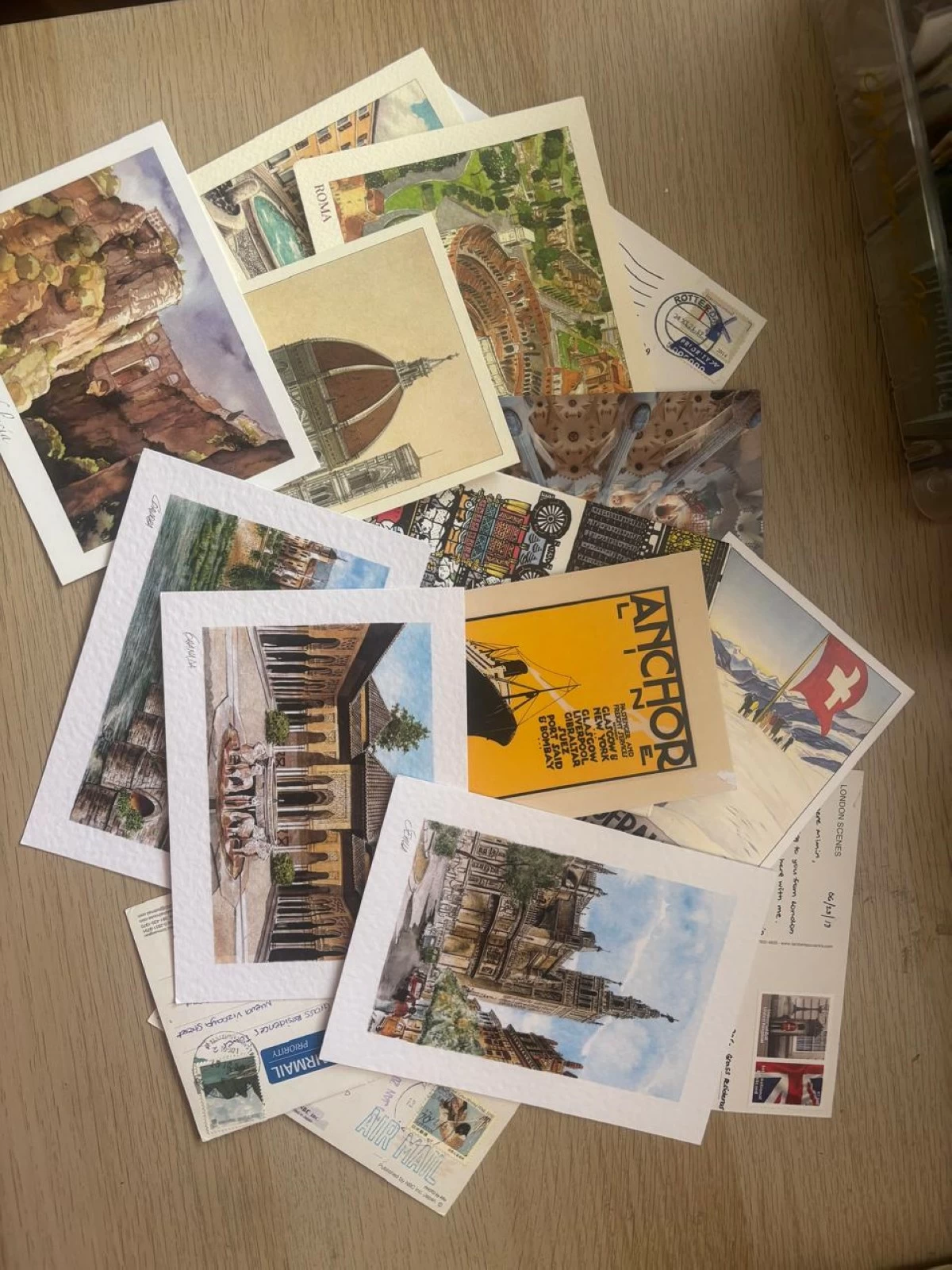
Postcards
Postcards
Years later, as snail mail content began appearing on her social media feed, something clicked. Why not share her art the same way she once shared postcards? Her work often features women and nature, paired with short reflections she writes to herself during both joyful and difficult seasons. When she posted them online, strangers began messaging her, saying they felt seen.
“While everyone’s journey is different, I believe there are moments where our experiences intersect in small ways,” she says. “My snail mail themes revolve around the seasons of life throughout the year, offering both gentle reminders and loud statements.”
Instead of keeping everything digital, she decided to make it physical.
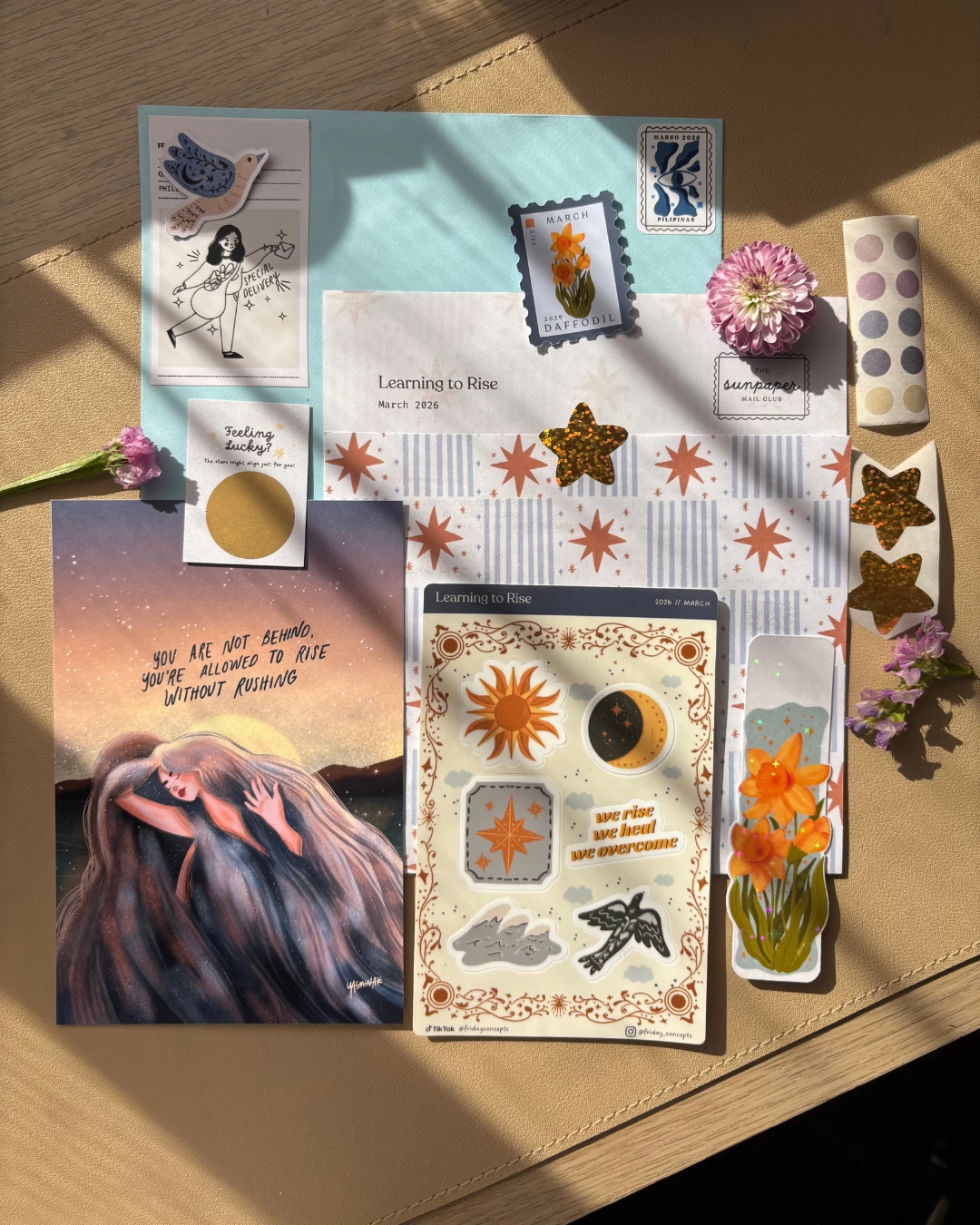
Yasmin's Snail mail for the month of March
Intentional letters
Each mail club release begins with a concept. Trained as an architect, Yasmin still relies on mood boards and a clear vision before creating. Her themes are rooted in her own life, often reflecting the “seasons” she is personally navigating. She revisits journals she has kept since 2007, pulling entries that resonate. From there, the colors, textures, and artwork follow naturally.
The venture remains a passion project. She is careful not to let it become another source of pressure. “I only wanted it to be a source of calm,” she explains. There is also the paradox of promoting something slow in a fast-paced online environment. As someone who describes herself as private and shy, Yasmin admits that the expectation to constantly create content for visibility can feel uncomfortable. One of her biggest lessons has been to move at her own pace and stay authentic.
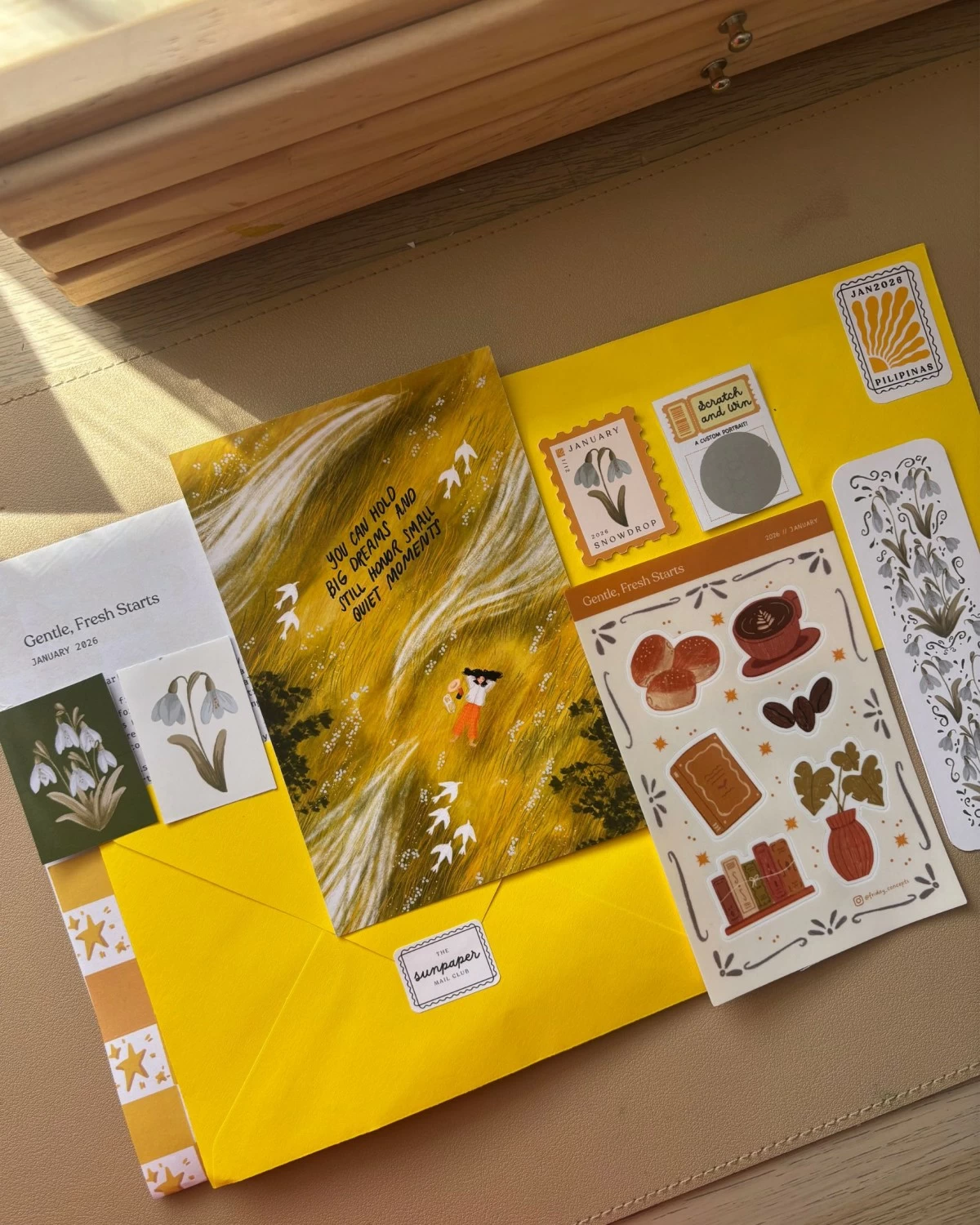
So why is snail mail resonating again?
“I think many people feel overwhelmed and burnt out from constant digital noise,” she says. Physical mail offers something slower and more intentional. A handwritten letter feels like a conversation with a friend. It requires time, thought, and presence.
“Handwritten or physical mail feels meaningful because it’s deeply personal. That’s exactly what I hope my mail feels like. There’s something comforting about knowing that someone, somewhere, is experiencing similar emotions and moments in life,” she says. “Some members have shared that they relate deeply to the themes, while others have said that receiving the mail feels like getting a letter from a friend.”
Looking ahead, Yasmin envisions gentle, organic growth. She dreams of adding interactive elements, perhaps even travel postcards inspired by her watercolor journals. But scale is not her main goal. What matters most is preserving the warmth of the space.
For young people who want to start their own snail mail journey, her advice is simple: keep it real. “It’s not about clout,” she says. “It’s about the joy of creating and sharing something meaningful.”
In a world that moves at the speed of a swipe, Yasmin is choosing paper, ink, and patience. And for a generation learning to slow down, that choice feels right on time.

Related Tags

Yasmin Atienza Kamus Snail Mail
ADVERTISEMENT
.most-popular .layout-ratio{ padding-bottom: 79.13%; } @media (min-width: 768px) and (max-width: 1024px) { .widget-title { font-size: 15px !important; } }

{{ articles_filter_1561_widget.title }}

.most-popular .layout-ratio{ padding-bottom: 79.13%; } @media (min-width: 768px) and (max-width: 1024px) { .widget-title { font-size: 15px !important; } }

{{ articles_filter_1562_widget.title }}

.most-popular .layout-ratio{ padding-bottom: 79.13%; } @media (min-width: 768px) and (max-width: 1024px) { .widget-title { font-size: 15px !important; } }

{{ articles_filter_1563_widget.title }}

{{ articles_filter_1564_widget.title }}

.mb-article-details { position: relative; } .mb-article-details .article-body-preview, .mb-article-details .article-body-summary{ font-size: 17px; line-height: 30px; font-family: "Libre Caslon Text", serif; color: #000; } .mb-article-details .article-body-preview iframe , .mb-article-details .article-body-summary iframe{ width: 100%; margin: auto; } .read-more-background { background: linear-gradient(180deg, color(display-p3 1.000 1.000 1.000 / 0) 13.75%, color(display-p3 1.000 1.000 1.000 / 0.8) 30.79%, color(display-p3 1.000 1.000 1.000) 72.5%); position: absolute; height: 200px; width: 100%; bottom: 0; display: flex; justify-content: center; align-items: center; padding: 0; } .read-more-background a{ color: #000; } .read-more-btn { padding: 17px 45px; font-family: Inter; font-weight: 700; font-size: 18px; line-height: 16px; text-align: center; vertical-align: middle; border: 1px solid black; background-color: white; } .hidden { display: none; }
function initializeAllSwipers() { // Get all hidden inputs with cms_article_id document.querySelectorAll('[id^="cms_article_id_"]').forEach(function (input) { const cmsArticleId = input.value; const articleSelector = '#article-' + cmsArticleId + ' .body_images'; const swiperElement = document.querySelector(articleSelector); if (swiperElement && !swiperElement.classList.contains('swiper-initialized')) { new Swiper(articleSelector, { loop: true, pagination: false, navigation: { nextEl: '#article-' + cmsArticleId + ' .swiper-button-next', prevEl: '#article-' + cmsArticleId + ' .swiper-button-prev', }, }); } }); } setTimeout(initializeAllSwipers, 3000); const intersectionObserver = new IntersectionObserver( (entries) => { entries.forEach((entry) => { if (entry.isIntersecting) { const newUrl = entry.target.getAttribute("data-url"); if (newUrl) { history.pushState(null, null, newUrl); let article = entry.target; // Extract metadata const author = article.querySelector('.author-section').textContent.replace('By', '').trim(); const section = article.querySelector('.section-info ').textContent.replace(' ', ' '); const title = article.querySelector('.article-title h1').textContent; // Parse URL for Chartbeat path format const parsedUrl = new URL(newUrl, window.location.origin); const cleanUrl = parsedUrl.host + parsedUrl.pathname; // Update Chartbeat configuration if (typeof window._sf_async_config !== 'undefined') { window._sf_async_config.path = cleanUrl; window._sf_async_config.sections = section; window._sf_async_config.authors = author; } // Track virtual page view with Chartbeat if (typeof pSUPERFLY !== 'undefined' && typeof pSUPERFLY.virtualPage === 'function') { try { pSUPERFLY.virtualPage({ path: cleanUrl, title: title, sections: section, authors: author }); } catch (error) { console.error('ping error', error); } } // Optional: Update document title if (title && title !== document.title) { document.title = title; } } } }); }, { threshold: 0.1 } ); function showArticleBody(button) { const article = button.closest("article"); const summary = article.querySelector(".article-body-summary"); const body = article.querySelector(".article-body-preview"); const readMoreSection = article.querySelector(".read-more-background"); // Hide summary and read-more section summary.style.display = "none"; readMoreSection.style.display = "none"; // Show the full article body body.classList.remove("hidden"); } document.addEventListener("DOMContentLoaded", () => { let loadCount = 0; // Track how many times articles are loaded const offset = [1, 2, 3, 4, 5, 6, 7, 8, 9, 10]; // Offset values const currentUrl = window.location.pathname.substring(1); let isLoading = false; // Prevent multiple calls if (!currentUrl) { console.log("Current URL is invalid."); return; } const sentinel = document.getElementById("load-more-sentinel"); if (!sentinel) { console.log("Sentinel element not found."); return; } function isSentinelVisible() { const rect = sentinel.getBoundingClientRect(); return ( rect.top < window.innerHeight && rect.bottom >= 0 ); } function onScroll() { if (isLoading) return; if (isSentinelVisible()) { if (loadCount >= offset.length) { console.log("Maximum load attempts reached."); window.removeEventListener("scroll", onScroll); return; } isLoading = true; const currentOffset = offset[loadCount]; window.loadMoreItems().then(() => { let article = document.querySelector('#widget_1690 > div:nth-last-of-type(2) article'); intersectionObserver.observe(article) loadCount++; }).catch(error => { console.error("Error loading more items:", error); }).finally(() => { isLoading = false; }); } } window.addEventListener("scroll", onScroll); });

Sign up by email to receive news.