







The diplomacy of Foreign Affairs Secretary Ma. Theresa Lazaro
Published Mar 2, 2026 11:56 am
|
Updated Mar 2, 2026 01:54 pm


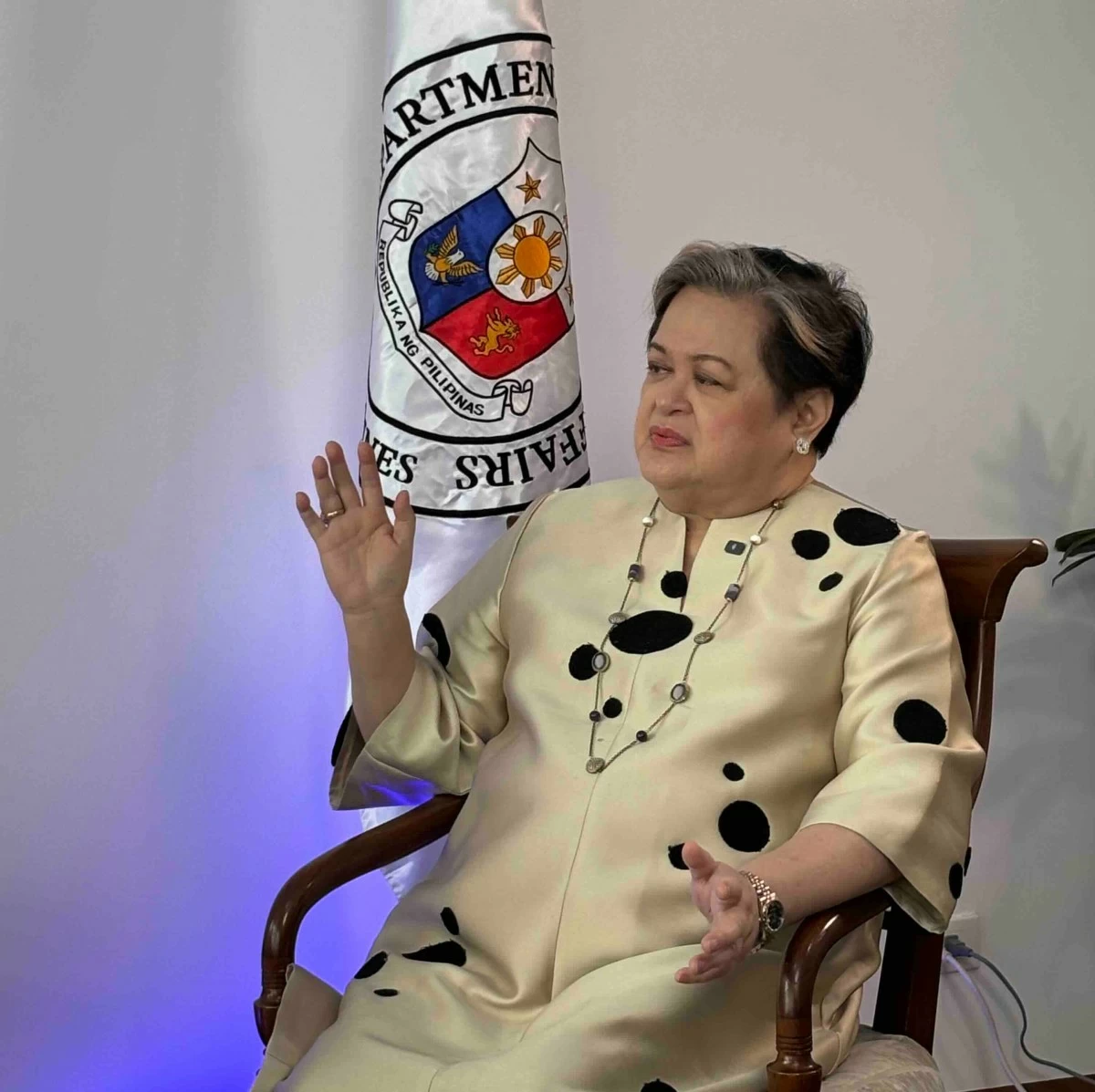
Department of Foreign Affairs Secretary Maria Theresa Lazaro
Secretary Maria Theresa Lazaro knows the Department of Foreign Affairs the way only a career official can. She has risen steadily through its ranks—from her first posting in Bangkok to serving as ambassador in France and Switzerland, and now as Secretary of Foreign Affairs—carrying with her both institutional memory and hard-earned authority. Over the years, she has shaped a distinct style of diplomacy: deliberate, persuasive without being abrasive, measured yet unmistakably firm.
It is a temperament well suited to the moment she now inhabits.
The Philippines stands at a defining juncture: chairing the Association of Southeast Asian Nations (ASEAN), campaigning for a non-permanent seat at the United Nations Security Council (UNSC), and navigating tensions in its maritime neighborhood. For Lazaro, these are not mere abstract headlines but her daily grind.
“We don’t have the military might,” she says candidly. “But what we have is the rule of law.”
She mentions this with purpose. For Lazaro, adherence to international law and multilateralism is not just ornamental language but rather a country’s leverage. In a region experiencing shifting alignments and escalating rhetoric, she frames the Philippines’ strength as its insistence on rules-based order—on frameworks rather than force. Diplomacy, she is careful to clarify, should never be mistaken for weakness.
“One cannot achieve anything if one antagonizes the other,” she says, describing the craft as both assertive and patient. Pushback is part of the job. So is persuasion. Outcomes are rarely instant. “It’s sometimes protracted. It’s hard work.”
Listening, she adds, is not passive. “One has to listen. Even if initially you think it’s a crazy idea, listen carefully. There’s always something of value.”
That discipline shapes how she approaches not only foreign governments, but domestic audiences. Foreign policy, she reminds, is rarely a single-agency endeavor. It is a whole-of-government effort, involving economic managers, defense officials, migrant workers’ offices, legislators, and civil society.
And it ultimately circles back to one question she keeps close: Will it benefit the Filipino people?
Manila as diplomatic capital
If global geopolitics can feel distant to the average Filipino, the diplomatic activity in Manila is anything but. Since the start of her term, foreign ministers and senior officials have visited with notable frequency. New embassies have opened. More are expected. Luxembourg’s foreign minister made a standalone visit. Slovenia, Ukraine, Slovakia, Bahrain, and others have established presence.
Lazaro is pragmatic about what this means. “Setting up an embassy is expensive,” she says. It is studied. Budgeted. Justified. In the same way that the Philippines carefully considers where it opens its own missions abroad, foreign governments assess political alignment, economic prospects, and long-term engagement before committing to a resident presence.
For Manila, these decisions signal confidence. In trade, investment, and partnership.
She describes the capital as a “vibrant, pulsating city,” shaped by democracy and opportunity. Those who look past the grit, she suggests, find energy and potential. Diplomats who arrive often recalibrate their expectations within a year. Some even return under the Special Resident Retiree’s Visa program.
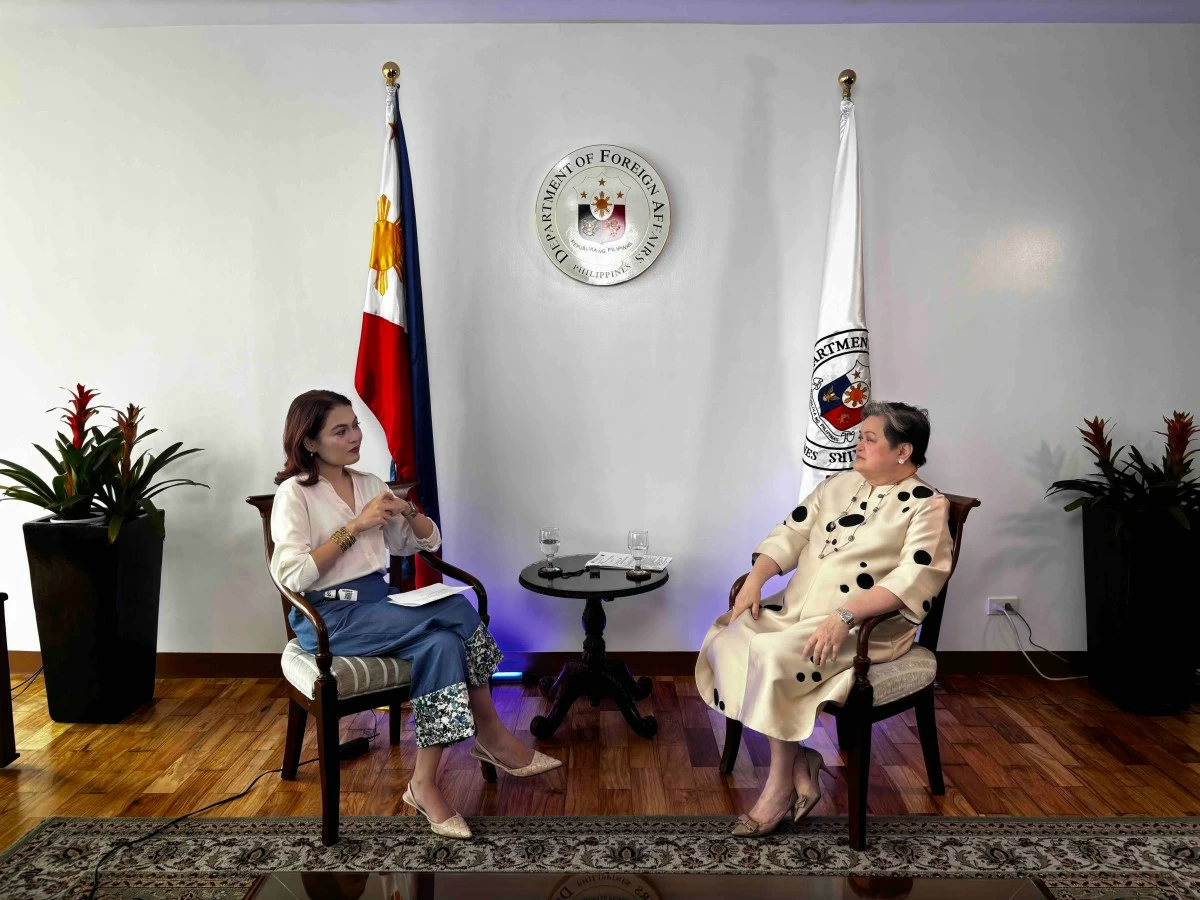
The author with Secretary Lazaro
The department that does not sleep
Yet beyond summits and ribbon cuttings lies the less visible side of foreign affairs. “The DFA does not sleep,” she says candidly. With Filipinos spread across continents, the department operates in constant vigilance. Any crisis anywhere can require immediate coordination. Lost passports. Labor disputes. Scam hubs in parts of Southeast Asia. Conflict zones. Natural disasters.
Assistance to nationals is not incidental; it is one of the Philippines’ three foreign policy pillars, alongside political-security and economic diplomacy.
Few countries articulate diaspora protection so explicitly. What keeps her up at night, she admits, is precisely this responsibility—the knowledge that the safety and dignity of Filipinos abroad may depend on the department’s response time.
It is also these same communities that give her hope. She recalls attending an event in Vienna where Filipino nurses who arrived in the 1970s were publicly honored, their contributions recognized at the state level. Such moments, she notes, are not isolated. Across different countries, Filipinos are acknowledged for their professionalism, reliability, and care. It makes her proud. At the same time, she speaks of a future where Filipinos can return home to meaningful opportunity—where migration is a choice rather than a necessity.
A career defined by service
Lazaro’s path to diplomacy began while she was in law school. She once imagined the Foreign Service might be less confrontational than courtroom litigation. Experience reshaped that view.
“There’s an art to it,” she says now.
Over decades, she served in Bangkok, Geneva, Madrid, Sydney, Bern, and Paris. Each posting contributed to her worldview; the first remains formative. Diplomacy exposed her to cross-cutting networks of power—from heads of state to grassroots communities.
She later headed the Board of Foreign Service Administration (BFSA), overseeing examinations that shape the next generation of diplomats. The service, she says, needs more officers. It welcomes multidisciplinary backgrounds—marine geologists, nurses, economists, lawyers. But what matters most are character and temperament.
“You have to be a people person,” she says. “You have to talk to everyone—from the highest to the lowest.” Humility is essential. So is loyalty to the Republic.
Inside the DFA, negotiations take time. Drafts are revised. Language is weighed. Alliances are strengthened. Crises are monitored across time zones. The work is relentless even if it’s not always visible. But it is consequential.
And under Lazaro’s leadership, it is guided by a steady framework: discipline, persuasion without hostility, principle without theatrics, and service without self-display. In diplomacy, that combination is not a concession but a form of strength.