ADVERTISEMENT

Responsible production in the heart of Asia

Published Mar 2, 2026 10:55 am
Building resilient livelihoods. With more
than 2,000 corn farmers supported, Aboitiz
Foods’ Project Silk equips corn farmers with
the tools, skills, and partnerships they need to
run sustainable, competitive agribusinesses.
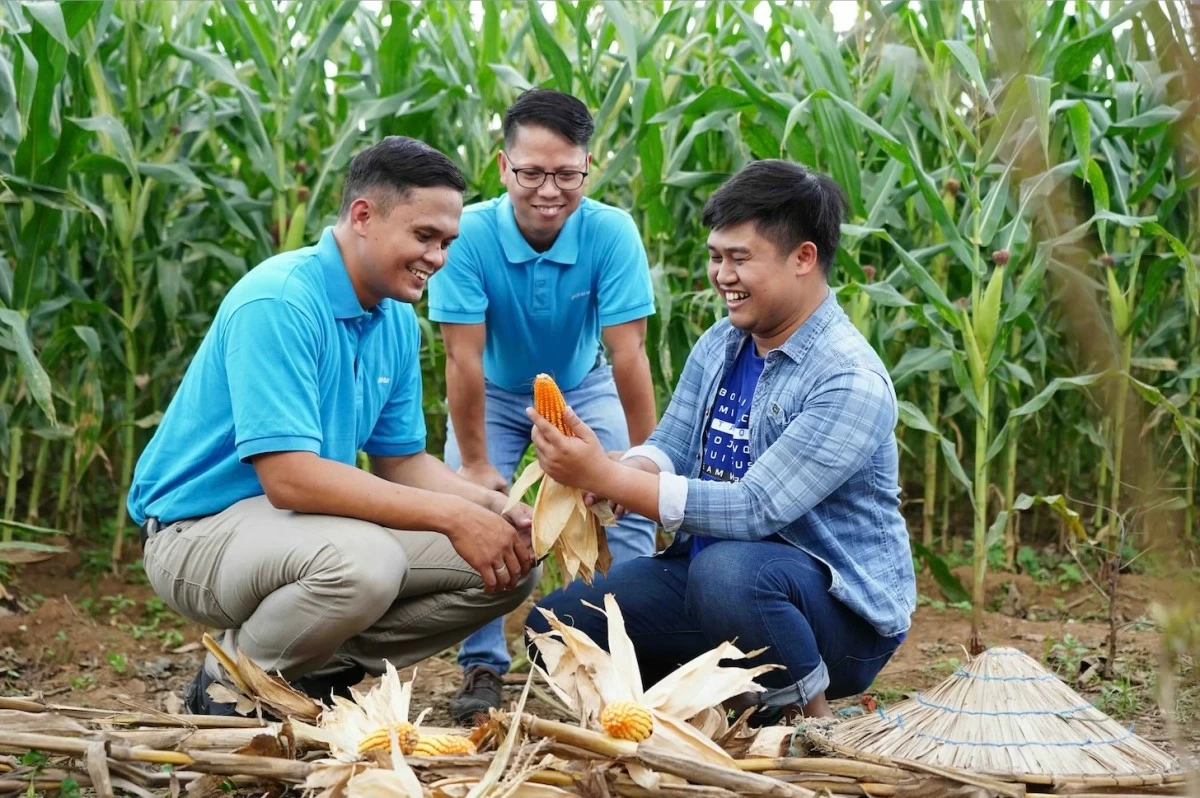
Building resilient livelihoods. With more than 2,000 corn farmers supported, Aboitiz Foods’ Project Silk equips corn farmers with the tools, skills, and partnerships they need to run sustainable, competitive agribusinesses.
Across Asia, food security increasingly depends on resilient, inclusive food systems that integrate farmers and their communities. As Aboitiz Foods expands its footprint across eight countries in the region, so does its commitment to helping strengthen these systems, anchoring its growth to a clear purpose: sustainably feeding Asia’s growth from mill to meal.
One way this approach takes shape on the ground is through Project Silk, an inclusive sourcing initiative that has supported yellow corn farmers in the Philippines over the past eight years. Implemented by Aboitiz Foods, through Pilmico Foods Corporation, and in partnership with the Department of Agriculture, local government units, and Aboitiz Foundation, the program has supported 2,835 corn farmers, strengthening livelihoods and generating USD 818,703.55 in corn sales from 2017 to 2025.
“Our goal is to empower communities across Asia to build resilient, inclusive food systems. Through Project Silk, we help corn farmers in the Philippines become better entrepreneurs so they can build viable and competitive enterprises,” said Joeben Gamatero, Aboitiz Foods Vice President for Brand & Reputation Management and Agribusiness Marketing. “When farmers build stronger businesses, the entire food value chain grows stronger with them.”
From subsistence to stronger food systems
Yellow corn is a key input for the livestock industry, making quality, consistency, and reliable market access essential to food security. Through Project Silk, Aboitiz Foods—through Pilmico—provides farmers with a stable and assured market by sourcing a portion of its corn requirements directly from participating cooperatives, helping reduce price volatility and market uncertainty.
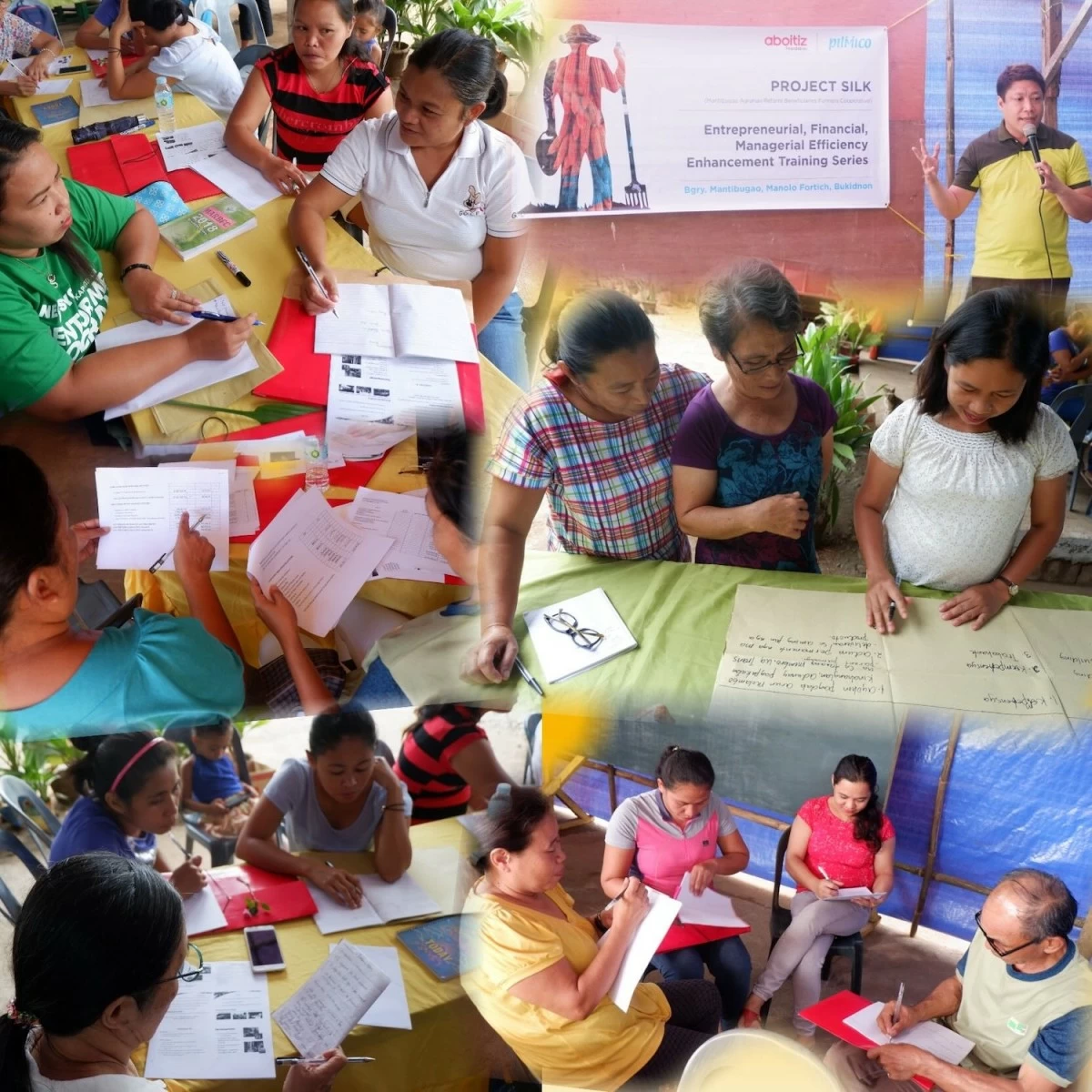
Working with business, financial, and academic partners, the company supports training in bookkeeping, financial management, market planning, and cooperative governance to help farmers operate sustainably. By combining assured market access, capability-building, and post-harvest support, the program has driven a 1,500 percent increase in cooperative revenues and helped make corn production a viable business again for many farmers.
For many cooperatives, the shift has been transformative. “We learned so much, especially in accounting, bookkeeping, financial statements, and budgeting,” shared cooperative leader Evangeline Frasco. “We now manage our farms like real businesses.”
Turning farming into a viable business.
Aboitiz Foods’ Project Silk has helped drive
stronger cooperative revenues and improved
market access for thousands of corn farmers
in the Philippines through assured market
access, capacity building, and post-harvest
support.
Turning farming into a viable business. Aboitiz Foods’ Project Silk has helped drive stronger cooperative revenues and improved market access for thousands of corn farmers in the Philippines through assured market access, capacity building, and post-harvest support.
To reduce post-harvest losses and improve market access, Aboitiz Foods has invested in facilities and programs that help farmers meet industry standards and secure better prices.
“This facility gives our farmers a secure market and a secure livelihood,” said Iligan City Agriculturist Mary Ann Beley, noting how improved quality translates into higher earnings.
Farmers have also diversified their income through small enterprises, strengthening resilience at both household and community levels.
Scaling impact across Asia
For Aboitiz Foods, cultivating strong multi-sectoral partnerships and implementing strategic corporate social responsibility programs establishes a collaborative, adaptable model that not only creates lasting impact on communities but also vitalizes the broader food value chain.
Beyond Project Silk, Aboitiz Foods advances food security, education, livelihood, and environmental initiatives across Asia, reinforcing its commitment to resilient and inclusive food systems aligned with global sustainability goals.
Hands-on learning, real-world impact.
Through Project Synergea, Aboitiz Foods
strengthens the Institute of Brunei Technical
Education (IBTE) Agro-Technology Campus
by enhancing its Broiler Management Farm
Facility—supporting hands-on learning for
Brunei’s next generation of food security
champions. / Photo courtesy: IBTE
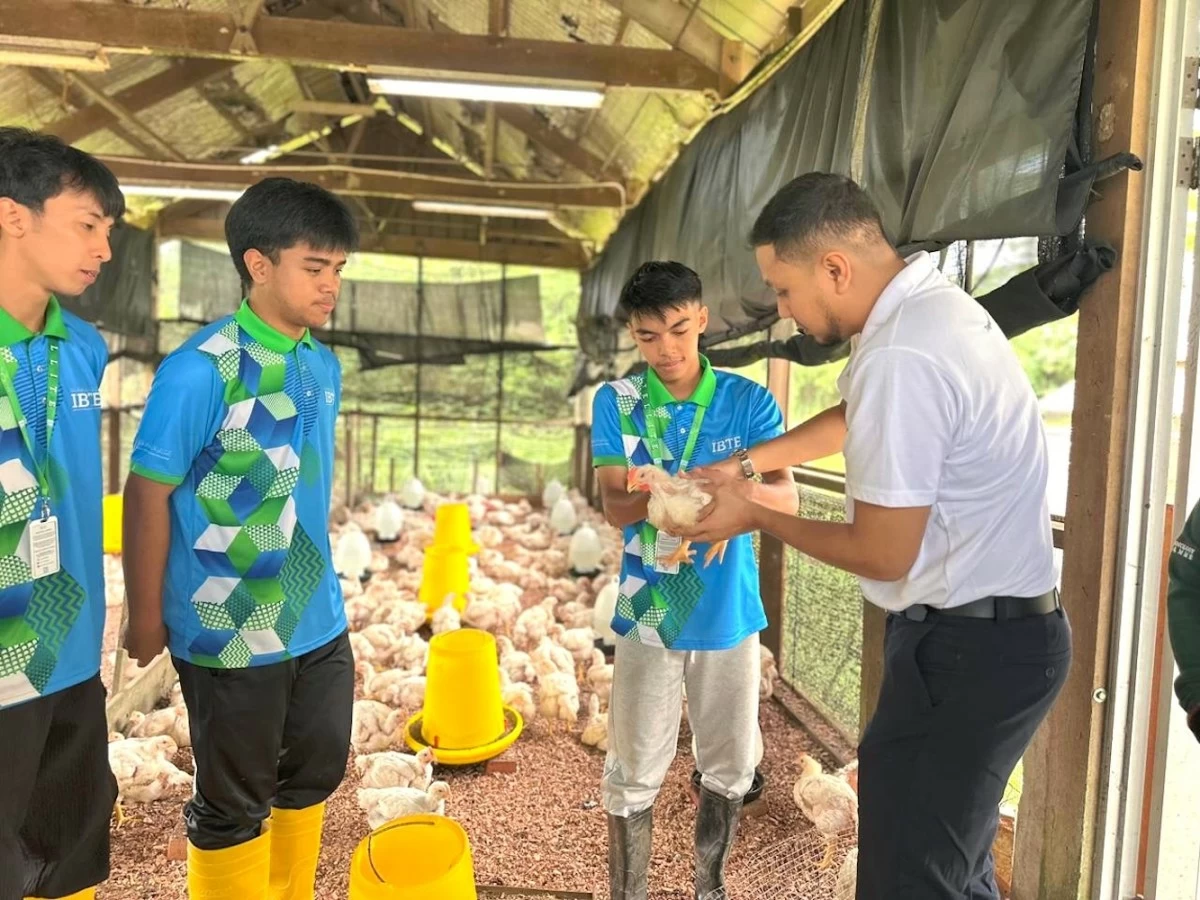
Hands-on learning, real-world impact. Through Project Synergea, Aboitiz Foods strengthens the Institute of Brunei Technical Education (IBTE) Agro-Technology Campus by enhancing its Broiler Management Farm Facility—supporting hands-on learning for Brunei’s next generation of food security champions. / Photo courtesy: IBTE
Empowering dreams. Through Project
EduCare, Aboitiz Foods supported Hungtian
Primary School in Zhangzhou, China with IT
equipment, learning materials, and sports
gear—helping bridge gaps in access to
quality education.
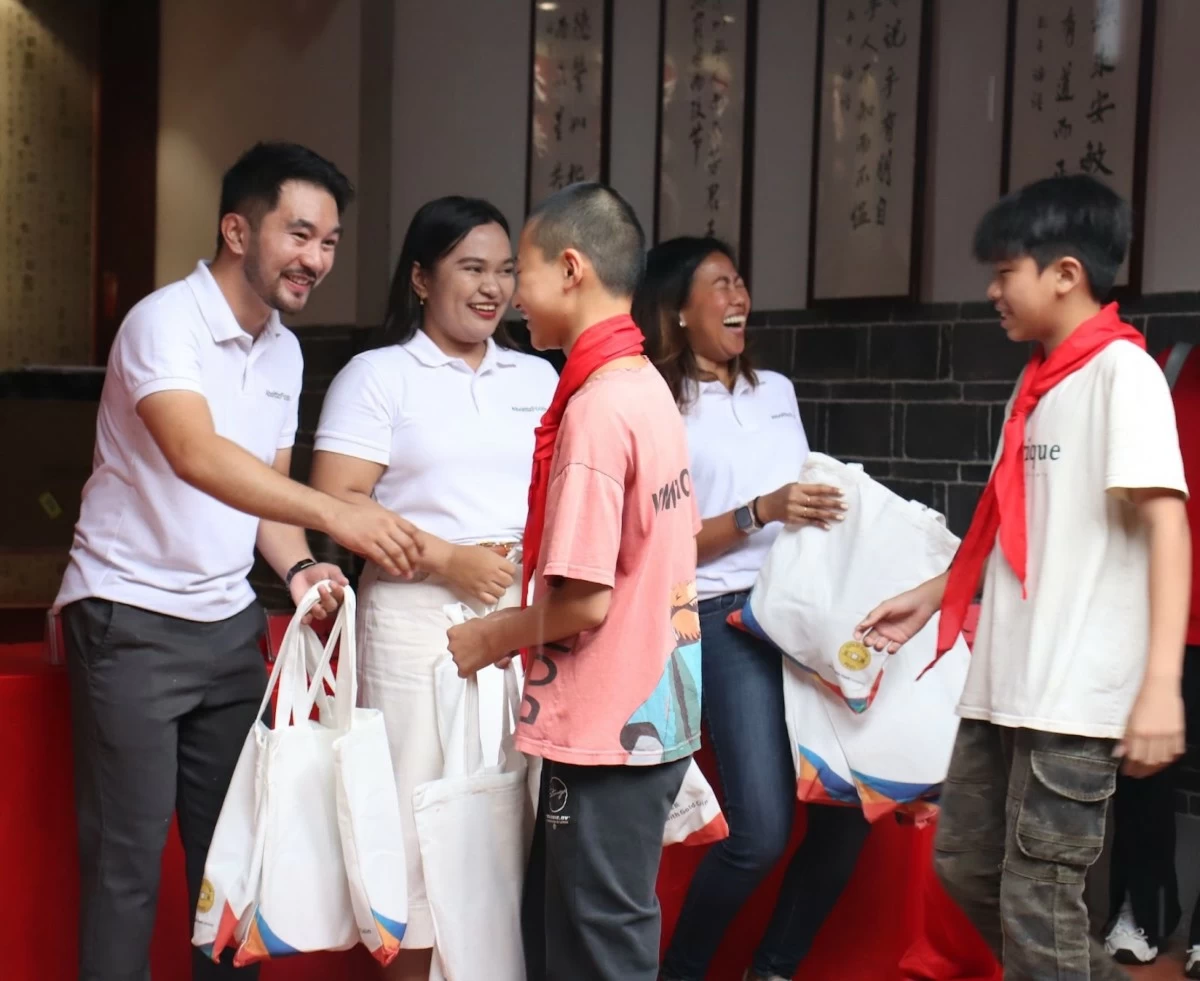
Empowering dreams. Through Project EduCare, Aboitiz Foods supported Hungtian Primary School in Zhangzhou, China with IT equipment, learning materials, and sports gear—helping bridge gaps in access to quality education.
Rooting for a healthier planet. In August
2025, Aboitiz Foods, through Gold Coin
Malaysia, kicked off Project ROOTS—
Restoring Our Oceans, Trees, and Shores—
by planting trees and mobilizing a clean-up
drive to protect coastlines for future generations.
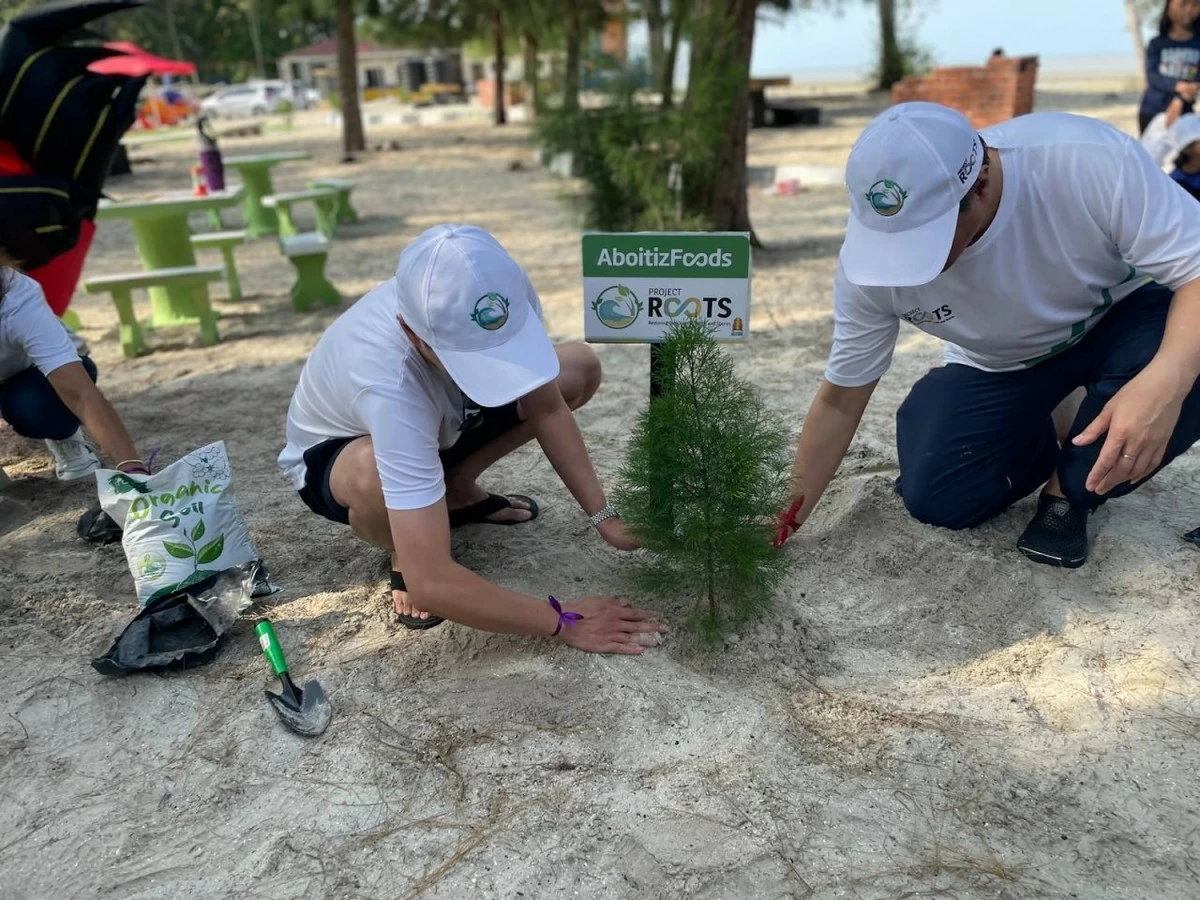
Rooting for a healthier planet. In August 2025, Aboitiz Foods, through Gold Coin Malaysia, kicked off Project ROOTS— Restoring Our Oceans, Trees, and Shores— by planting trees and mobilizing a clean-up drive to protect coastlines for future generations.
In Brunei, Project Synergea, a partnership between Aboitiz Foods’ subsidiary Gold Coin and the Institute of Brunei Technical Education, strengthens food security by equipping communities with agricultural knowledge and technical expertise through hands-on poultry education. In China and Vietnam, Project EduCare supports access to quality education in underserved communities, helping equip young people with the knowledge and opportunities needed to participate in more sustainable food and agriculture systems. In Malaysia and China, Project ROOTS advances environmental stewardship by restoring oceans, trees, and shorelines, supporting climate resilience in communities closely linked to food production.
Complementing these community initiatives, Aboitiz Foods reinforces responsible production across its operations, including exceeding extended producer responsibility (EPR) targets through Pilmico. Together, these efforts contribute to global development goals on food security, education, decent work, and environmental protection, bringing the company’s purpose to life across the region.
“These efforts reflect how Aboitiz Foods integrates social responsibility and sustainability into its regional operations, creating shared value that extends beyond individual projects or markets,” Gamatero said. “As we expand our business across the region, we will keep creating pathways toward shared progress and nourishing a more sustainable food future together with the communities.”

Related Tags

Aboitiz Foods
ADVERTISEMENT
.most-popular .layout-ratio{ padding-bottom: 79.13%; } @media (min-width: 768px) and (max-width: 1024px) { .widget-title { font-size: 15px !important; } }

{{ articles_filter_1561_widget.title }}

.most-popular .layout-ratio{ padding-bottom: 79.13%; } @media (min-width: 768px) and (max-width: 1024px) { .widget-title { font-size: 15px !important; } }

{{ articles_filter_1562_widget.title }}

.most-popular .layout-ratio{ padding-bottom: 79.13%; } @media (min-width: 768px) and (max-width: 1024px) { .widget-title { font-size: 15px !important; } }

{{ articles_filter_1563_widget.title }}

{{ articles_filter_1564_widget.title }}

.mb-article-details { position: relative; } .mb-article-details .article-body-preview, .mb-article-details .article-body-summary{ font-size: 17px; line-height: 30px; font-family: "Libre Caslon Text", serif; color: #000; } .mb-article-details .article-body-preview iframe , .mb-article-details .article-body-summary iframe{ width: 100%; margin: auto; } .read-more-background { background: linear-gradient(180deg, color(display-p3 1.000 1.000 1.000 / 0) 13.75%, color(display-p3 1.000 1.000 1.000 / 0.8) 30.79%, color(display-p3 1.000 1.000 1.000) 72.5%); position: absolute; height: 200px; width: 100%; bottom: 0; display: flex; justify-content: center; align-items: center; padding: 0; } .read-more-background a{ color: #000; } .read-more-btn { padding: 17px 45px; font-family: Inter; font-weight: 700; font-size: 18px; line-height: 16px; text-align: center; vertical-align: middle; border: 1px solid black; background-color: white; } .hidden { display: none; }
function initializeAllSwipers() { // Get all hidden inputs with cms_article_id document.querySelectorAll('[id^="cms_article_id_"]').forEach(function (input) { const cmsArticleId = input.value; const articleSelector = '#article-' + cmsArticleId + ' .body_images'; const swiperElement = document.querySelector(articleSelector); if (swiperElement && !swiperElement.classList.contains('swiper-initialized')) { new Swiper(articleSelector, { loop: true, pagination: false, navigation: { nextEl: '#article-' + cmsArticleId + ' .swiper-button-next', prevEl: '#article-' + cmsArticleId + ' .swiper-button-prev', }, }); } }); } setTimeout(initializeAllSwipers, 3000); const intersectionObserver = new IntersectionObserver( (entries) => { entries.forEach((entry) => { if (entry.isIntersecting) { const newUrl = entry.target.getAttribute("data-url"); if (newUrl) { history.pushState(null, null, newUrl); let article = entry.target; // Extract metadata const author = article.querySelector('.author-section').textContent.replace('By', '').trim(); const section = article.querySelector('.section-info ').textContent.replace(' ', ' '); const title = article.querySelector('.article-title h1').textContent; // Parse URL for Chartbeat path format const parsedUrl = new URL(newUrl, window.location.origin); const cleanUrl = parsedUrl.host + parsedUrl.pathname; // Update Chartbeat configuration if (typeof window._sf_async_config !== 'undefined') { window._sf_async_config.path = cleanUrl; window._sf_async_config.sections = section; window._sf_async_config.authors = author; } // Track virtual page view with Chartbeat if (typeof pSUPERFLY !== 'undefined' && typeof pSUPERFLY.virtualPage === 'function') { try { pSUPERFLY.virtualPage({ path: cleanUrl, title: title, sections: section, authors: author }); } catch (error) { console.error('ping error', error); } } // Optional: Update document title if (title && title !== document.title) { document.title = title; } } } }); }, { threshold: 0.1 } ); function showArticleBody(button) { const article = button.closest("article"); const summary = article.querySelector(".article-body-summary"); const body = article.querySelector(".article-body-preview"); const readMoreSection = article.querySelector(".read-more-background"); // Hide summary and read-more section summary.style.display = "none"; readMoreSection.style.display = "none"; // Show the full article body body.classList.remove("hidden"); } document.addEventListener("DOMContentLoaded", () => { let loadCount = 0; // Track how many times articles are loaded const offset = [1, 2, 3, 4, 5, 6, 7, 8, 9, 10]; // Offset values const currentUrl = window.location.pathname.substring(1); let isLoading = false; // Prevent multiple calls if (!currentUrl) { console.log("Current URL is invalid."); return; } const sentinel = document.getElementById("load-more-sentinel"); if (!sentinel) { console.log("Sentinel element not found."); return; } function isSentinelVisible() { const rect = sentinel.getBoundingClientRect(); return ( rect.top < window.innerHeight && rect.bottom >= 0 ); } function onScroll() { if (isLoading) return; if (isSentinelVisible()) { if (loadCount >= offset.length) { console.log("Maximum load attempts reached."); window.removeEventListener("scroll", onScroll); return; } isLoading = true; const currentOffset = offset[loadCount]; window.loadMoreItems().then(() => { let article = document.querySelector('#widget_1690 > div:nth-last-of-type(2) article'); intersectionObserver.observe(article) loadCount++; }).catch(error => { console.error("Error loading more items:", error); }).finally(() => { isLoading = false; }); } } window.addEventListener("scroll", onScroll); });

Sign up by email to receive news.