






 Business
Trade & Industry
Philippines moves up in global logistics race, but still trails Southeast Asia
Business
Trade & Industry
Philippines moves up in global logistics race, but still trails Southeast Asia
Philippines moves up in global logistics race, but still trails Southeast Asia


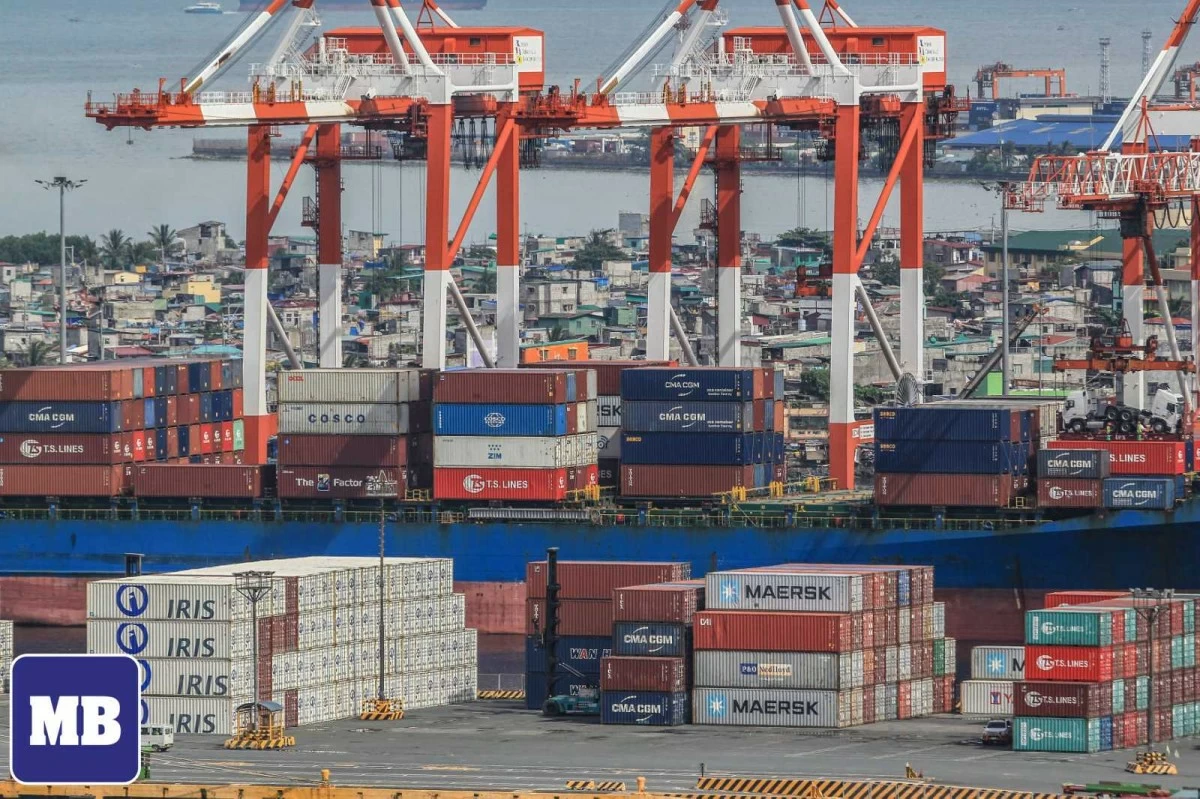
The Philippines climbed two places to 21st out of 50 of the world’s most promising logistics markets in this year’s Agility Emerging Markets Index (AEMI), but the country still lagged behind its neighbors in Southeast Asia.
Under the 2026 AEMI, the Philippines obtained an overall score of 4.96, an improvement from last year’s 4.91 when it placed 23rd in the ranking.
Conducted by global logistics firm Agility and market research firm Transport Intelligence Ltd. (Ti), the index ranks 50 economies for their potential as logistics markets and investment destinations.
AEMI provides policymakers with insight into how their markets fare on the global stage by highlighting their advantages, vulnerabilities, and investment opportunities.
Each economy’s performance is measured using economic and trade data, social indicators, and transport development, as well as responses from over 500 industry executives.
The annual index determines an economy’s ranking through four areas of logistics market development: domestic logistics opportunities, international logistics opportunities, business fundamentals, and digital readiness.
The Philippines saw its best performance in digital readiness, improving five places to 18th with a score of 5.35 from last year’s 23rd and a score of 5.05.
Last year, AEMI cited the country as one of three economies that “struggled” in this ranking due to declining network readiness and lagging innovation indices.
Digital readiness measures the potential and progress of an emerging market (EM) in becoming a digitally led, skills-rich, innovation-oriented, and sustainable economy for the future.
In terms of domestic logistics opportunities, the Philippines moved up to 16th with a score of 5.03, from 17th and a score of 4.97. This sub-index measures the performance of each EM and its potential to sustain and develop domestic demand.
Conversely, the country performed weaker in international logistics opportunities, dropping three spots to 19th with a score of 4.8 compared to last year’s 16th rank and a score of 4.95. This metric evaluates internal and external demand for trade-intensive logistics services and the capacity of individual emerging markets to facilitate cross-border logistics operations.
Meanwhile, the Philippines improved slightly to 30th with a score of 4.62 in business fundamentals, from last year’s ranking of 31st and a score of 4.53.
According to AEMI, business fundamentals assess the openness, robustness, fairness, and strength of each emerging market’s business environment, including the rule of law and market independence.
Despite stronger performance this year, the Philippines continues to fall behind its closest competitors in Southeast Asia, trailing Malaysia (fifth), Indonesia (sixth), Thailand (ninth), and Vietnam (11th).
The report noted that Southeast Asian economies are generally converging toward solid mid-range growth, although there remains variation across markets.
Within the region, the Philippines only managed to exceed the performance of Cambodia and Myanmar, which ranked 37th and 47th, respectively.
For this year’s index, China retained its No. 1 rank with an overall score of 8.44, followed by India, the United Arab Emirates, and Saudi Arabia.
With last year’s trade environment largely shaped by uncertainties surrounding the United States’ (US) tariff policy, Agility chairman Tarek Ultan said investments in artificial intelligence (AI), data centers, and related infrastructure will continue offsetting volatility this year.
While noting that it is a challenge they’re least prepared for, Ultan said economies will start counting on AI to help them cope with turbulence in global trade.
“Weak digital infrastructure is the biggest gap in and biggest threat to supply chains,” he said.