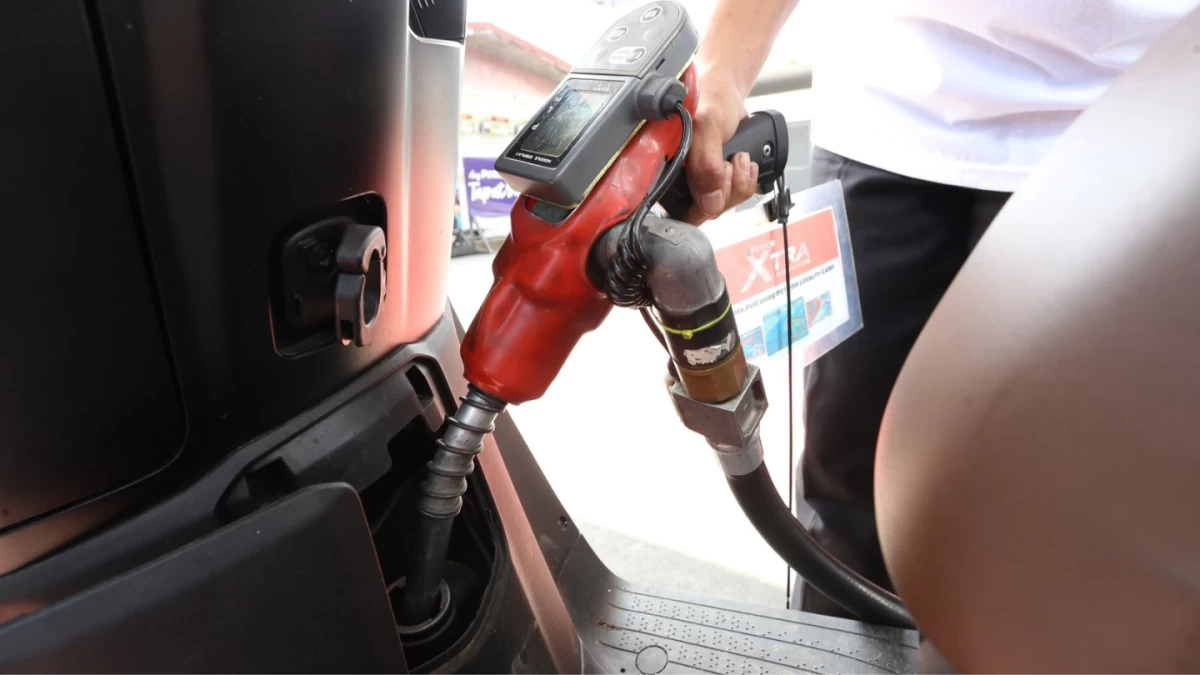
Oil companies will raise pump prices for a ninth consecutive week on Tuesday, March 3, as escalating military tensions in the Middle East and supply disruptions in the Persian Gulf continue to rattle global energy markets.
Gasoline will increase by ₱1.90 per liter, diesel by ₱1.20, and kerosene by ₱1.50, according to advisories from industry leaders including Shell Pilipinas Corp., Seaoil Philippines Inc., and Chevron Philippines Inc.
Most adjustments are scheduled to take effect at 6 a.m. local time, while Cleanfuel will implement its rate hike at 8:01 a.m.
Leo Bellas, Jetti Petroleum president said the price action is increasingly driven by “much larger” freight costs and risk premiums embedded in the supply chain.
The surge comes as the United States (US) and Iran remain locked in a military standoff that has deterred shippers from navigating critical corridors such as the Strait of Hormuz.
The geopolitical rift has caused marked reluctance among vessel operators to traverse the Persian Gulf, according to a report from ING Economics.
With roughly 20 percent of the world’s daily oil supply passing through the Strait of Hormuz, any prolonged blockage or perceived threat to tankers translates directly into higher costs for net-importing nations like the Philippines.
Economists warned that the impact of the disruption may widen if international refineries begin to curb output in response to unstable crude deliveries.
Michael Ricafort, chief economist at Rizal Commercial Banking Corp., described the current environment as a “wait-and-see situation” for the energy market.
He noted that extreme volatility in global prices and potential breaks in the supply chain remain the primary risks to domestic inflation.
Unless there is a significant de-escalation in the Persian Gulf, analysts expect the trend to persist into a 10th week.
The Department of Energy, which monitors the weekly price movements based on regional trading benchmarks, has yet to provide a formal outlook on the duration of the current cycle.
Jonathan Ravelas, senior adviser at Reyes Tacandong & Co., explained that this could be labeled as a “sustained risk” if the conflict drags on.
“That means higher transport and food costs in the coming weeks. Zooming out, expensive fuel acts like a tax on the economy—consumers spend less, businesses face higher costs, and sectors like transport, logistics, and manufacturing feel the squeeze,” he elaborated.
“The practical takeaway is this: households need to budget more carefully, and businesses should brace for tighter margins and higher operating expenses if tensions persist.”
Meanwhile, Bellas assured consumers that oil companies are mandated to maintain sufficient stockpiles, noting that they would be compliant with the 15-day inventory requirement.
“If there would be a prolonged disruption to supply, it is possible that crude oil prices could reach and breach the $100 mark, despite the possibility that countries like China would draw from their reserves to support supply in Asia,” he cautioned, as prices have already climbed to around $90 per barrel (bbl).