






Manila Bulletin
 Philippines
National
Bulusan shows increased seismic activity; Mayon continues effusive eruption
Philippines
National
Bulusan shows increased seismic activity; Mayon continues effusive eruption
Philippines
National
Bulusan shows increased seismic activity; Mayon continues effusive eruption
Bulusan shows increased seismic activity; Mayon continues effusive eruption
Published Mar 2, 2026 11:53 am


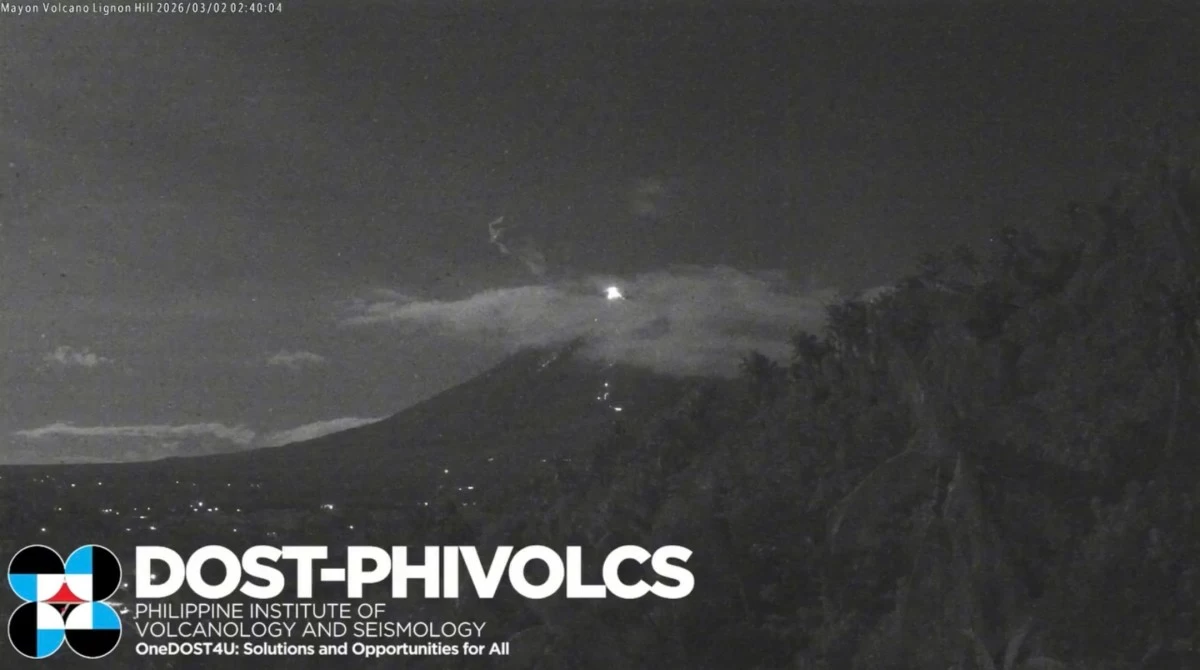
Mayon Volcano continues its 56-day effusive eruption on March 2, 2026, producing lava flows, rockfalls, and pyroclastic density currents, while minor strombolian bursts were recorded at the summit. (Screenshot from Phivolcs)
Bulusan Volcano in Sorsogon recorded a notable rise in seismic activity over the past week, the Philippine Institute of Volcanology and Seismology (Phivolcs) reported on Monday, March 2, raising concerns about possible sudden steam-driven or phreatic eruptions.
From 3 a.m. of Feb. 26, the Bulusan Volcano Network recorded 49 volcanic earthquakes, including 16 volcano-tectonic events linked to rock fracturing three to six kilometers beneath its northern and southeastern edifice.
Other monitoring parameters, such as degassing from the summit crater and vents, were very weak to moderate, while sulfur dioxide (SO₂) emissions were too weak to be detected during the last measurement.
Bulusan remains under Alert Level 0, meaning no magmatic eruption is expected.
However, Phivolcs cautioned that the recent increase in earthquakes could indicate hydrothermal processes beneath the volcano, which may trigger sudden hazardous steam-driven or phreatic eruptions.
It reminded residents and visitors to avoid the four-kilometer permanent danger zone (PDZ), especially near vents on the south-southeastern slopes.
Phivolcs also advised that local government units must prepare their response and revisit their emergency plans in case the status of the volcano is raised to Alert Level 1, while civil aviation authorities were warned to caution pilots against flying close to the summit.
Meanwhile, Phivolcs said Mayon Volcano in Albay continues its 56-day-long effusive eruption, producing lava flows, pyroclastic density currents (PDCs) or “uson”, and rockfalls along the upper southern and eastern slopes.
Time-lapse footages captured minor strombolian bursts at the summit at 2:37 a.m. and 2:47 a.m. on Monday, March 2.
An effusive eruption is characterized by the slow outflow of lava from the volcano, forming rivers of molten rock rather than explosive blasts, while a strombolian eruption involves small but explosive bursts of lava that shoot upward, often creating glowing lava fountains.
Mayon remains under Alert Level 3, indicating intensified magmatic unrest and the potential for hazardous eruptions. It has been under this alert status since January 6.
Ongoing activity may continue to generate lava flows, collapse-fed rockfalls, and PDCs, while possible lava fountaining or moderate explosions could affect all sectors.
Phivolcs reiterated that entry into the six-kilometer permanent danger zone is strictly prohibited, and residents within an eight-kilometer radius were advised to stay prepared for possible evacuation should monitoring parameters escalate and the alert level be raised to Alert Level 4.