






Manila Bulletin
 Philippines
National
Group urges gov't to reduce pork import to protect local producers
Philippines
National
Group urges gov't to reduce pork import to protect local producers
Philippines
National
Group urges gov't to reduce pork import to protect local producers
Group urges gov't to reduce pork import to protect local producers
Published Mar 1, 2026 08:25 pm


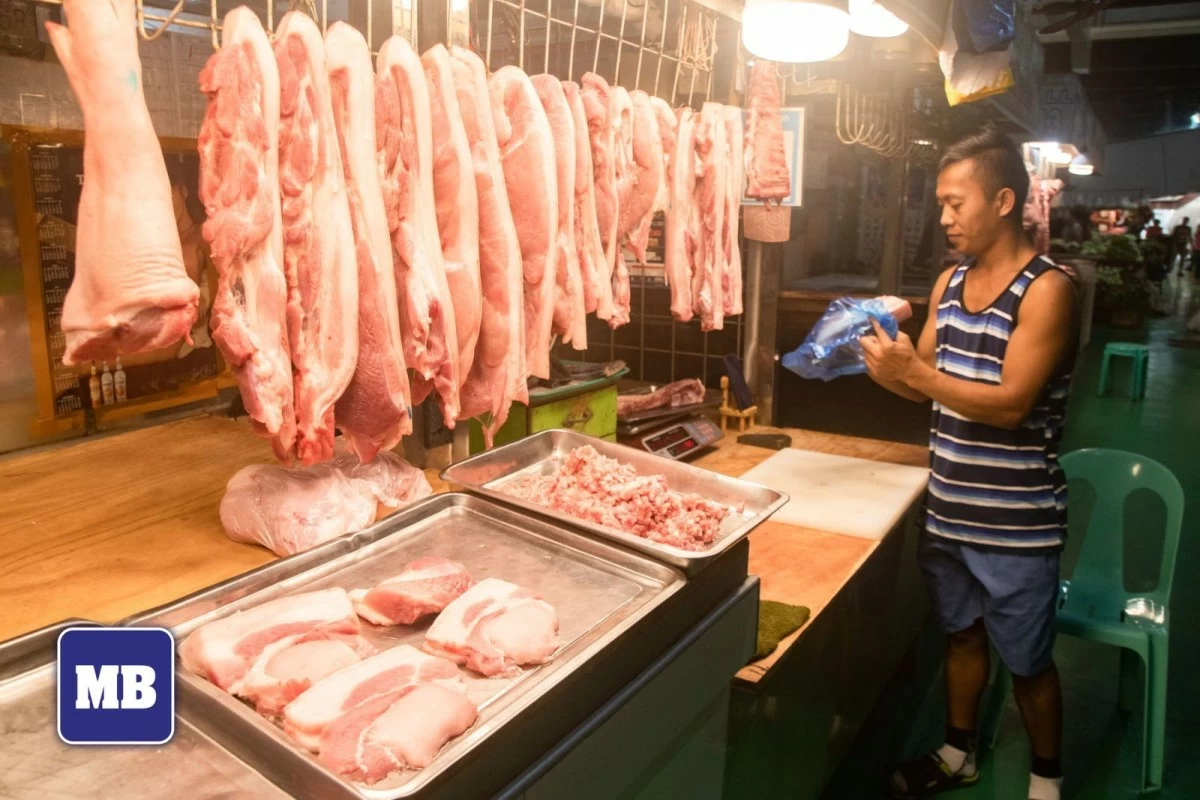
The national government should reduce the importation of pork in order to encourage hog raisers to enhance domestic production, the Samahang Industriya ng Agrikultura (SINAG) said.
The group called for this year’s import which reached 850,000 metric tons—to be reduced to 550,000 metric tons, arguing that carryover stock from earlier imports has left a substantial oversupply.
SINAG chairman Rosendo So explained that cutting imports would create an economic incentive for local farmers to rebuild their swine herds and supply the domestic market.
He drew a parallel to the rice sector, where the government imposed limits on rice imports after cheap foreign rice caused significant losses for local farmers, “The government saw that situation with rice, so the same approach should be applied to pork.”
He warned that cold-storage facilities are currently filled with imported pork that importers are seeking to sell quickly into the domestic market, adding that this surplus is depressing prices for locally produced pork and discouraging farmers from repopulating.
Imported dressed pork, he noted, is being sold at roughly P80–100 per kilo, with better cuts such as kasim (pork shoulder) priced around P120 per kilo. By comparison, locally produced pork is valued at about P165 per kilo live weight—equivalent to approximately P206 per kilo after slaughter and dressing.
So said that the price of P120 per kilogram of imported pork is evidently below the production cost of P180 per kilogram live weight for local hog raisers, “If dressed imported pork can be bought at P120 per kilo and resold at P150 trader buyers and food outlets will naturally choose the cheaper imported product.”
“Who will have the courage to repopulate their swine herds if they cannot earn a living?” he added.
SINAG also reiterated calls for the government to reinstate higher tariffs on pork. The Group said the preferential tariff rates introduced in 2021—15 percent in-quota and 25 percent out-quota from original tariff 30 percent in quota and 40 percent out quota .
SINAG is urging a return to the previous tariff structure of 30 percent in-quota and 40 percent out-quota.
Industry data indicated that the Philippine pork consumption last year was about 1,580,000 metric tons and local production at roughly 1,060,000 metric tons, implying an estimated shortfall of 520,000 metric tons.
SINAG noted, however, that 2025 imports reached 851,760 metric tons—creating what the group describes as a carryover surplus that undermines prices and local producers’ recovery efforts.
SINAG said reducing import volumes now, while awaiting any tariff reinstatement, would provide immediate relief for hog raisers and support efforts to rebuild the domestic herd.
The group also urged the Department of Agriculture and other relevant agencies to consider adjusting import quotas and tariff policy to protect local livelihoods and help restore the country’s pork self-sufficiency.