






Manila Bulletin
 Philippines
National
From Blood Alliance to Strategic Partnership: Korea and the Philippines at a New Turning Point
Philippines
National
From Blood Alliance to Strategic Partnership: Korea and the Philippines at a New Turning Point
Philippines
National
From Blood Alliance to Strategic Partnership: Korea and the Philippines at a New Turning Point
From Blood Alliance to Strategic Partnership: Korea and the Philippines at a New Turning Point
Published Feb 28, 2026 07:50 pm


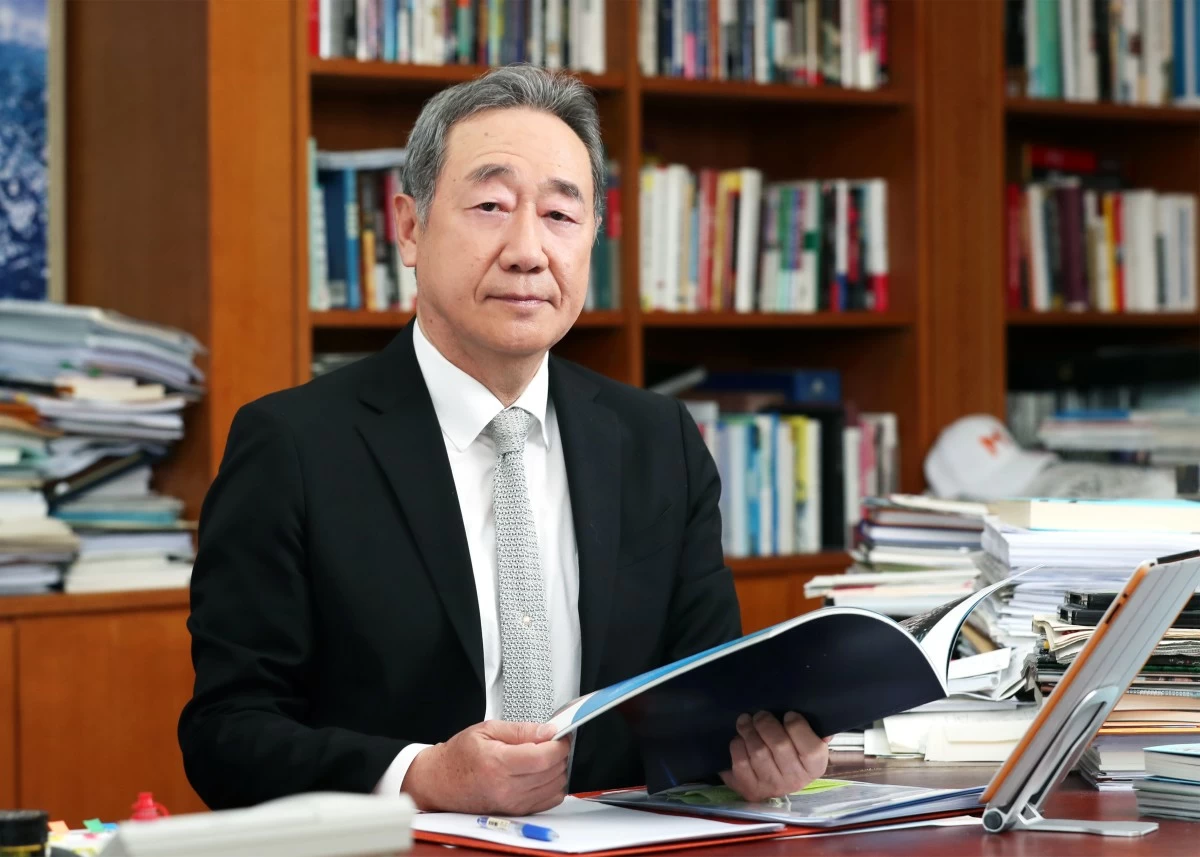
Dr. CHANG Dae-Whan is the Chairman and Publisher of Maekyung Media
Seventy-five years ago, when freedom on the Korean Peninsula hung by a thread, the first Asian nation to extend a hand was the Philippines. General Carlos P. Romulo, then President of the United Nations General Assembly, helped rally international support—guided by the profound conviction that freedom is indivisible, and that a blow dealt to liberty in one corner of the globe is a strike against the conscience of all mankind—and persuaded his government to make a historic decision: to dispatch Asia’s first combat troops to Korea. The freedom and prosperity the Republic of Korea enjoys today rest, in no small part, on the sacrifice of 7,420 Filipino veterans of the Philippine Expeditionary Forces to Korea (PEFTOK), who fought with valor at battles such as Yuldong and Hill Eerie. Koreans will never forget their noble dedication, and we hold the Philippines in deep and enduring gratitude. This bond, forged in battle, has evolved into a vital economic pillar through human exchange. Today, tens of thousands of diligent Filipino workers in Korea are essential partners driving the dynamism of our economy across various sectors. We deeply value their contribution as a key axis of our growth, serving as the powerful human engine for the strategic partnership envisioned by our governments. This profound trust and the substantial economic contributions of our people have laid a solid foundation for our relationship. Now, we must transcend our historic bond of blood and labor to ignite a new era of strategic synergy. By converging Korea’s world-class technology with the Philippines’ dynamic growth potential, we will power new engines of shared prosperity in three pivotal sectors: shipbuilding, defense, and nuclear energy. First, if Korea’s world-leading shipbuilding capabilities are combined with the Philippines’ strategic location, the Philippines can reemerge as Southeast Asia’s maritime logistics hub and a shipbuilding powerhouse. Projects such as modernizing the Subic Bay naval base are only the beginning. Second, Korea is already a key partner in the Philippines’ military modernization, having built trust through the FA-50 light combat aircraft and frigates. Going beyond a simple buyer–seller relationship, a comprehensive defense partnership—including technology transfer and local production—can significantly strengthen the Philippines’ self-reliant defense capabilities. Third, energy security and carbon neutrality are challenges that both countries must confront. Korea possesses world-class know-how in nuclear powerplant construction, recognized for its safety and cost competitiveness. Energy cooperation, including discussions on restarting the Bataan Nuclear Power Plant, can serve as a catalyst for a stable power supply and stronger industrial competitiveness in the Philippines. In this context, it is very timely and meaningful that President Lee Jae Myung and President Ferdinand R. Marcos Jr. hold a summit in March. The meeting should be more than a ceremonial exchange; it must be the moment our two governments align priorities and convert goodwill into concrete deliverables—whether in shipbuilding cooperation, a deeper defense industrial partnership, or energy security. Clear direction from the top can mobilize agencies and industries on both sides, set timelines, and ensure that our strategic partnership produces visible results for our citizens. Moreover, this year the Philippines serves as ASEAN Chair, carrying the weighty responsibility of advancing regional integration and development. I hope the leadership the Philippines demonstrates will deepen ASEAN cohesion and broaden the horizons of regional prosperity—and that, in the process, the framework for cooperation between Korea and ASEAN will become even more robust. Just as General Romulo’s courage 75 years ago became a milestone that helped secure Korea’s freedom, our economic cooperation today must become a new milestone—one that opens a more prosperous future for both our peoples. Built on the trust we have forged together, let us write a new legend of shared growth.