






Manila Bulletin
 Philippines
National
Mercado-Revilla's twin education reform bills hurdle House panel
Philippines
National
Mercado-Revilla's twin education reform bills hurdle House panel
Philippines
National
Mercado-Revilla's twin education reform bills hurdle House panel
Mercado-Revilla's twin education reform bills hurdle House panel
Published Feb 28, 2026 07:07 am


At A Glance
- Cavite 2nd district Rep. Lani Mercado-Revilla is upbeat over the passage of her two education reform bills at the committee level in the House of Representatives.
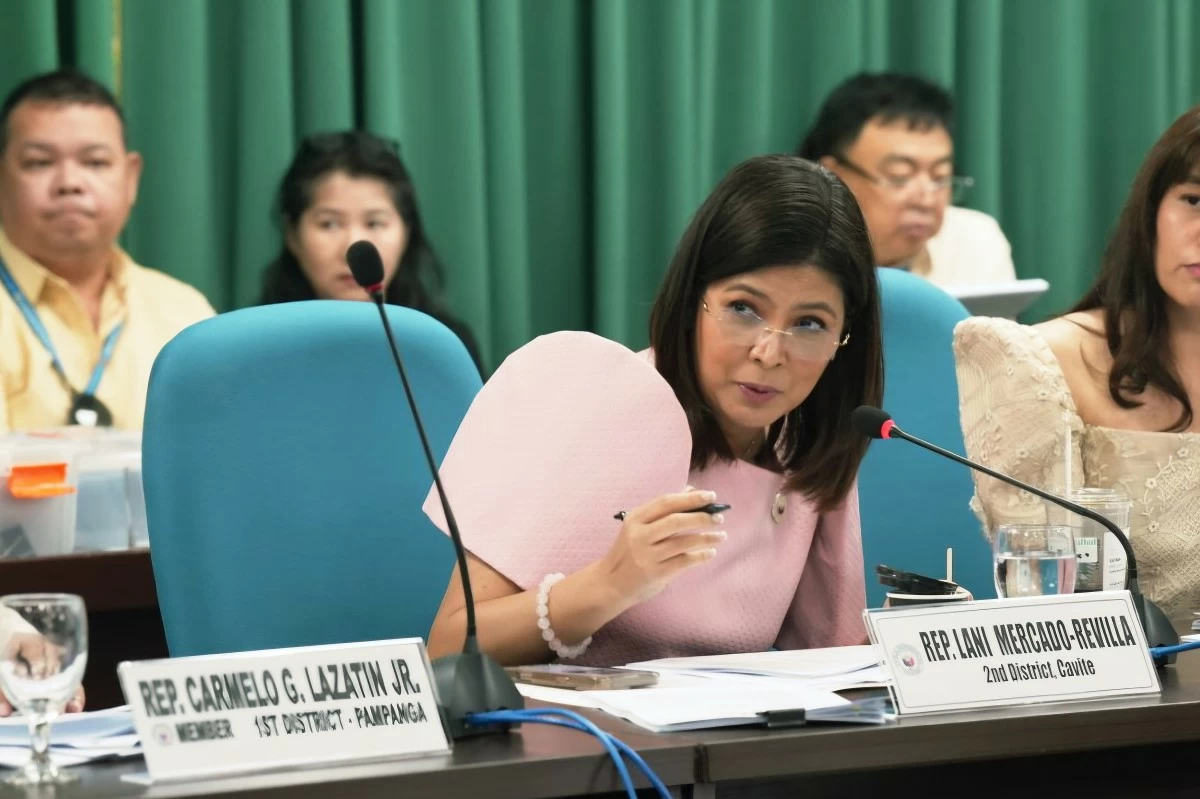
Cavite 2nd district Rep. Lani Mercado-Revilla (PPAB)
Cavite 2nd district Rep. Lani Mercado-Revilla is upbeat over the passage of her two education reform bills at the committee level in the House of Representatives.
Recently getting the nod of the House Committee on Basic Education and Culture were House Bill (HB) No. 7798, or the Classroom-Building Acceleration Program Act; and HB No. 3648, or the Education Pathways Act.
Mercado-Revilla says HB No. 7798 seeks to institutionalize a Classroom-Building Acceleration Program (CAP) under the Department of Education (DepEd) to fast-track the construction of classrooms nationwide.
The measure creates a dedicated acceleration program within DepEd to centralize planning, coordination, and implementation of classroom construction projects. It authorizes local government units and qualified private entities to participate in building classrooms, subject to DepEd standards and oversight.
The bill also provides for the establishment of a Program Management Office tasked with reviewing proposals, ensuring compliance with technical standards, monitoring timelines, and promoting transparency in procurement and implementation.
It mandates that all classroom projects comply with infrastructure standards, including disaster resilience, climate adaptation measures, proper ventilation, sanitation facilities, and readiness for digital connectivity. Periodic monitoring and reporting requirements are likewise included to ensure accountability and measurable reduction of classroom backlog.
Meanwhile, the Cavite solon says HB No. 3648 proposes structural reforms in the basic education system by institutionalizing clearer and more inclusive learning pathways.
The measure recognizes multiple education pathways for Grade 10 completers, allowing students to choose between academic, technical-vocational, or employment-oriented tracks. It strengthens career guidance programs in schools to help students make informed decisions aligned with their abilities and long-term goals.
The bill further mandates alignment of curriculum frameworks between DepEd, higher education institutions, and technical-vocational agencies to ensure smooth transitions across levels.
It provides for alternative advancement or assessment mechanisms for students seeking accelerated or specialized tracks and encourages coordination with technical education and skills development programs to facilitate workforce entry for students opting for technical-vocational routes.
“Itinataguyod nito ang mas malinaw at inclusive education pathways, mula basic education hanggang higher education, technical-vocational, at employment, upang matulungan ang bawat mag-aaral na mahanap ang angkop na direksyon para sa kanilang kakayahan at pangarap,” Mercado-Revilla emphasized.
(It promotes clearer and more inclusive education pathways—from basic education to higher education, technical-vocational training, and employment—so that every learner can find the direction best suited to their abilities and aspirations.)
With both measures now approved at the committee level, Mercado-Revilla vowed to work toward their passage in plenary.
The advancement of these bills underscores the lady solon's continued legislative focus on strengthening education infrastructure and building a more flexible, inclusive, and future-ready education system for Filipino youth.