







Time to enact broader Estate Tax Amnesty
Published Feb 27, 2026 12:05 am
|
Updated Feb 26, 2026 06:09 pm


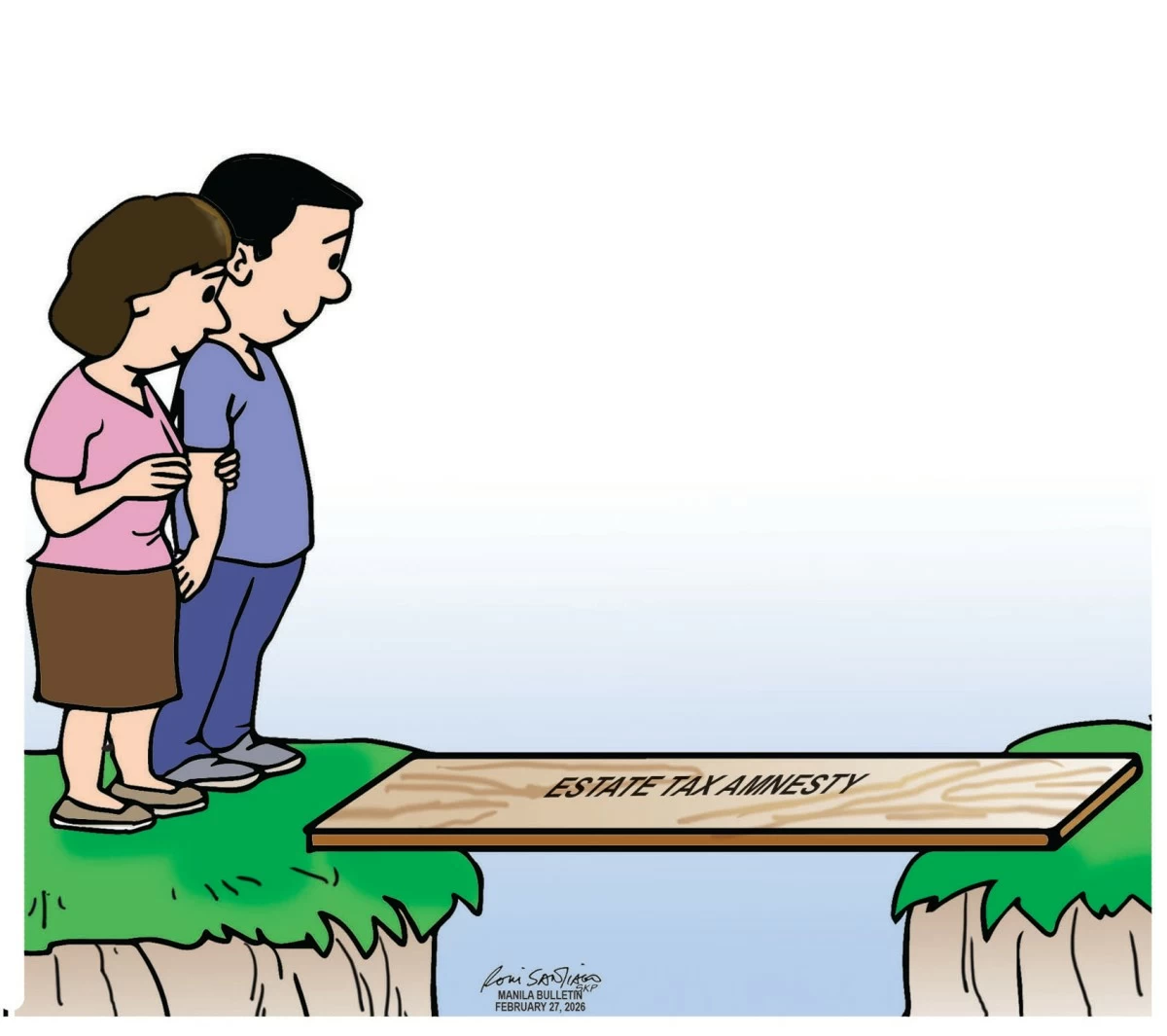
The proposal of Senator Panfilo Lacson to enact a broader Estate Tax Amnesty deserves urgent and thoughtful support. A perusal of this measure shows that it is not about absolving wrongdoing or rewarding those who deliberately evade taxes. It is about confronting a long-festering structural problem with pragmatism, compassion, and fiscal intelligence.
For decades, thousands of Filipino families have been trapped in a rather cruel bind. A loved one dies, leaving behind property—often modest homes or small parcels of land—but the estate tax remains unpaid owing to financial difficulties. Thus, penalties accumulate. Interest compounds. What may have begun as a manageable obligation becomes an insurmountable burden. Titles cannot be transferred. Assets remain frozen. Land lies idle. Families are left in legal limbo, unable to sell, develop, or even fully claim what is rightfully theirs.
The proposed amnesty seeks to address this burden by offering a one-time opportunity to settle estate tax liabilities at a uniform six percent rate, with simplified requirements and a minimum payment for estates with negligible net value. It covers estates of those who died on or before Dec. 31, 2025, regardless of pending assessments or cases. In doing so, it transforms dormant tax exposure into immediate government revenue—without costly litigation, prolonged enforcement, or bureaucratic gridlock.
Make no mistake. This measure is not a license for tax evasion. The state’s power to tax is essential to nation-building. Roads, schools, hospitals, and social services depend on compliance. But governance also demands discernment. There is a profound difference between willful evasion and systemic paralysis. Many unsettled estates are not the product of bad faith, but of confusion, lack of resources, outdated procedures, or the sheer emotional weight of loss.
Families navigating hospital bills, funeral expenses, and sudden income loss often postpone estate settlement—not out of defiance, but out of survival. As years pass, penalties snowball and the door to compliance narrows. The result is a stalemate that benefits no one. Heirs cannot move forward, and the government collects nothing.
A pragmatic amnesty recognizes this reality. By simplifying documentation, enabling electronic filing and payment, and separating tax settlement from property transfer processes, the bill enhances administrative efficiency. It allows the Bureau of Internal Revenue to redirect scarce enforcement resources toward current and deliberate noncompliance, rather than chasing decades-old cases with diminishing returns.
Critics may argue that repeated amnesties encourage a culture of waiting for the next reprieve. That concern is valid. But the solution is not to ignore a backlog that already exists; it is to pair this measure with firm communication that this is a definitive, time-bound opportunity. After the window closes, enforcement must be consistent and credible. Compassion today does not preclude accountability tomorrow.
More importantly, this proposal carries a human dimension that fiscal spreadsheets cannot capture. Behind every unsettled estate is a story—children unable to divide a small inheritance, siblings in dispute because documents remain incomplete, widows who cannot transfer a title to secure a loan. The law should not deepen their distress.
By converting idle properties into productive assets and unlocking frozen capital, the amnesty also stimulates economic activity. Land can be developed. Homes can be sold. Businesses can be reorganized. Revenue flows not only from the six percent tax, but from the broader circulation of assets once trapped in legal uncertainty.
This bill is an exercise of responsible governance. It does not erase obligations; it makes them payable. It does not reward evasion; it restores compliance. It does not weaken the tax system; it strengthens it by making it workable.
In times of economic strain, wise leadership chooses solutions that are both principled and practical. Enacting this Estate Tax Amnesty is one such choice—an act that eases the burden on grieving families while reinforcing the foundations of fiscal stability.