







Shouting in silence: The metamorphosis of Rosscapili
The artist's 'Travelogue Retrospection' celebrates the beauty of transformation, reflecting on art, violence, and vulnerability
Published Feb 27, 2026 07:57 pm


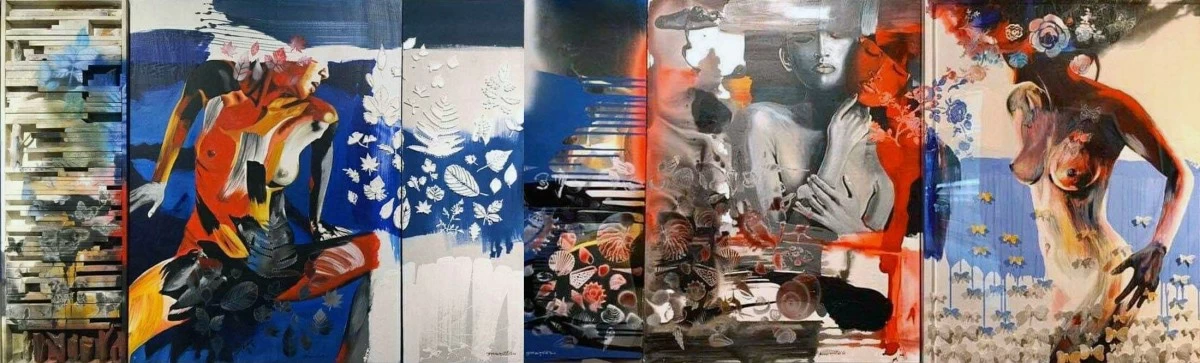
'COEXISTENCE' acrylic mixed media, 2000-2010
By Hannah Jo Uy
Rosscapili has established himself as a formidable presence in contemporary Philippine art, a veteran painter whose works have traveled from Manila to New York. Yet much like one can admire a butterfly without witnessing the violence of its transformation, the world can see the accolades of an artist, but rarely the cost of his becoming.
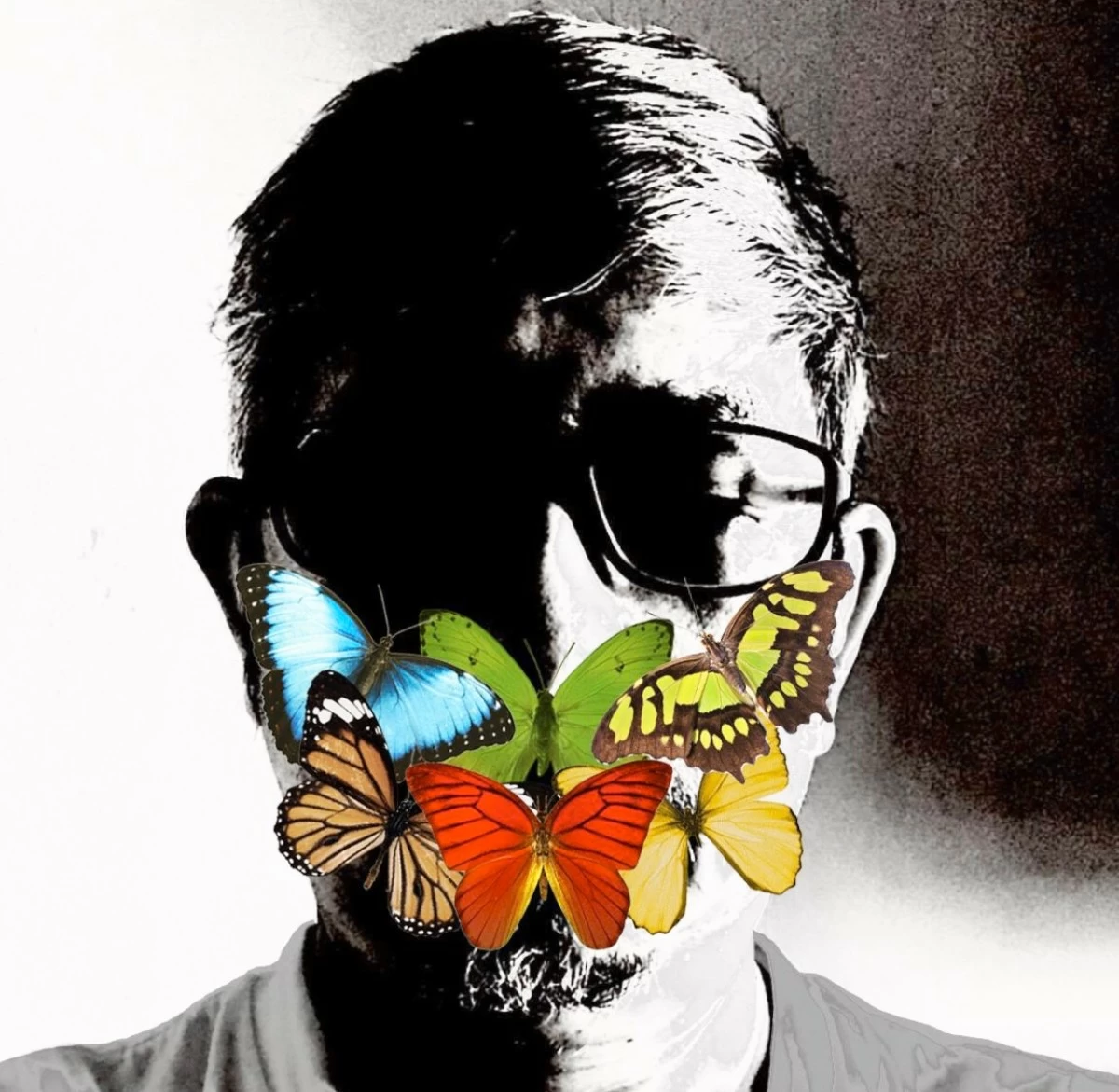
MEET THE ARTIST Rosscapili
Ross’ story begins in 1969, with oil. No, not the painter’s kind. As a Grade 5 student in Tondo, he cleaned jeepneys for his allowance, hands slick with motor oil. “The streets where I was born became my workplace, and the oil was my final touch on the steel floors of Sarao jeepneys,” he shares.
While scrubbing metal, he watched folk artists paint ceilings and bodies in riotous color, and something shifted. “My curiosity led me to mimic their techniques and designs at a young age. What my family saw as just cleaning jeepneys, I found to be an expression of art. Little did they know, it was just the beginning of my journey.”
That journey unfolded in hardship. Floodwaters crept into their home.. Gang wars erupted near Moriones Street, where he witnessed two fatal stabbings as a child. “Even the kids had a gang,” he recalled, admitting he was drawn into fights, at one point smashing a bakeshop display shelf during a clash. School became secondary to survival, and he made frequent appearances at the guidance counsellor’s office.
In 1970, he tried to leave the chaos of his domestic life. He packed his clothes and wandered for hours, hungry and lost, until a stranger fed him and returned him home. “I was thinking, why can’t I live with this old man instead? It could have been different. But I was back to fighting for my life. Back to what I grew up in, ugly, messy, and empty of beauty.”
His salvation, however, would soon arrive. In his third year at the Philippine College of Arts and Trades (PCAT), his drafting teacher urged him to join an on-the-spot painting contest at the Rotary Club of Manila. “I asked my dad for some money for watercolor, he said, ‘Ano iyang art art mo diyan, gutom lang iyan (That art of yours will only lead to hunger).’ He never gave me the money for it.”
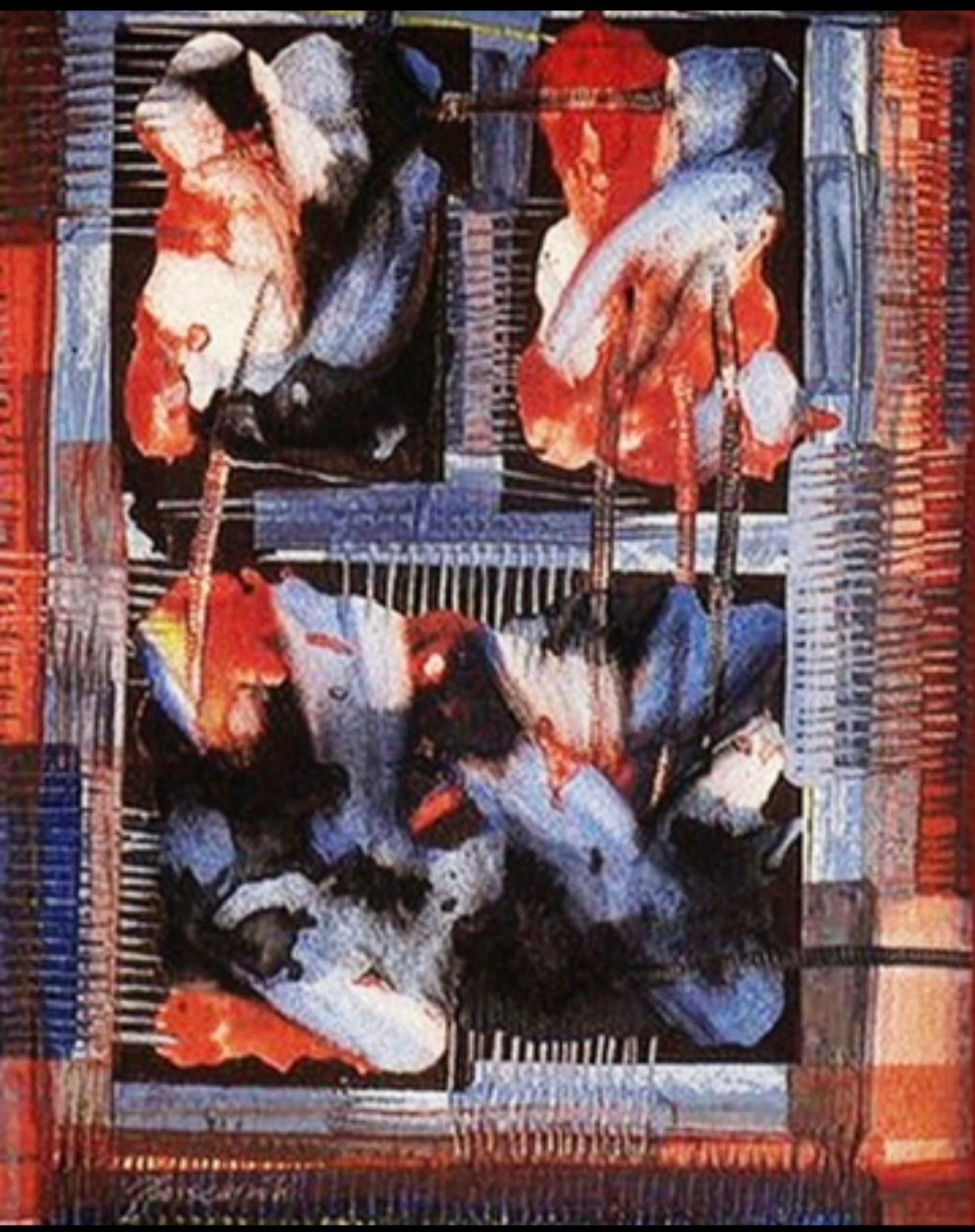
'HABITATION' acrylic on board, 1987
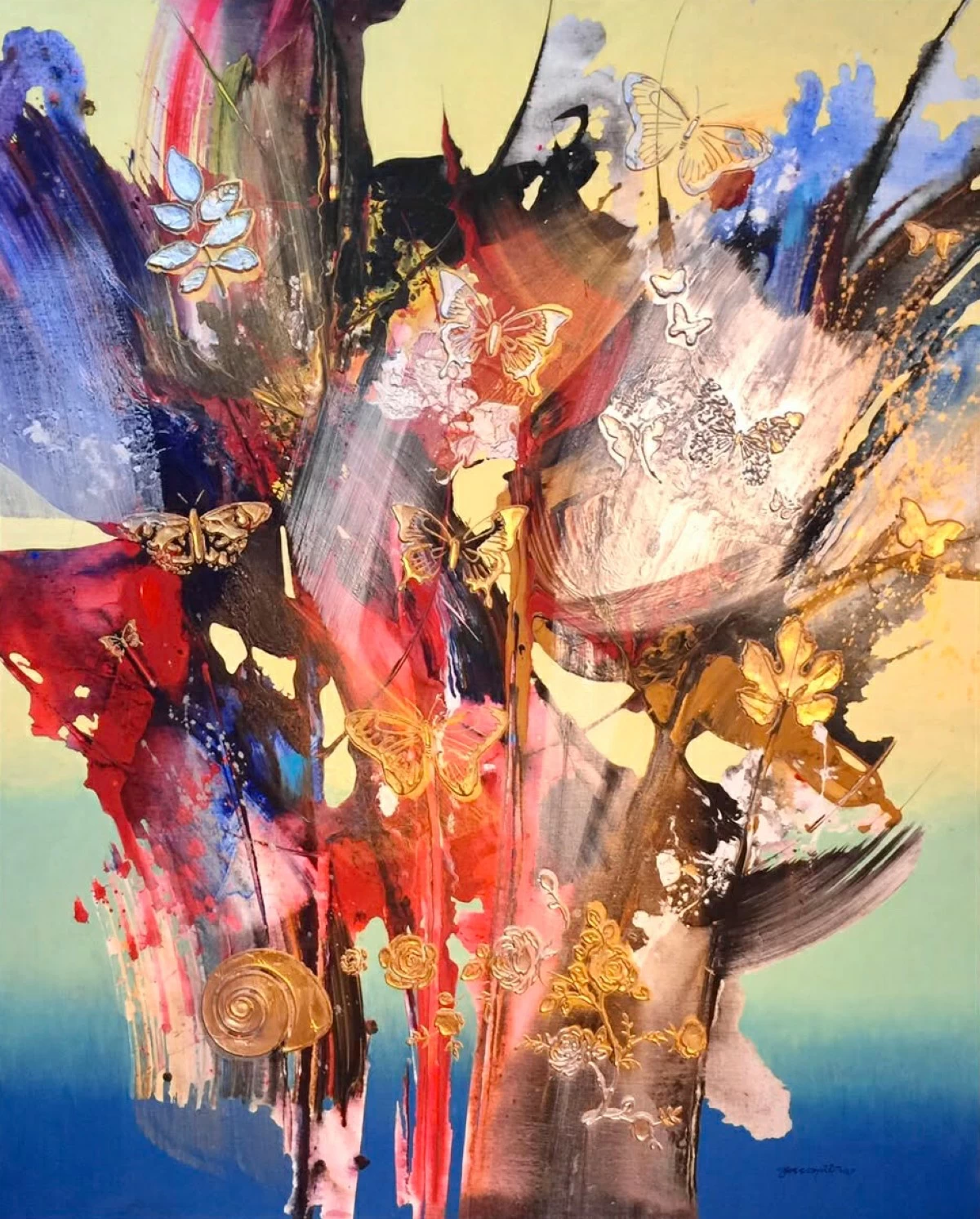
'BRAVURA' acrylic on canvas, 2016
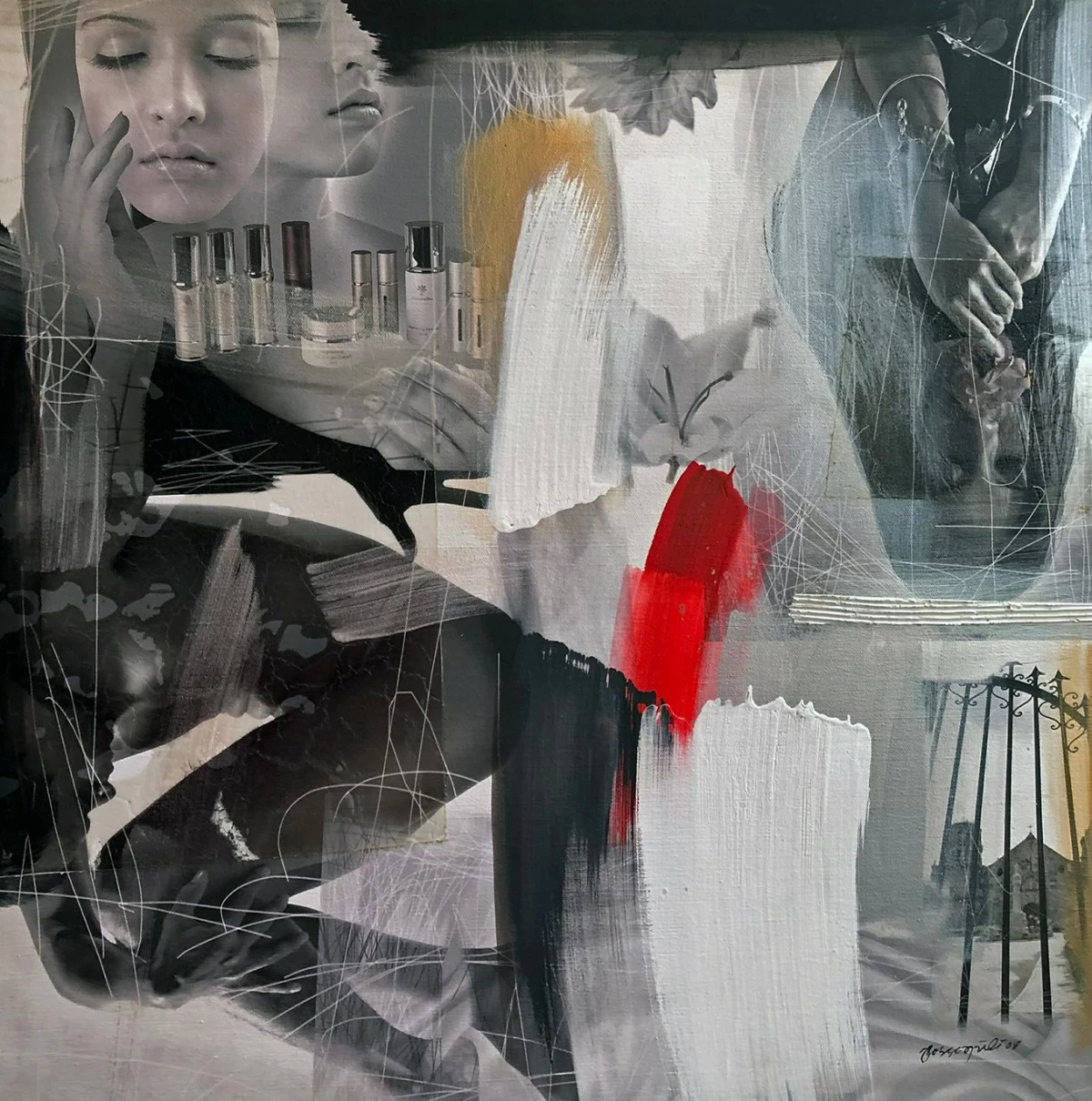
'COEXISTENCE' acrylic mixed media, 2003
Ross persisted. At the Royal Hotel’s revolving restaurant on Hidalgo Street, he stood with his friends among university fine arts students and professors armed with three small tubes of watercolor, black, red, and yellow. “I didn’t have a brush, so I tore off a small piece of cardboard to use as an applicator.” Thankfully, the Rotary Club provided Strathmore paper. “24 x 18 inches,” he recalls. The theme was “Environmental Preservation.” “I felt embarrassed with every stroke because I was trying to stretch the very small amount of paint I had. I simply added more water, spreading it out and letting it drip across the whole sheet of paper.”
While Ross’ classmates folded their entries into paper airplanes, crashing them into the street, he submitted his. On the back, as instructed, he wrote a price: “₱30,” he recalls, “just in case.”
Three days later, despite the ridicule, he returned to the Rotary Club office to check the results. The receptionist said there were no high school winners. He nodded and turned to leave. Then someone asked for his name. Ross won second place. They had assumed he was in college. “PCAT has a high school department,” he explained. That day, he walked from Kalaw back to Moriones Street at dusk in awe. “I felt like I was floating in the clouds,” he says. “I told my mom and dad right away. They laughed at me at first, thinking I was imagining things.”
Only later did the scale of it register. First prize had gone to a senior UST Fine Arts student (₱500). Third prize to a PWU professor (₱100). Ross received (₱300). In the 1970s, his entire annual tuition cost only ₱30.
He bought painting materials immediately. While it was his first competition, it would not be his last. “What if I had folded my entry into a paper airplane, too?” he asks, with amusement.
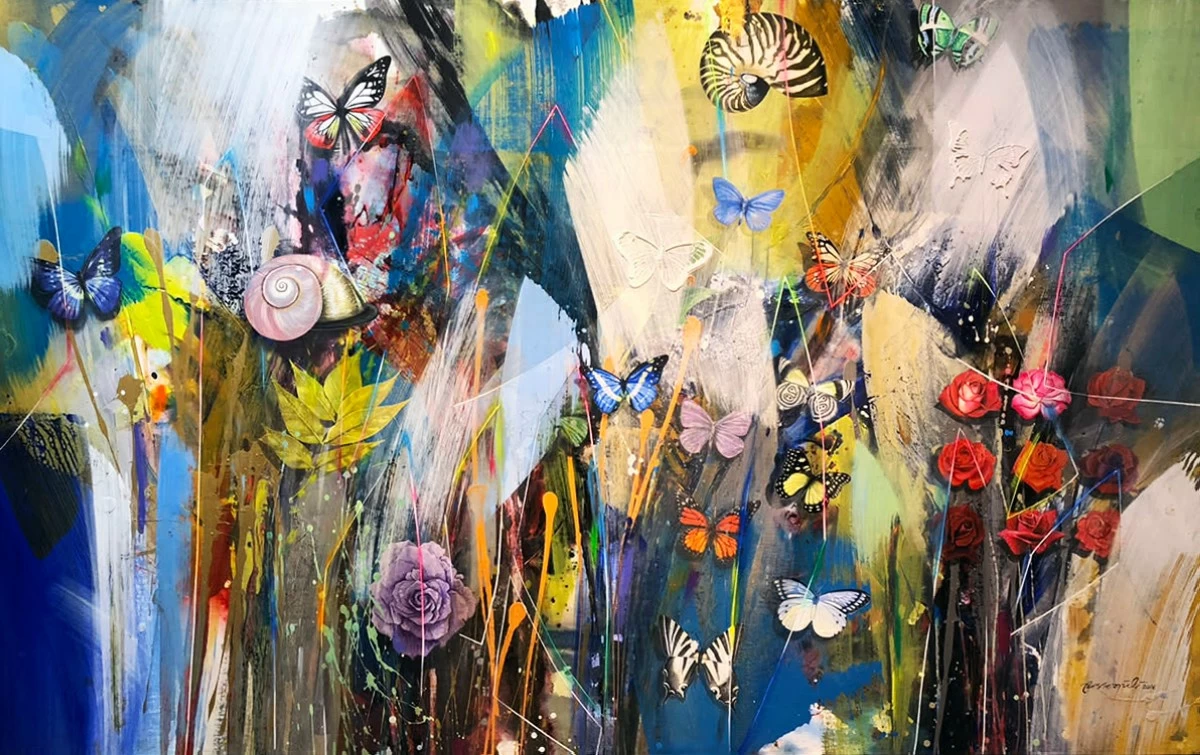
'NEW DAY' acrylic on canvas, 2018
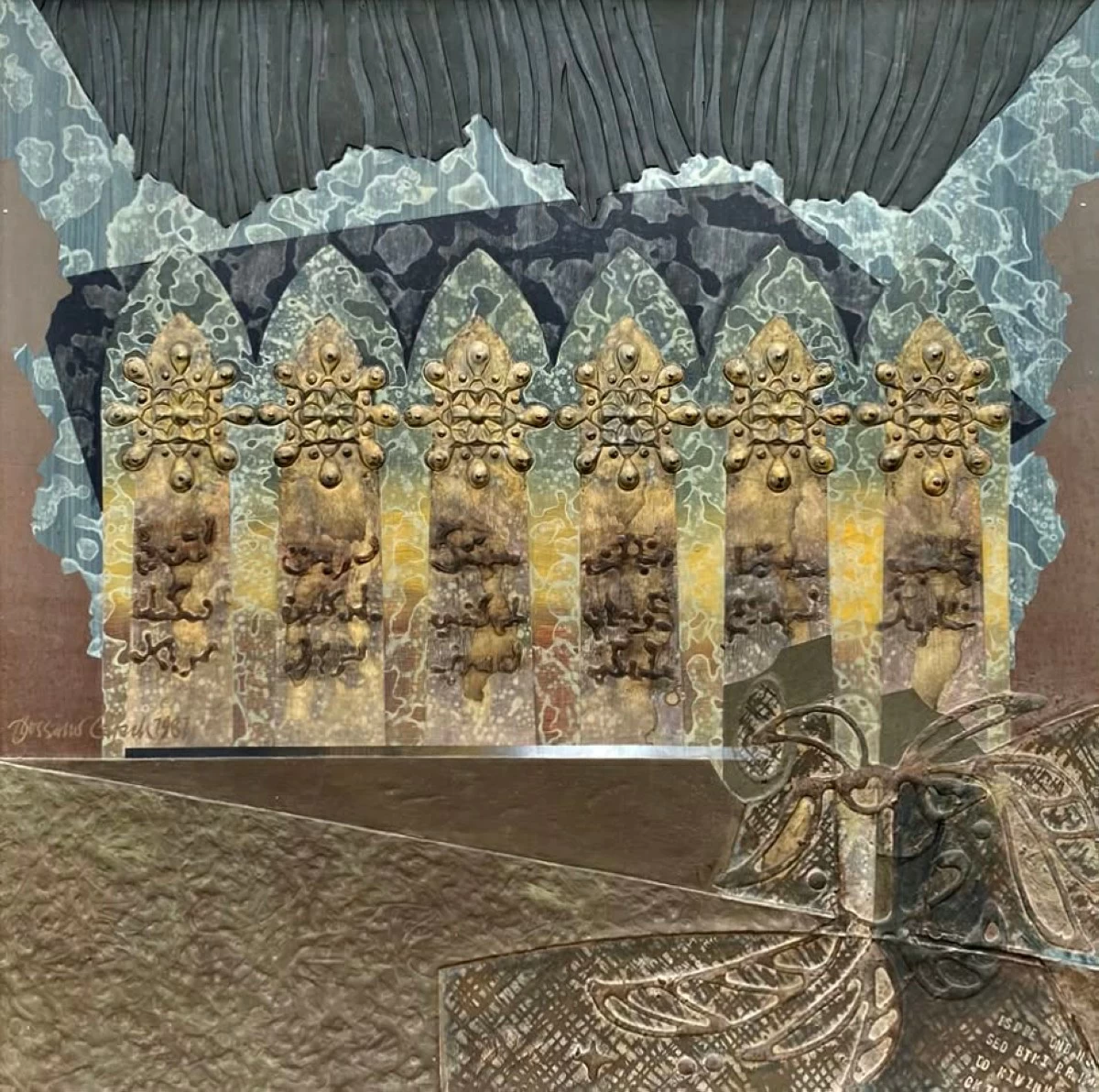
'LOGOS' acrylic and brass, 1981
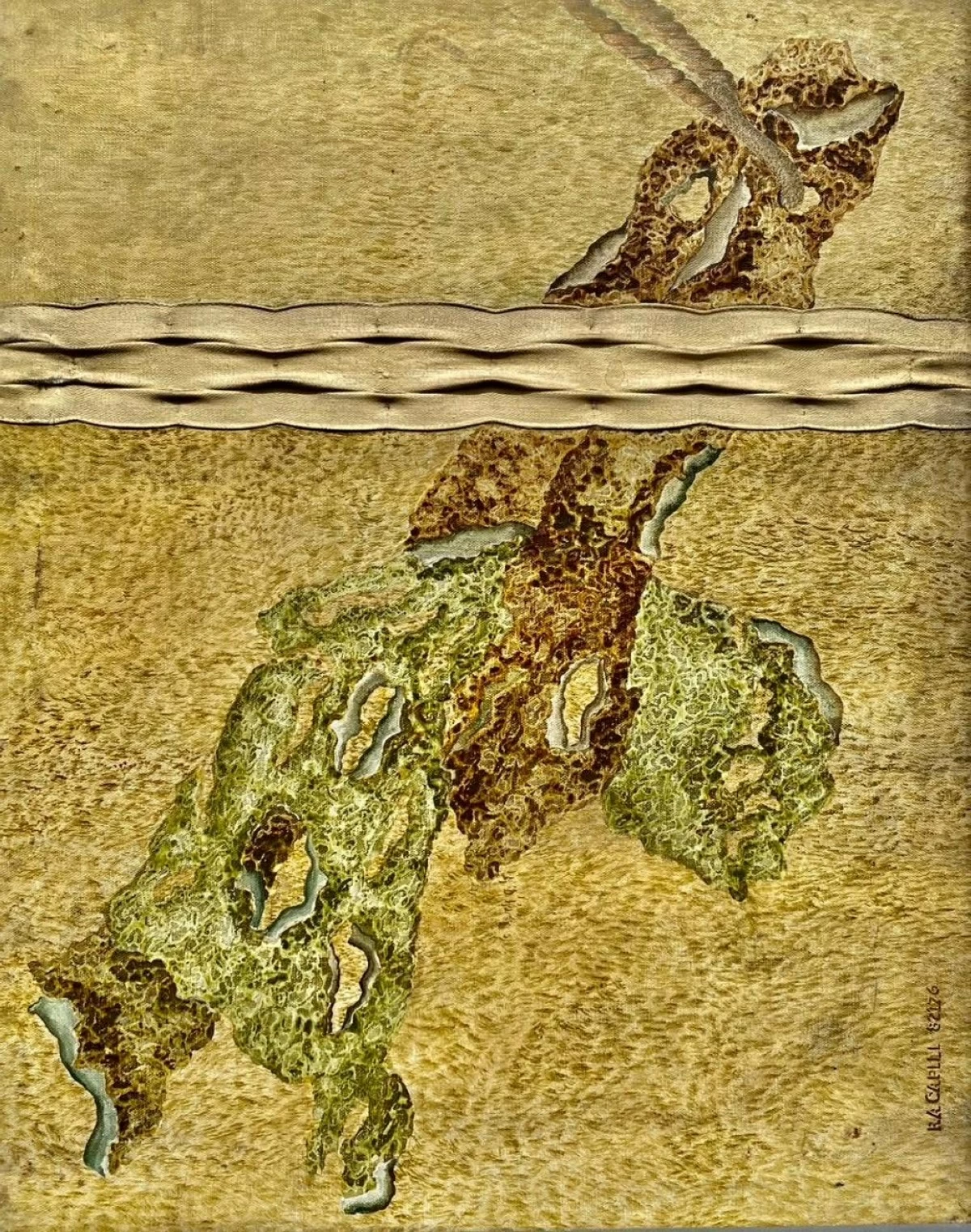
'KRISTO' acrylic on canvas, 1976
This persistence anchors “Rosscapili’s Metamorphosis: Retrospective Travelogue,” opening at LRI Art Pavilion in Makati City on March 7, 2026.
The exhibition returns to the origin, a replica of his 1974 winning entry and his first oil painting, before unfolding into a career spanning more than five decades. Acrylic experimentation, photography, printmaking, digital manipulation, sculpture, and mixed media converge into something more than a collection, but rather, a lived archive.
Spanning 1969 to 2026, the retrospective renders each year in jeepney plate numbers, serving as a quiet homage to the streets where his journey began. Movement defines Ross’ practice, not only across mediums, but inward. “Self-reflection has definitely shaped my art over the years. It's helped me tap into emotions and experiences I didn't even realize were influencing my work.”
Each body of work marks this psychological transformation from “Beginnings (1976)” to “Happy Cake for Mother Earth (2024).” “First, I painted non-objective to communicate with myself,” he shares, reflecting on his “Habitation” series, in the early ’90s. “Then, my pieces were more about nature’s survival and degradation of the environment, but as I've grown, my art has become more introspective.”
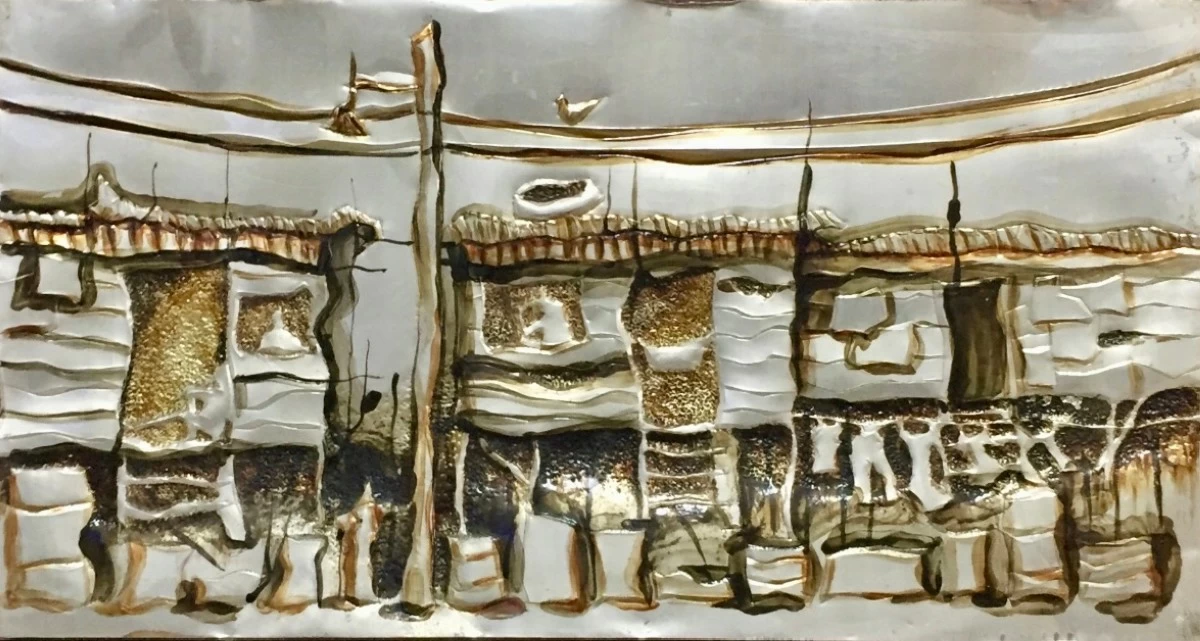
'TUNDO' metal scoring, 1977
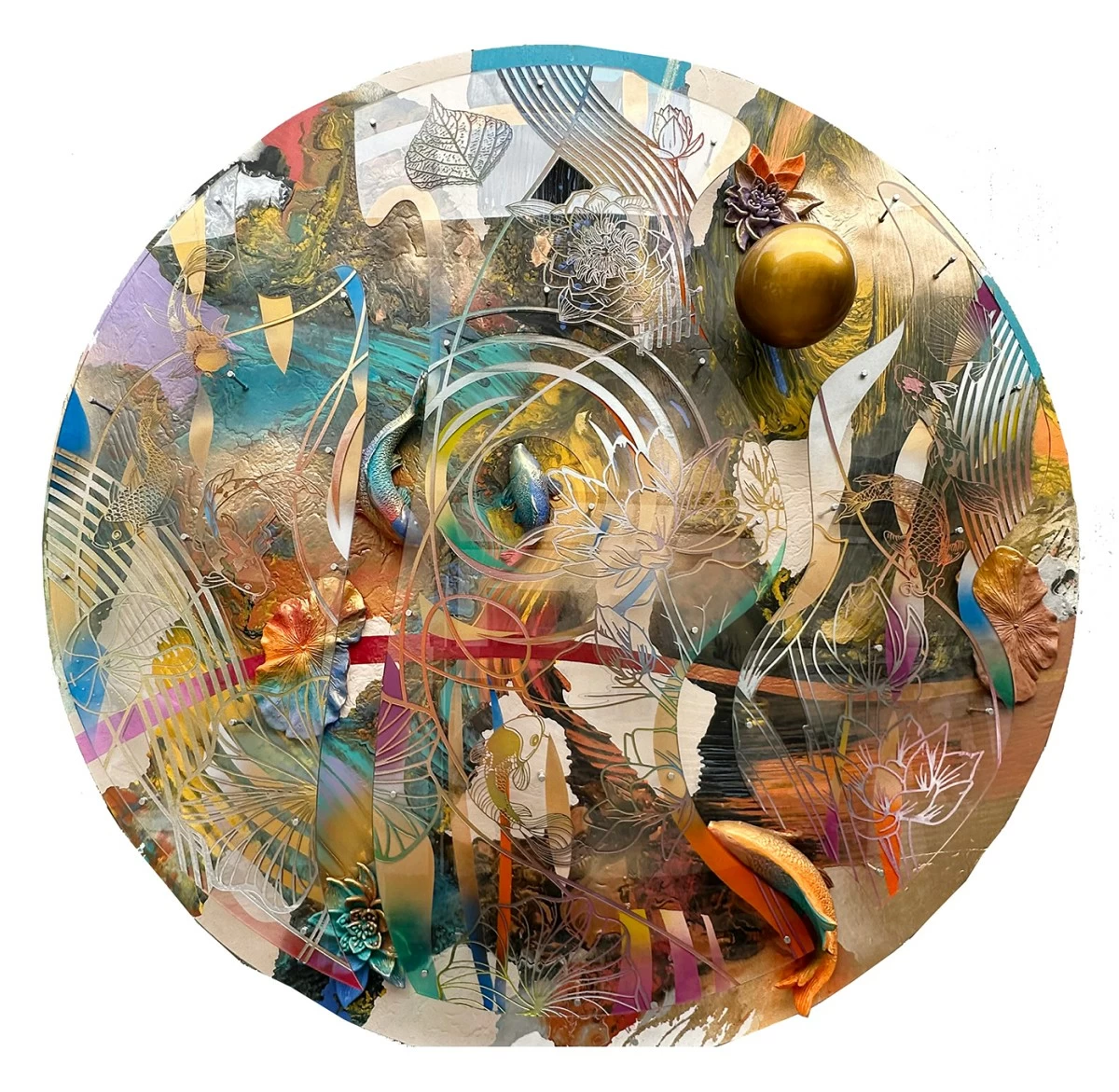
'NEW EARTH' multimixed media on round canvas, 2026
By 2003, photography and digital manipulation expanded his language. Through his “Coexistence” series, he explored faith, sensuality, and belonging. “I studied themes on religion and sensuality, struggle to exist, to be accepted, and what it means to be human. It's a journey still stuck in my head.”
Beyond medium and method lies something quieter: catharsis. In laying bare his inner world, Ross has discovered not only expression, but understanding. “It’s always a release as if I’m shouting in silence through my painting. I learned to accept things I can’t accept. I learned to love and respect as I paint those nature-inspired works. Over the years, it's changed me as a person, too. It's taught me to be more empathetic, more aware of the world around me, and more willing to be vulnerable.”
In his quiet way, Ross hopes that openness might ripple outward. “If I open up through my art, perhaps some people can relate and tell their struggles as well,” he says, a reminder that real strength often lies in the courage to be seen.
“Rosscapili’s Metamorphosis: Retrospective Travelogue - A 50-Year Life Story of the Artist” is not a conclusion. It is the visible wingbeat of a life still unfolding, and a prelude to “Rosscapili Metamorphosis,” the forthcoming coffee table book to be published by The Manila Bulletin in September 2026.
The exhibition will run from March 7 to 21 at Art Pavilion LRI Design Plaza and Studio, Makati City.