

ADVERTISEMENT

Review: Mazda 2 Hatchback

Get it before it's gone

Published Feb 27, 2026 09:11 am

At A Glance

  • In a market where crossovers and SUVs increasingly dominate the roads, the Mazda 2 hatchback stands as a reminder that there's still space for compact, driver-centric cars that blend style, efficiency, and fun.
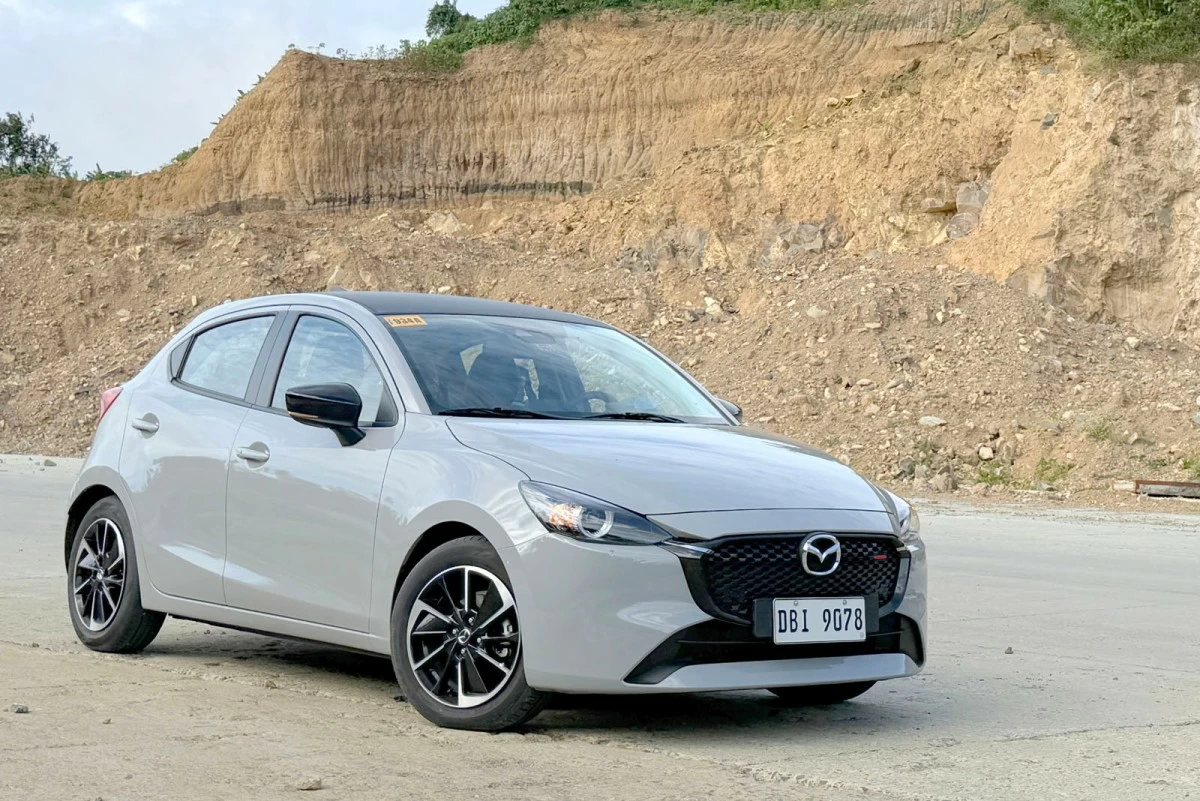
As SUVs, become a more mainstream choice among car buyers, the hatchback body style is beginning to disappear from some car brand lineups.
It’s shame as I think hatchbacks are ideal for Pinoys. They don’t take up as much space, they’re perfect for our many narrow roads, and a lot of us travel alone to and from work. Aside from their size, another cool thing about small hatchbacks is that they are fun to drive, and I think that's an often overlooked aspect.
In a market where crossovers and SUVs increasingly dominate the roads, the Mazda 2 hatchback stands as a reminder that there’s still space for compact, driver-centric cars that blend style, efficiency, and fun. Mazda’s smallest offering here hasn’t changed much since this generation was introduced. The latest iteration brings refinements that address both urban practicality and the spirited drive many buyers secretly crave.
The Mazda 2 has been one of my favorite models to come out of the brand since this generation was launched, and learning the news of it’s discontinuation is sad. Upon learning that, we recently drove what could be the last of its line.
Exterior
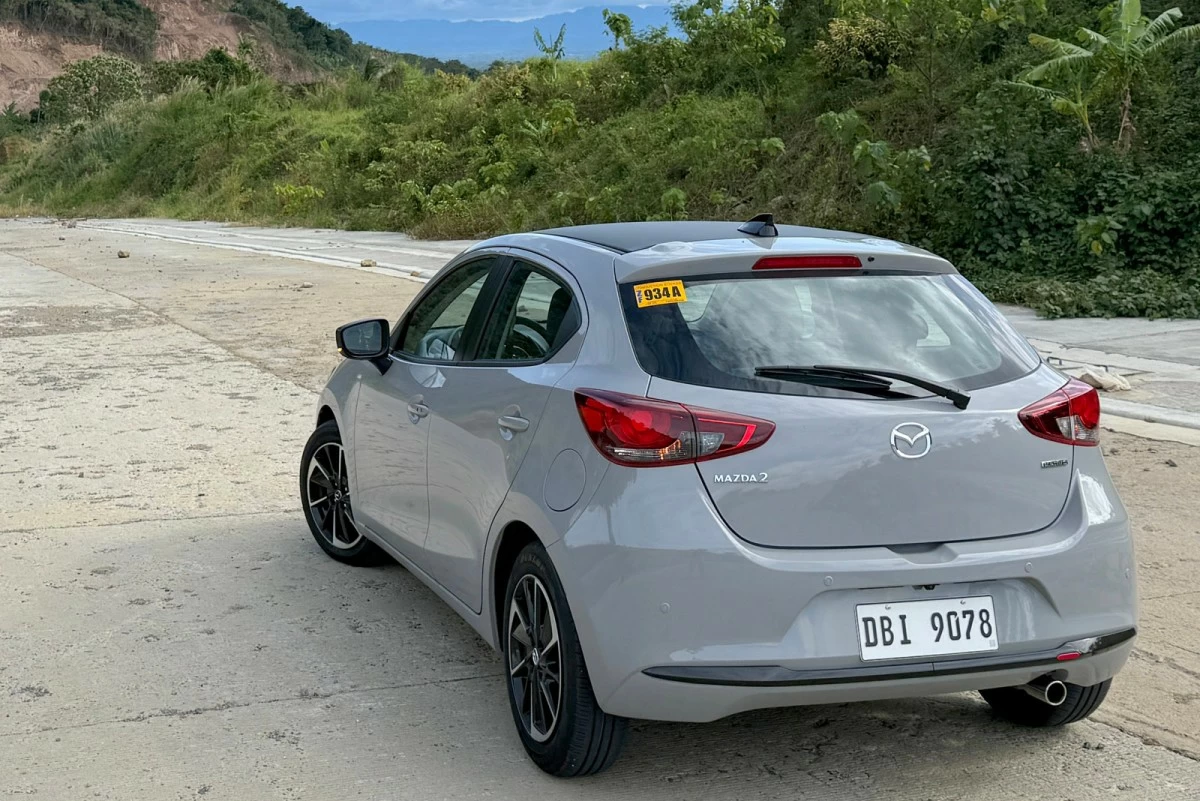
Compared to the rest of Mazda’s Philippine lineup, the Mazda 2 still manages to look youthful in a sea of new cars. Some brands often struggle to make their design language translate well into their smaller cars. The 2 Mazda is no less a Mazda than its bigger brothers. Its Evolved Kodo Design has held up since it was introduced.
The front and rear bumpers have been updated, it also has new two tone 16-inch alloy wheels wrapped in 185/60’s. The grille is a gloss black honeycomb design and the roof has a black carbon fiber wrap on it. It’s equipped with LED Daytime running lights, LED headlights with auto-levelling, high beam control and Auto On/Off functions.
Interior
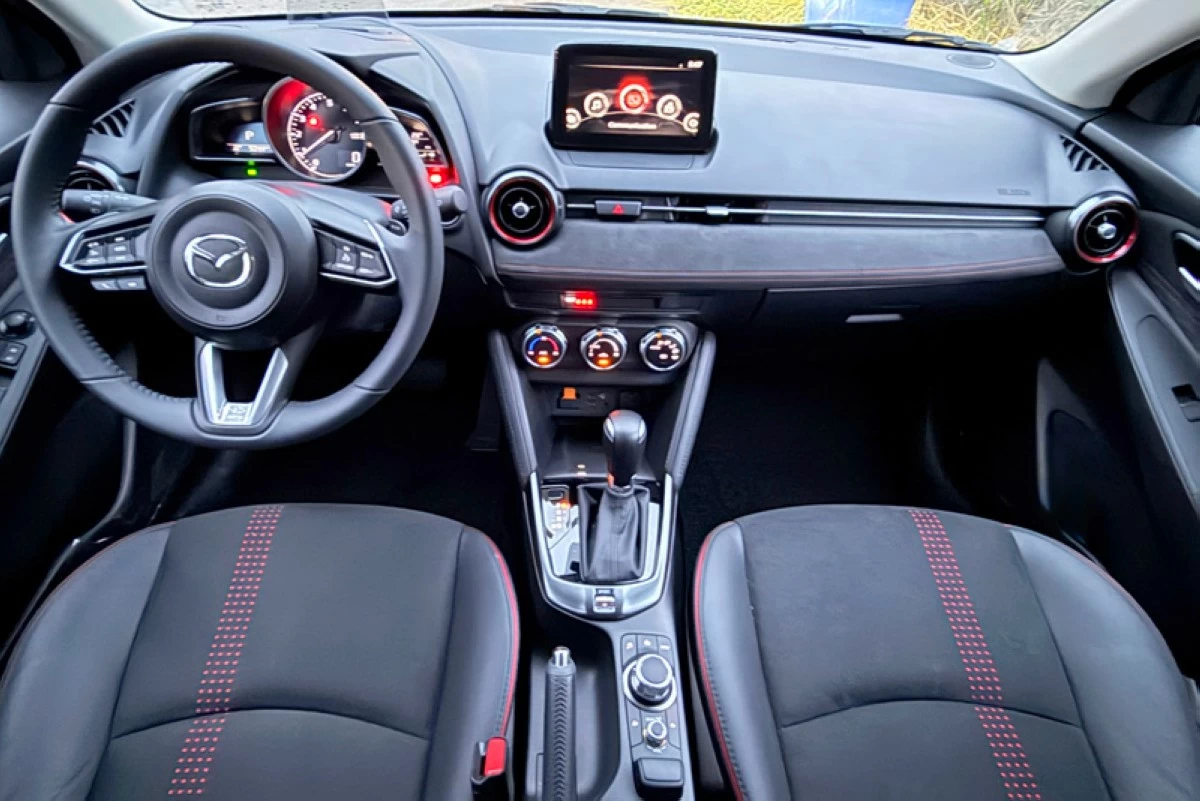
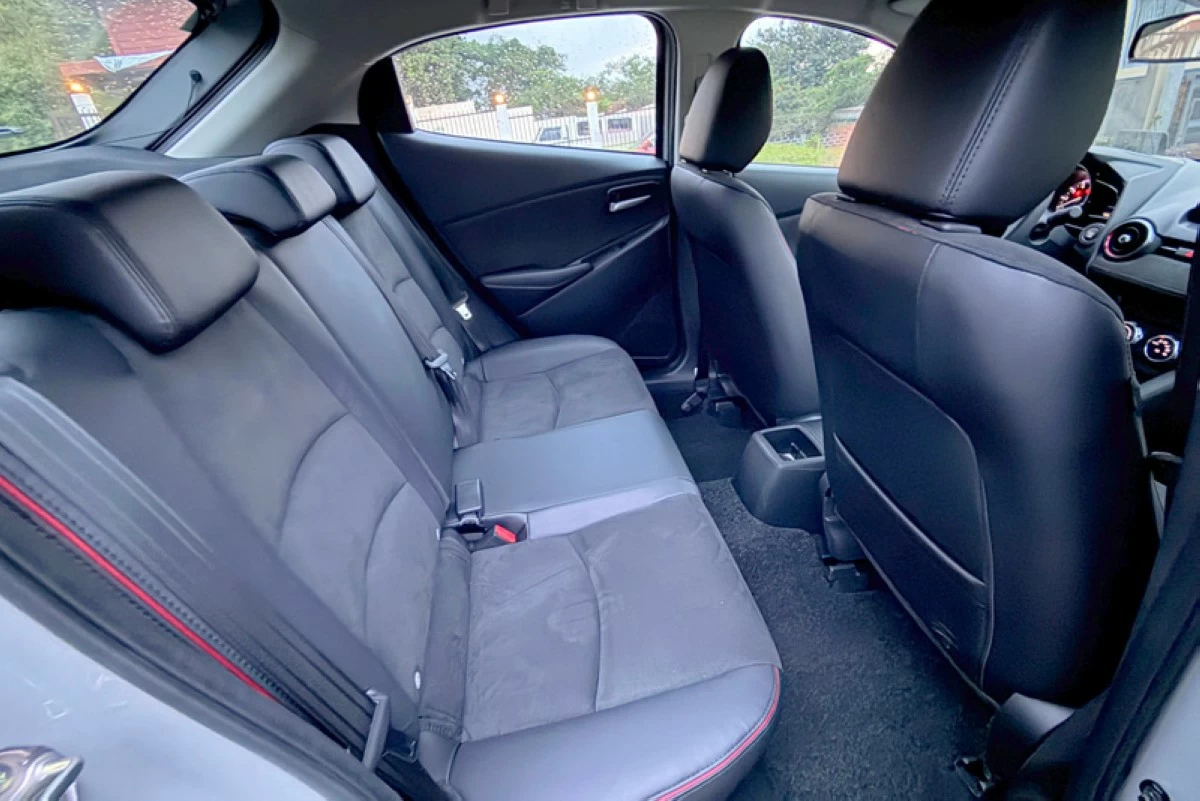
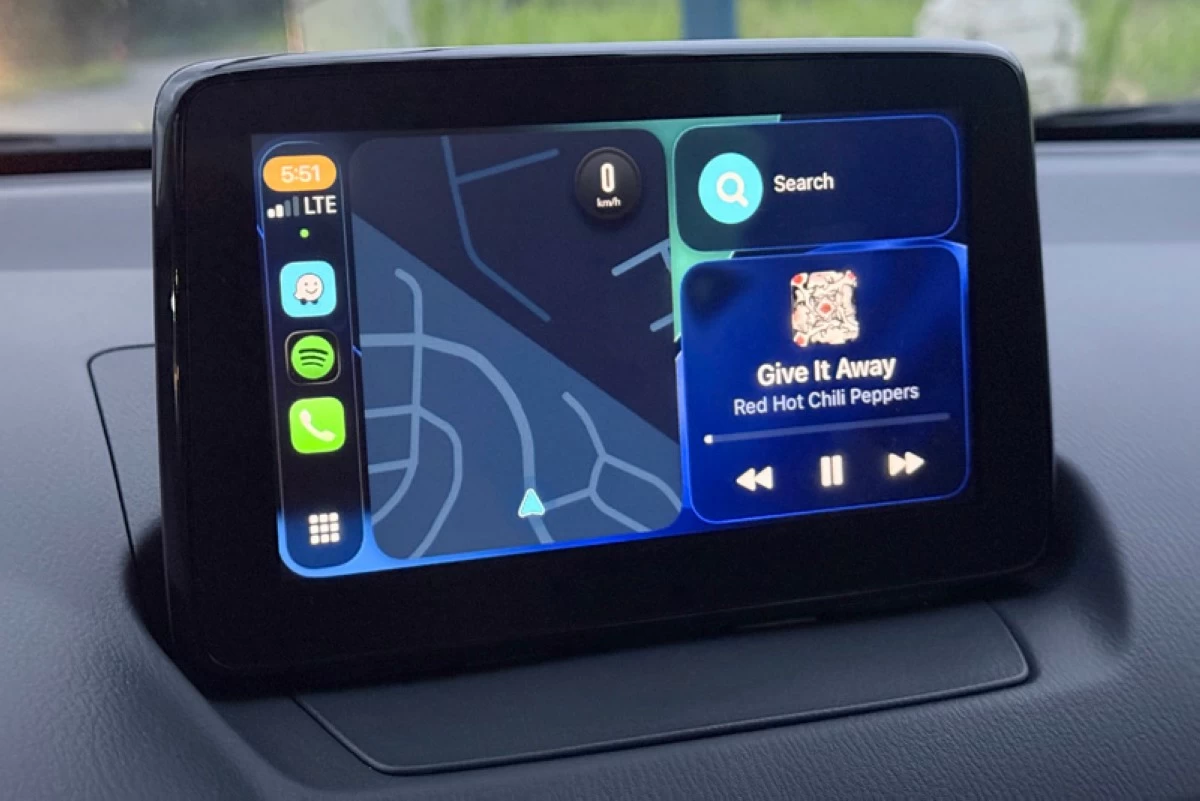
This is where the Mazda 2 is all grown up. It is dark with black suede with red trim. Seating for five are in the same materials and colors. The driver’s seat is six-way manually adjustable while the front passenger is four-way. The rear seats are 60-40 split with recline and the steering is leather wrapped with infotainment, cruise control and telephony controls. Infotainment comes from a six-speaker, seven-inch touchscreen LCD with Mazda Connect. A phone can be connected with dual USB A ports on the lower part of the center console. In front of the line of sight of the driver is a heads up display which shows both the speed and navigation cues.
Powertrain
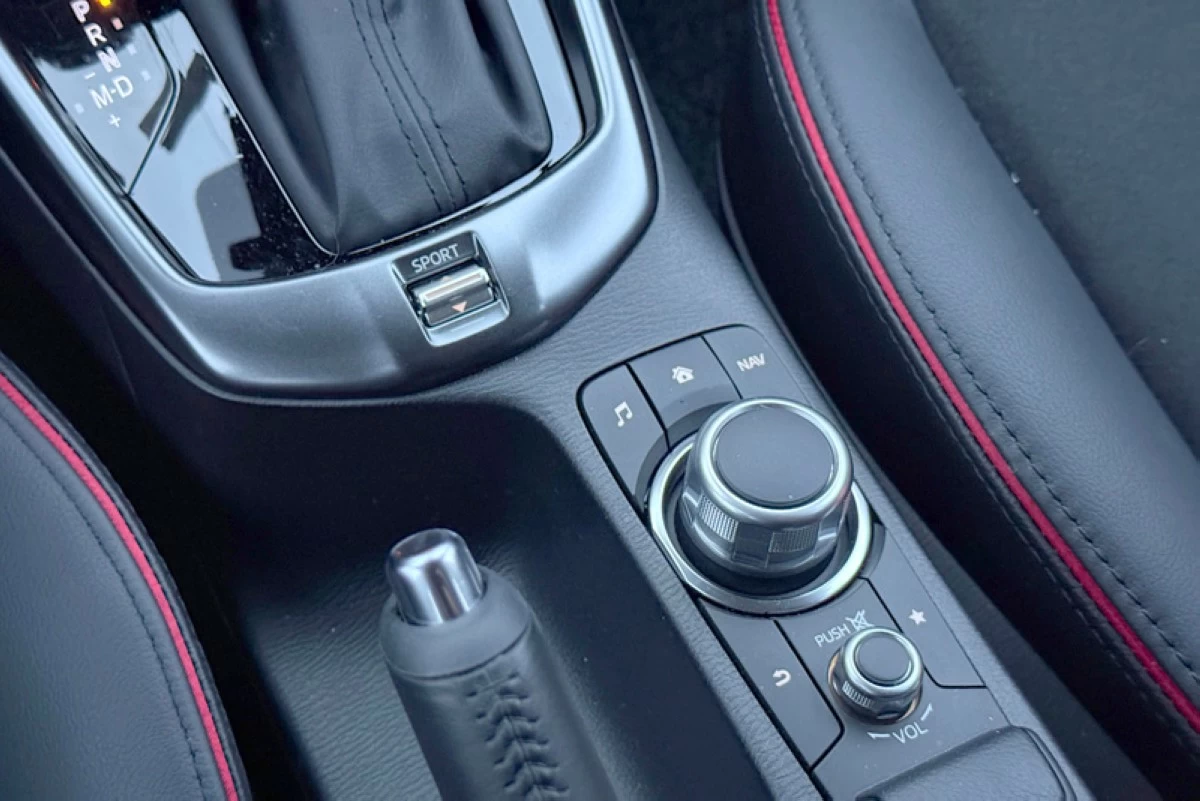
Under the hood is still the same Euro-4 compliant four-cylinder 16-valve DOHC 1.5-liter SkyActiv-G naturally aspirated engine which puts out 110-PS at 6,000 rpm with 141-Nm of torque at 4,000 rpm. This is mated to a six-speed automatic transmission with Sport Mode. The Mazda 2 is now equipped with G-Vectoring Control Plus, which helps with handling and stability.
Safety
It’s equipped with the latest i-Activsense suite of driver assist technologies – Smart City Brake Support, Forward Obstruction Warning, Lane Departure Warning, Blind Spot Monitoring and Rear Cross Traffic Alert.
Standard safety features are six airbags and ABS with EBD. It’s also equipped with hill start assist, a reverse camera, rear parking sensors, a seatbelt reminder, child lock protection, ISOFIX child seat anchors and a smart keyless entry system.
Impressions
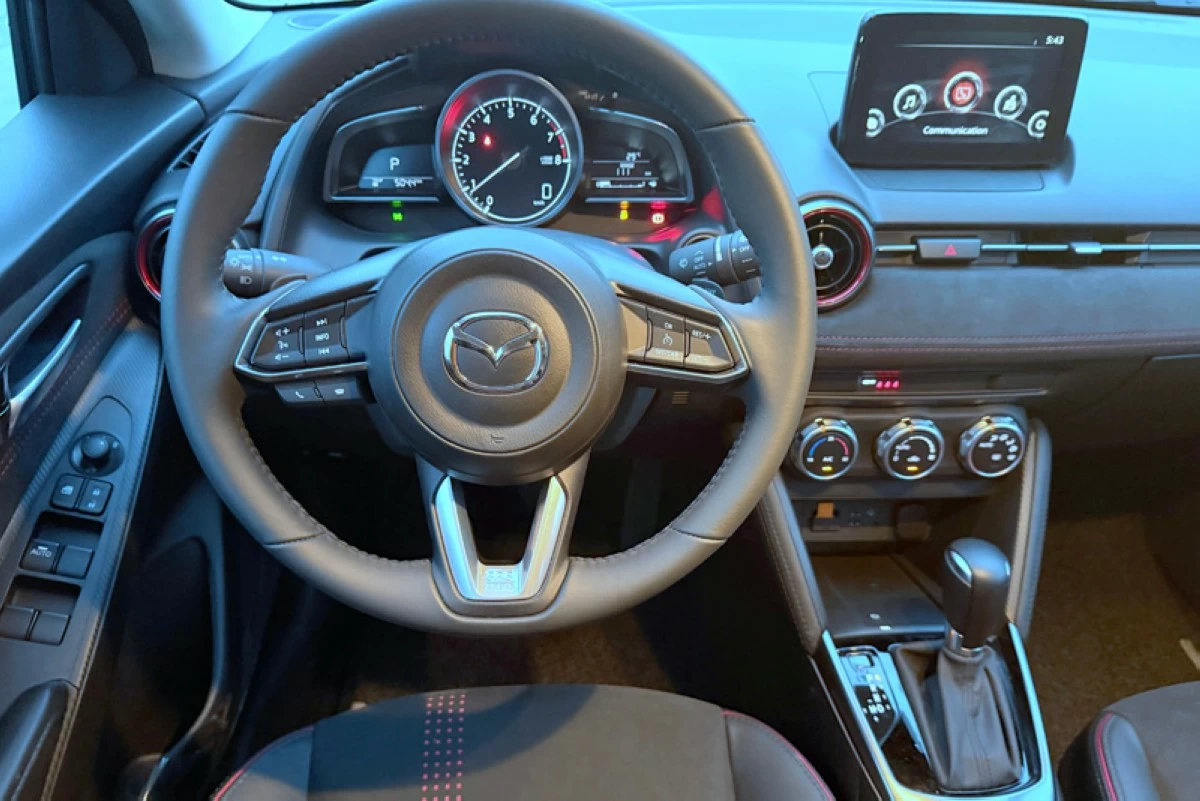
While this generation of Mazda 2 hasn't changed much since it was launched, what also hasn't changed are its driving dynamics. It’s still a fun car to drive whether in the city or the open road. Sport Mode makes driving more fun, keeping up the revs and eagerly downshifting, even more so with the paddle shifters. I rarely found the need to use them as the engine and gearbox combination was already responsive. G-Vectoring Control Plus working the background helps keep you pointed in the right direction, and this feature is not usually found in cars of this class. i-Activsense is also a reassuring addition.
Seating is comfortable for the driver and front passenger. Rear legroom is a bit tight for taller Pinoys, but that’s expected in small hatchbacks. Ergonomics are fantastic as Mazda’s engineers put everything within natural reach and exactly where you needed them to be. This may seem trivial for some, but when knobs and buttons are where you expect them to be, you can focus on your drive and really enjoy what Mazda vehicles offer.
Priced at P1.25M, it’s near the top of the price range for its class. However, price shouldn’t be the reason you consider a Mazda 2. You get it does everything you’d wish a small car could. The Mazda 2 hatchback represents a balanced choice that doesn’t compromise on driving pleasure or everyday practicality. It stays true to Mazda’s DNA. With reports of the Mazda 2 being discontinued soon, this might be a good time get one before its gone.

Related Tags

Mazda Philippines
ADVERTISEMENT
.most-popular .layout-ratio{ padding-bottom: 79.13%; } @media (min-width: 768px) and (max-width: 1024px) { .widget-title { font-size: 15px !important; } }

{{ articles_filter_1561_widget.title }}

.most-popular .layout-ratio{ padding-bottom: 79.13%; } @media (min-width: 768px) and (max-width: 1024px) { .widget-title { font-size: 15px !important; } }

{{ articles_filter_1562_widget.title }}

.most-popular .layout-ratio{ padding-bottom: 79.13%; } @media (min-width: 768px) and (max-width: 1024px) { .widget-title { font-size: 15px !important; } }

{{ articles_filter_1563_widget.title }}

{{ articles_filter_1564_widget.title }}

.mb-article-details { position: relative; } .mb-article-details .article-body-preview, .mb-article-details .article-body-summary{ font-size: 17px; line-height: 30px; font-family: "Libre Caslon Text", serif; color: #000; } .mb-article-details .article-body-preview iframe , .mb-article-details .article-body-summary iframe{ width: 100%; margin: auto; } .read-more-background { background: linear-gradient(180deg, color(display-p3 1.000 1.000 1.000 / 0) 13.75%, color(display-p3 1.000 1.000 1.000 / 0.8) 30.79%, color(display-p3 1.000 1.000 1.000) 72.5%); position: absolute; height: 200px; width: 100%; bottom: 0; display: flex; justify-content: center; align-items: center; padding: 0; } .read-more-background a{ color: #000; } .read-more-btn { padding: 17px 45px; font-family: Inter; font-weight: 700; font-size: 18px; line-height: 16px; text-align: center; vertical-align: middle; border: 1px solid black; background-color: white; } .hidden { display: none; }
function initializeAllSwipers() { // Get all hidden inputs with cms_article_id document.querySelectorAll('[id^="cms_article_id_"]').forEach(function (input) { const cmsArticleId = input.value; const articleSelector = '#article-' + cmsArticleId + ' .body_images'; const swiperElement = document.querySelector(articleSelector); if (swiperElement && !swiperElement.classList.contains('swiper-initialized')) { new Swiper(articleSelector, { loop: true, pagination: false, navigation: { nextEl: '#article-' + cmsArticleId + ' .swiper-button-next', prevEl: '#article-' + cmsArticleId + ' .swiper-button-prev', }, }); } }); } setTimeout(initializeAllSwipers, 3000); const intersectionObserver = new IntersectionObserver( (entries) => { entries.forEach((entry) => { if (entry.isIntersecting) { const newUrl = entry.target.getAttribute("data-url"); if (newUrl) { history.pushState(null, null, newUrl); let article = entry.target; // Extract metadata const author = article.querySelector('.author-section').textContent.replace('By', '').trim(); const section = article.querySelector('.section-info ').textContent.replace(' ', ' '); const title = article.querySelector('.article-title h1').textContent; // Parse URL for Chartbeat path format const parsedUrl = new URL(newUrl, window.location.origin); const cleanUrl = parsedUrl.host + parsedUrl.pathname; // Update Chartbeat configuration if (typeof window._sf_async_config !== 'undefined') { window._sf_async_config.path = cleanUrl; window._sf_async_config.sections = section; window._sf_async_config.authors = author; } // Track virtual page view with Chartbeat if (typeof pSUPERFLY !== 'undefined' && typeof pSUPERFLY.virtualPage === 'function') { try { pSUPERFLY.virtualPage({ path: cleanUrl, title: title, sections: section, authors: author }); } catch (error) { console.error('ping error', error); } } // Optional: Update document title if (title && title !== document.title) { document.title = title; } } } }); }, { threshold: 0.1 } ); function showArticleBody(button) { const article = button.closest("article"); const summary = article.querySelector(".article-body-summary"); const body = article.querySelector(".article-body-preview"); const readMoreSection = article.querySelector(".read-more-background"); // Hide summary and read-more section summary.style.display = "none"; readMoreSection.style.display = "none"; // Show the full article body body.classList.remove("hidden"); } document.addEventListener("DOMContentLoaded", () => { let loadCount = 0; // Track how many times articles are loaded const offset = [1, 2, 3, 4, 5, 6, 7, 8, 9, 10]; // Offset values const currentUrl = window.location.pathname.substring(1); let isLoading = false; // Prevent multiple calls if (!currentUrl) { console.log("Current URL is invalid."); return; } const sentinel = document.getElementById("load-more-sentinel"); if (!sentinel) { console.log("Sentinel element not found."); return; } function isSentinelVisible() { const rect = sentinel.getBoundingClientRect(); return ( rect.top < window.innerHeight && rect.bottom >= 0 ); } function onScroll() { if (isLoading) return; if (isSentinelVisible()) { if (loadCount >= offset.length) { console.log("Maximum load attempts reached."); window.removeEventListener("scroll", onScroll); return; } isLoading = true; const currentOffset = offset[loadCount]; window.loadMoreItems().then(() => { let article = document.querySelector('#widget_1690 > div:nth-last-of-type(2) article'); intersectionObserver.observe(article) loadCount++; }).catch(error => { console.error("Error loading more items:", error); }).finally(() => { isLoading = false; }); } } window.addEventListener("scroll", onScroll); });

Sign up by email to receive news.