






 Business
Trade & Industry
Philippine exports rise in January despite slower momentum, falling imports
Business
Trade & Industry
Philippine exports rise in January despite slower momentum, falling imports
Philippine exports rise in January despite slower momentum, falling imports


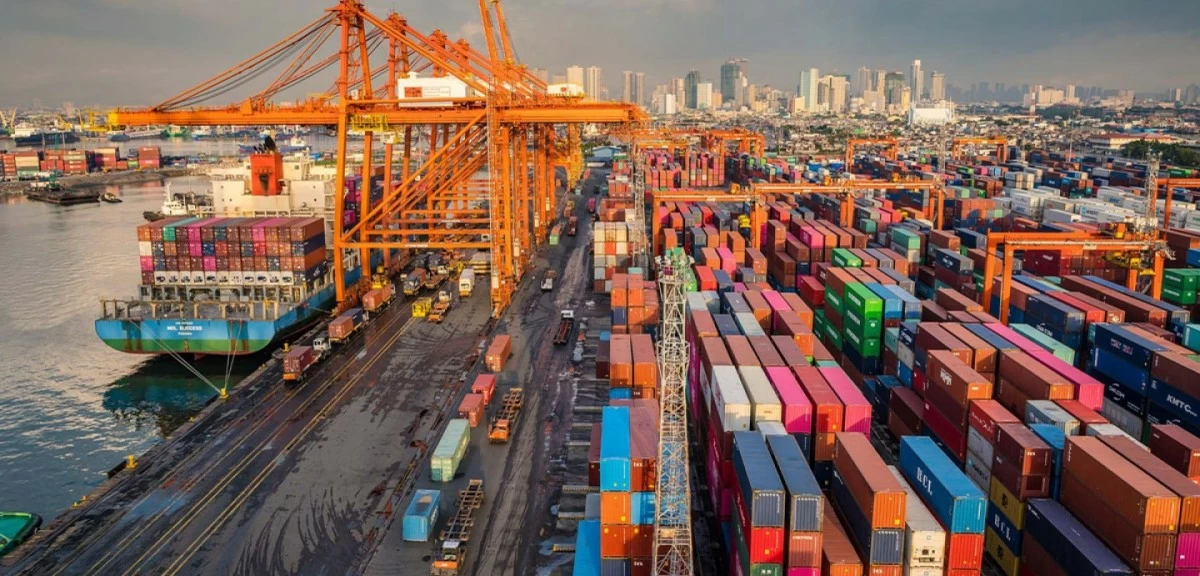
Philippine goods exports continued to grow in January, although at a slower pace than a year ago when exporters front-loaded shipments ahead of threats of higher United States (US) tariffs, while imports declined after holiday-season demand eased.
The latest preliminary Philippine Statistics Authority (PSA) data on Friday, Feb. 27, showed that merchandise exports grew 7.9 percent year-on-year to $7.09 billion at the start of the year, a moderated expansion compared with the 9.6-percent growth rate in January 2025 and the 23.9-percent jump in December last year. Goods exports had posted double-digit growth each month from September to December 2025.
In terms of freight-on-board (FOB) value, sales of Philippine-made goods overseas in January hit a three-month high since the record $7.45 billion in monthly export revenues posted in October last year.
In 2025, the Philippines achieved a historic-high annual goods export value of $84.44 billion despite uncertainties wrought by US President Donald Trump’s reciprocal tariff spree, which ultimately slapped a 19-percent duty on Philippine products imported by America.
As the US Supreme Court recently declared Trump’s sweeping enforcement of reciprocal tariffs unconstitutional, the US president has set a global rate of up to 15 percent, which Philippine economic officials and exporter groups said could benefit exports bound for the US.
In a Feb. 25 report, think tank Oxford Economics tagged the Philippines among the winners from the US Supreme Court ruling nullifying tariffs invoked under the International Emergency Economic Powers Act (IEEPA) and Trump replacing them with Section 122 of the Trade Act of 1974, imposing at least a 10-percent rate over the next five months.
From an effective tariff rate of 12.3 percent, active tariffs on Philippine exports to the US are seen declining by 1.1 percentage points (ppts) to 11.2 percent under Section 122, estimates by Oxford Economics chief global economist Ryan Sweet showed.
The US remained the Philippines’ No. 1 export market in January, with shipments growing 3.1 percent year-on-year to $1.16 billion, accounting for 16.4 percent of total exports that month, although smaller than the 17.2-percent share a year ago, PSA data showed.
On the other hand, the value of goods imported by the Philippines shrank by 3.1 percent year-on-year to $11.14 billion in January, reversing the 11.2-percent climb a year ago and halting two consecutive months of growth.
China, which is consistently the top source of Philippine imports, saw January sales contract by 1.7 percent year-on-year to $3.26 billion, even as the share of Chinese products in total import value inched up to 29.2 percent from 28.8 percent in January last year.
The Philippines is a net importer of the products it consumes, hence sustaining the trade-in-goods deficit in January, which nonetheless shrank by 17.8 percent year-on-year to a three-month high of $4.05 billion.
Total merchandise trade, or exports and imports combined, inched up by 0.9 percent year-on-year to $18.24 billion in January.
As the Philippines moves to expand markets to mitigate risks from US tariffs, PSA data showed that exports to neighboring Hong Kong, China, South Korea, Taiwan, Singapore, and Vietnam grew faster than shipments to America in January, although sales to Japan, Thailand, Malaysia, and India slipped.
Exports to European countries Germany and the Netherlands also recorded double-digit growth at the start of the year.
As for imports, the value of South Korean products entering the Philippines surged 44.5 percent year-on-year to $1.25 billion in January, a far second place to China. South Korea bucked the trend among most of the country’s top 10 import sources that month, eight of which posted declines, while Japan eked out only one-percent growth.
Last year’s total imports amounting to $134.07 billion were the second highest on record, only below the FOB value in 2022 when the economy reopened from the most stringent Covid-19 lockdown restrictions.
The Cabinet-level Development Budget Coordination Committee (DBCC) targets two-percent growth for both goods exports and imports this year.
Oxford Economics senior economist Sheana Yue said in a Feb. 27 report that while Asian goods exports strengthened in January, “trend measures suggest... momentum is unlikely to sustain” despite starting 2026 on what she described as firmer footing.
“Temporary US tariff relief lowers near-term downside risks but does little to lift the medium-term outlook amid policy uncertainty and the risk of reinstatement. Narrowing intra-Asia tariff differentials should reinforce trade rotation toward emerging Asia, while a still strong albeit cooling artificial intelligence (AI) cycle would provide a cushion against broader export softening,” Yue said.
Locally, Philippine firms, including exporters, are facing higher production cost inflation, with January’s producer price index (PPI) for manufacturing soaring to 1.5 percent year-on-year, which separate PSA data showed was the highest since May 2023’s 2.2 percent.
The PSA said the increase in January PPI was driven mainly by higher prices in food manufacturing, which accounted for the largest share of the uptick.
Computer, electronic, and optical products manufacturing was the biggest contributor to overall rise in manufacturing PPI, followed by coke and refined petroleum products, and food manufacturing, the PSA said.