







Philippine businesses shake off the gloom, optimism surges
By Derco Rosal
Published Feb 27, 2026 03:41 pm


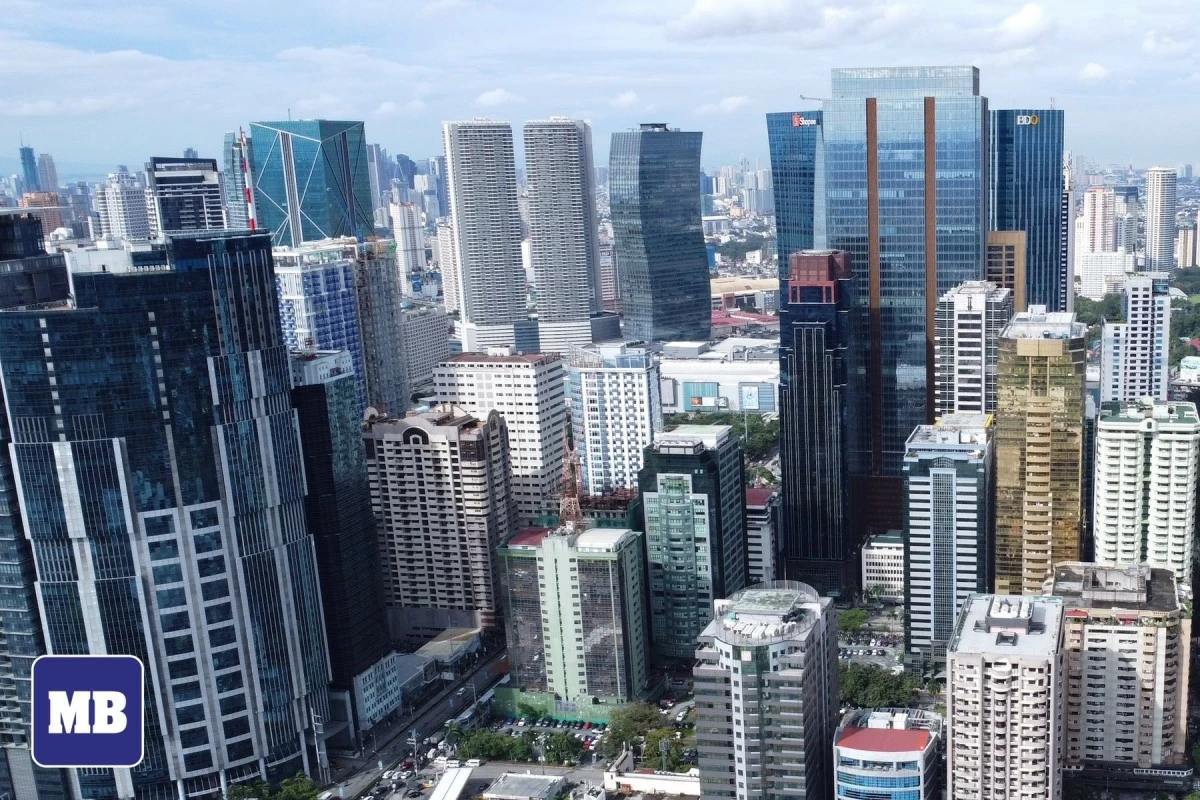
High-rise buildings in the Ortigas Business Center are seen on Wednesday, Nov. 5. In a report by Bloomberg, the Philippine Stock Exchange Index has dropped 20 percent over the past decade, ranking as the worst performer among major global benchmarks. In contrast, Asia-Pacific stocks climbed 72 percent, while Indonesia’s Jakarta Composite Index soared 82 percent. Photo by Santi San Juan | MB
Philippine businesses are shaking off the gloom that defined the latter half of last year, with sentiment turning positive in January and expectations for growth surging through 2027.
According to the Bangko Sentral ng Pilipinas’ (BSP) business expectations survey (BES), businesses were upbeat in the first month of the year, as reflected in the positive confidence index (CI) of nearly one percent.
Building on the January mood, the survey showed that the business outlook for the next quarter and for 2027 was even more optimistic, garnering indices of 33.3 percent and 38.6 percent, respectively.
A positive CI indicates that more respondents are optimistic than pessimistic or anticipate “easy” conditions regarding the business outlook. Meanwhile, a negative index signals the opposite, as more firms are pessimistic or expect “tight” conditions, such as restricted credit access.
Firms were more upbeat for the succeeding periods as they expect “stronger consumer demand and sales for specific goods and services during the summer season and for most products for the rest of the year.”
In addition, firms were banking on an improved economy following successive slumps, and investment prospects were propped up by “recovering government spending, better governance, and stronger investor confidence.”
While firms were generally optimistic in January, they expected a tight cash position and limited access to credit. Both indices were negative, with the financial condition index recording -19.2 percent.
“Respondents cited stiff domestic competition, insufficient demand, and high interest rates as major constraints to business activities in January 2026,” the survey report published on Friday, Feb. 27, read.
On prices, businesses expected inflation to average 2.2 percent in January, 2.4 percent in April, and 2.6 percent through 2027. These expectations fall within the central bank’s target range of two to four percent.
For local businesses, the peso is expected to weaken to 58.88 per United States (US) dollar in early 2026 and 58.99 over the next year.
With favorable conditions expected ahead, businesses could onboard more staff over the next quarter and year, as employment indices were 11.3 percent and 23.3 percent, respectively.
Moreover, 14.1 percent of businesses have expansion plans for April, while a fourth are planning to grow over the next year.