






 Business
Trade & Industry
January meat imports surge past 140,000 MT as supply gap persists
Business
Trade & Industry
January meat imports surge past 140,000 MT as supply gap persists
January meat imports surge past 140,000 MT as supply gap persists


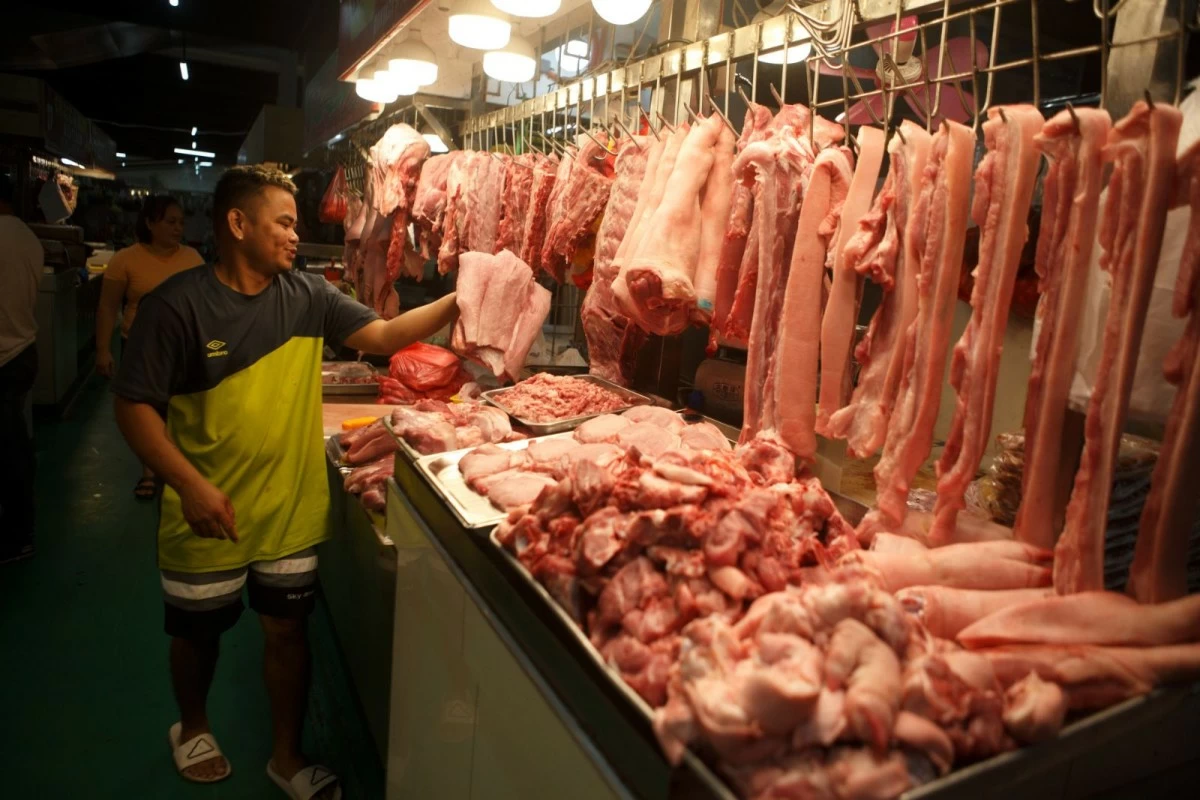
The country’s meat imports rose to over 140,000 metric tons (MT) in January as traders resorted to purchasing meat products abroad to help plug the gap between domestic demand and production.
Based on the latest data from the Bureau of Animal Industry (BAI), meat imports increased four percent to 143,842 MT last month from nearly 138,000 MT in January last year.
Pork products accounted for just over half of total meat import volume last month at 74,791 MT, up six percent from 70,449 MT a year earlier.
Pork cuts led all shipments with 30,554 MT, or 41 percent of total, followed by offal at 21,551 MT, and bellies at 12,678 MT.
Importation of pork has been on an upswing in recent years as local pork production continues to fall behind growing demand for the commodity.
Data from the Philippine Statistics Authority (PSA) showed that the country’s hog inventory stood at 8.79 million heads by the end of 2025, a marginal increase from 8.75 million heads in 2024.
However, the figure remains far below the previous swine population of around 14 million heads before the spread of African swine fever (ASF), which remains a major challenge.
With limited supply, average prices of local pork cuts have remained elevated, with pork liempo (belly) fetching ₱381.97 per kilo, while local pigue (ham) sells for ₱331.25 per kilo as of Feb. 27.
Sought for comment, Philippine Amalgamated Supermarkets Association Inc. (Pagasa) president Steven Cua said the surge in importation has forced some raisers to scale back production.
Cua said these raisers have been urging the government to step up efforts to help the domestic industry grow, as well as limit reliance on imports.
PSA data also showed that the country’s chicken inventory reached 217.23 million birds by the end of last year, a 5.2-percent increase from the previous year’s count of 206.43 million.
Despite this, BAI data noted that chicken imports increased by nearly nine percent in January to 49,701 MT from 45,631 MT in the same month last year.
Imports of mechanically deboned meat (MDM), which is commonly used to produce processed foods, were the leading variety, with shipments reaching 24,226 MT, or 49 percent of total chicken import volume.
Beef imports dropped by 23 percent to 15,233 MT last month from 19,895 MT a year earlier. This was despite the country’s cattle population declining to 2.51 million heads from 2.55 million, according to the PSA.
In terms of buffalo meat, the country’s imports surged to 3,471 MT in January from 1,932 MT a year ago. For other protein sources, duck imports stood at 388 MT, lamb imports at 74 MT, while turkey imports reached just over one MT last month.
According to BAI, Brazil was the country’s main source of imported meat in January, supplying 66,314 MT, or 46 percent of total volume. This was followed by the United States (US) with 18,494 MT, and Spain with 13,333 MT.