






Manila Bulletin
 Philippines
National
Unfair to call House anti-political dynasty bill 'weak', says Adiong
Philippines
National
Unfair to call House anti-political dynasty bill 'weak', says Adiong
Philippines
National
Unfair to call House anti-political dynasty bill 'weak', says Adiong
Unfair to call House anti-political dynasty bill 'weak', says Adiong
Published Feb 26, 2026 12:24 pm


At A Glance
- Lanao del Sur 1st district Rep. Zia Alonto Adiong has rejected claims that the version of the Anti-Political Dynasty Law being pushed by House Speaker Faustino "Bojie" Dy III and Majority Leader Sandro Marcos is "weak".
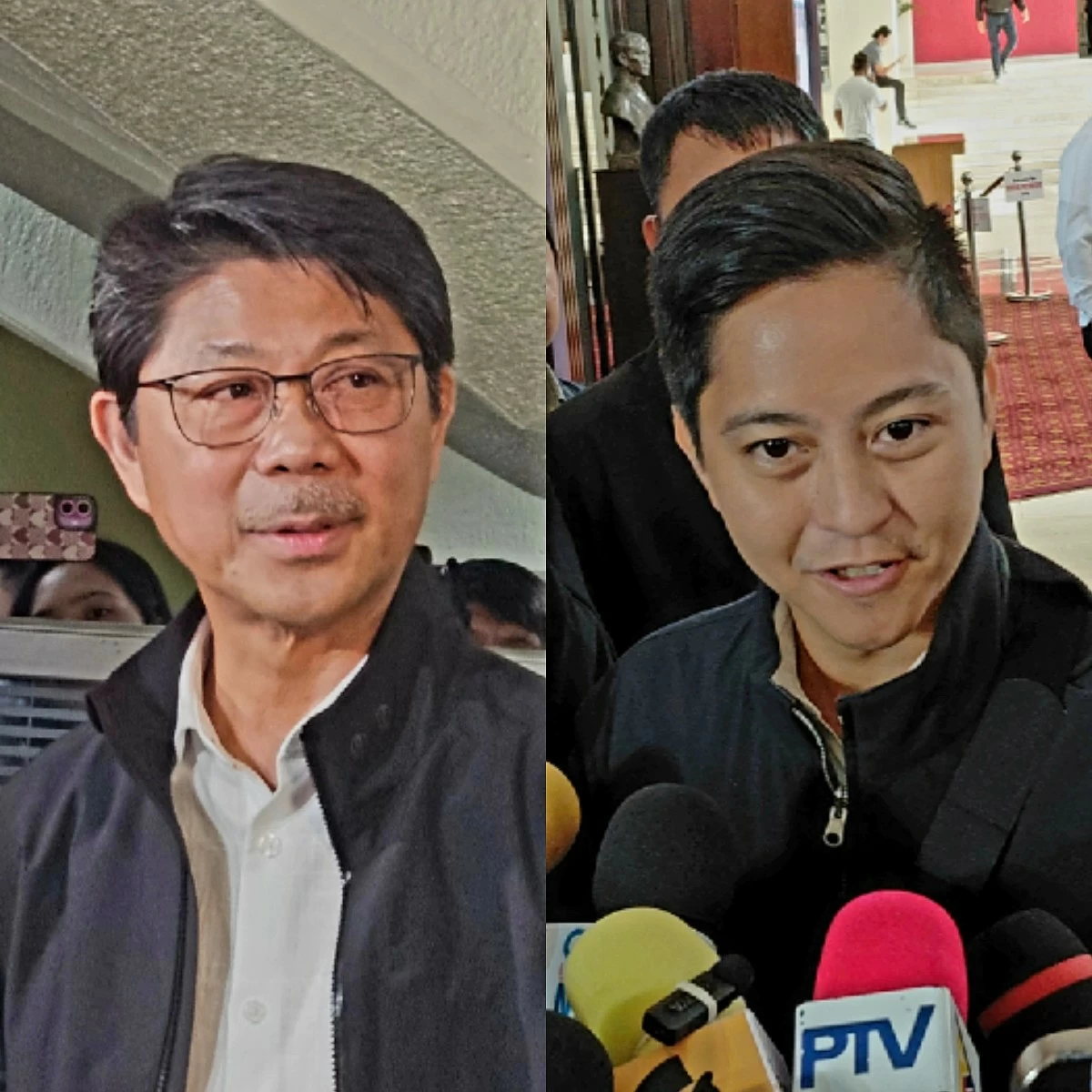
House Speaker Faustino "Bojie" Dy III (left), Majority Leader Sandro Marcos (Ellson Quismorio/ MANILA BULLETIN)
Lanao del Sur 1st district Rep. Zia Alonto Adiong has rejected claims that the version of the Anti-Political Dynasty Law being pushed by House Speaker Faustino "Bojie" Dy III and Majority Leader Sandro Marcos is "weak".
"I think it's not fair to label it weak," Adiong said in a press conference Wednesday, Feb. 25, following comments from so-called experts that House Bill (HB) No. 6671 was no watered down.
"We don't have any point of reference to say at the very least that it is going to be a weak law. So, titignan natin (we will see), what we are actually trying to achieve here is to have an anti-political dynasty [law] that will be implementable," he said.
"In the first place, there's no anti-political dynasty measure as of today that implements in the national level," added Adiong, chairman of House Committee on Suffrage and Electoral Reforms.
At any rate, Adiong said there are two existing laws of a smaller scope that can be used as basis for the long-sought Anti-Political Dynasty Law. These are the Sangguniang Kabataan (SK) law, and the Bangsamoro Autonomous Region in Muslim Mindanao (BARMM) electoral code, which both provide for a second degree ban on election candidates from political families.
"So, our basis is there are already existing policies, although it is not being implemented nationwide," he noted.
The Adiong panel has been busy deliberating on the 24 anti-political dynasty bills that has been referred to it since the start of the current 20th Congress.
Filed by Dy of Isabela's 6th district, and Marcos of Ilocos Norte's 1st district, HB No.6671 had earlier been designated as a the working draft in consolidating the 24 measures.
HB No.6671, now co-authored by 144 House members, defines a political dynasty as the concentration or dominance of elective political power by persons related to one another.
The measure covers all elective posts from the national level down to the barangay, including President, Vice President, Senator, members of the House of Representatives, governors, mayors and barangay officials.
Under the proposal, spouses and covered relatives would be barred from simultaneously holding elective positions within the same political jurisdiction, preventing the consolidation of power at the same national, provincial, city, municipal, legislative district or barangay level.
Adiong clarified that the bill does not legitimize political dynasties but seeks to prevent excessive concentration of power in one locality.
“No, it’s not really about that, it’s actually balancing it out,” he said when asked about concerns that relatives may still run in different districts.
“We cannot really penalize the entire family simply because they share the same DNA and they cannot be allowed for example to serve different localities in different positions all at the same time,” he explained.
He stressed that the core issue is power concentration within a single jurisdiction. “But we have to limit because the issue now is the concentration of power, ‘di ba? That’s essentially what a political dynasty is about.”