







The trucks behind every meal
Published Feb 26, 2026 12:04 am
|
Updated Feb 25, 2026 04:35 pm


DRIVING THOUGHTS
The true measure of a nation’s food security is not only found in its farms or supermarkets, but in the unseen links that connect them.
Drive along any major highway at dawn and you will see them — long rows of hardworking trucks moving quietly with the country’s daily nourishment in tow. Crates of vegetables harvested just hours earlier. Live poultry bound for processing plants. Refrigerated vans carrying dressed meat to distribution hubs. These vehicles are not merely part of daily traffic; they are part of the food chain itself.
In our country , where farms are scattered across islands and urban markets are concentrated in key cities, logistics is the key. The distance between farm gate and family table is not just measured in kilometers, but in timing, temperature, and reliability. And much of that responsibility rests on commercial workhorses such as those produced by Isuzu Philippines Corporation. Recently, Isuzu Philippines extended its remarkable run as the country’s No. 1 truck brand for the 26th consecutive year, claiming the coveted “Triple Crown” by leading sales in all three major truck categories — light-, medium-, and heavy-duty — in 2025.
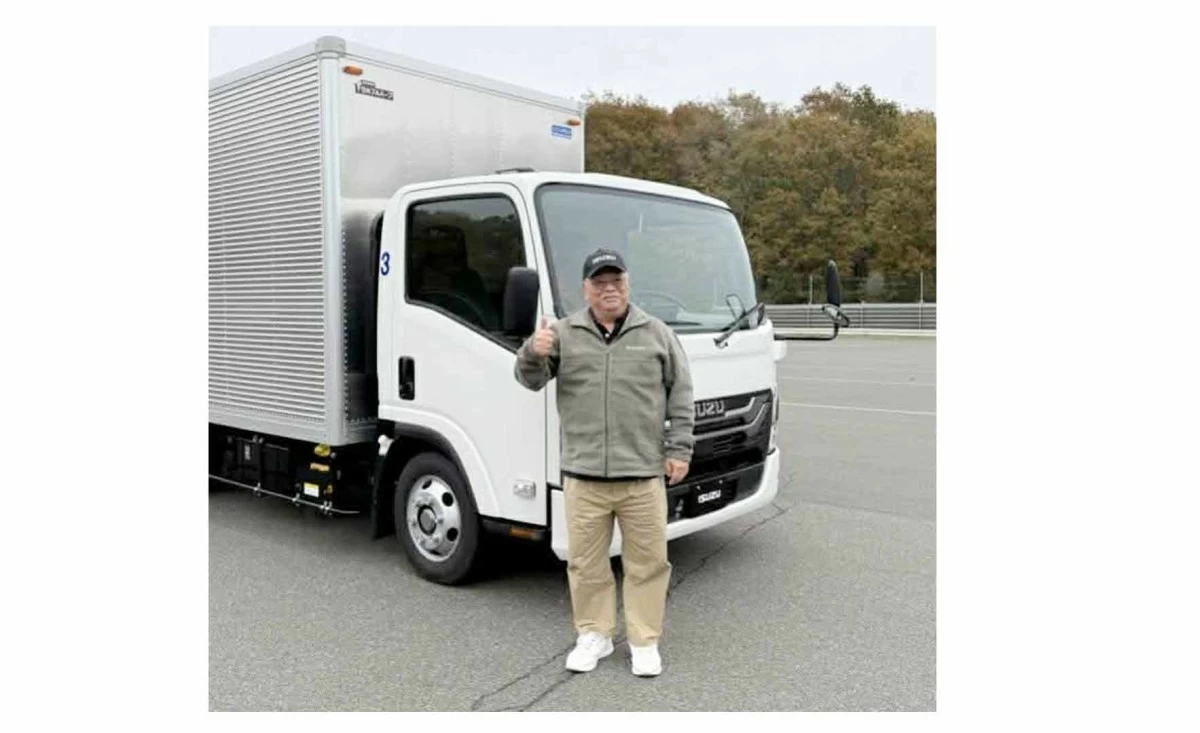
ALFONSO CO OF BOUNTY PLUS INC.
The food journey begins long before products are neatly packed in supermarkets. Fresh vegetables harvested at dawn must reach consolidation hubs quickly to preserve quality. Poultry and livestock require carefully managed transport to minimize stress and ensure animal welfare.
In an archipelago where road conditions vary from paved expressways to rugged backroads, durability matters. Operators often cite fuel efficiency and ease of maintenance as deciding factors, especially in a business where margins are tight and delivery windows unforgiving.
Once products reach processing facilities, the stakes rise.
These trucks are the unseen links that connect our food from the farms to the consumers. On a very cold day in Hokkaido months ago, I met Mr. Alfonso Co of Bounty Plus Inc. at the Isuzu Hokkaido Proving Grounds where he was part of a group of representatives of Philippine companies with Isuzu trucks in their fleets attending a seminar on logistics, efficient driving, and electric trucks.
In an interesting conversation, Mr. Co started the story of our food links at the farm level where produce must move quickly after harvest.
He related how poultry must be transported with proper ventilation to minimize stress and protect quality. In the Philippines, a tropical country, that is done either in the morning or the evening, to lessen the stress from the heat, he said.
“Normally we transport the chicken very early or late at the night. So it's cooler. The transport of the live birds needs a certain time to reach the dressing plants or the hot weather might kill the birds," he explained.
After the chickens are dressed, they need to be carried by another special truck to the supermarket. Meanwhile, a specialized refrigerated truck carries the fresh chicken products to the markets. Then there are the trucks — and training for drivers — for other processes of food production, like the delivery of eggs, and ready-to-cook food. Even before all of that, there are the trucks that build the farms of the food company. And so Mr. Co took us through the journey of food on the wheels of hard-working trucks.
I realized that the truck is not just a container — it is an environment.
Transportation is where consistency is won or lost. If you cannot move products safely, efficiently, and on time, everything upstream is compromised, he said.
When our products leave the facility, the responsibility does not end. The truck becomes part of our quality control system. Temperature has to be exact. Delivery schedules have to be precise and are monitored by GPS. There is very little margin for error, he explained.
Refrigerated vans mounted on medium- and heavy-duty chassis are calibrated to maintain strict temperatures. Routinely, backup systems, preventive maintenance schedules, and real-time tracking are built into daily operations.
The final stage — from processing plant to supermarket distribution centers, wet markets, and restaurant commissaries — requires another layer of specialization.
Urban deliveries rely on smaller refrigerated trucks that can thread through narrow streets and tight loading bays. Larger refrigerated units, meanwhile, service regional distribution hubs, moving bulk shipments efficiently and safely. It is a tiered fleet strategy, mirroring the layered structure of the food industry itself.
Fuel efficiency, again, plays a decisive role. Rising transport costs ripple directly into food pricing, making every kilometer optimized, every hour saved, critically important.
Trucks are the unsung custodians of food security. They bridge geography. They buffer against delays. They preserve temperature and timing. They ensure that what begins as a harvest at sunrise can become dinner by evening.
From farm gate to family table, the journey of nourishment depends on wheels as much as it does on soil.
And the next time we sit down to a simple meal, it may be worth remembering that long before food reached our plates, it traveled — carefully, purposefully, and reliably — across the country, carried by the trucks that keep the nation fed. (Email: [email protected])