






Manila Bulletin
 Environment and Sustainability
Inside Hive Modular's sustainable vision for Philippine housing
Environment and Sustainability
Inside Hive Modular's sustainable vision for Philippine housing
Environment and Sustainability
Inside Hive Modular's sustainable vision for Philippine housing
Inside Hive Modular's sustainable vision for Philippine housing
Published Feb 26, 2026 05:13 pm


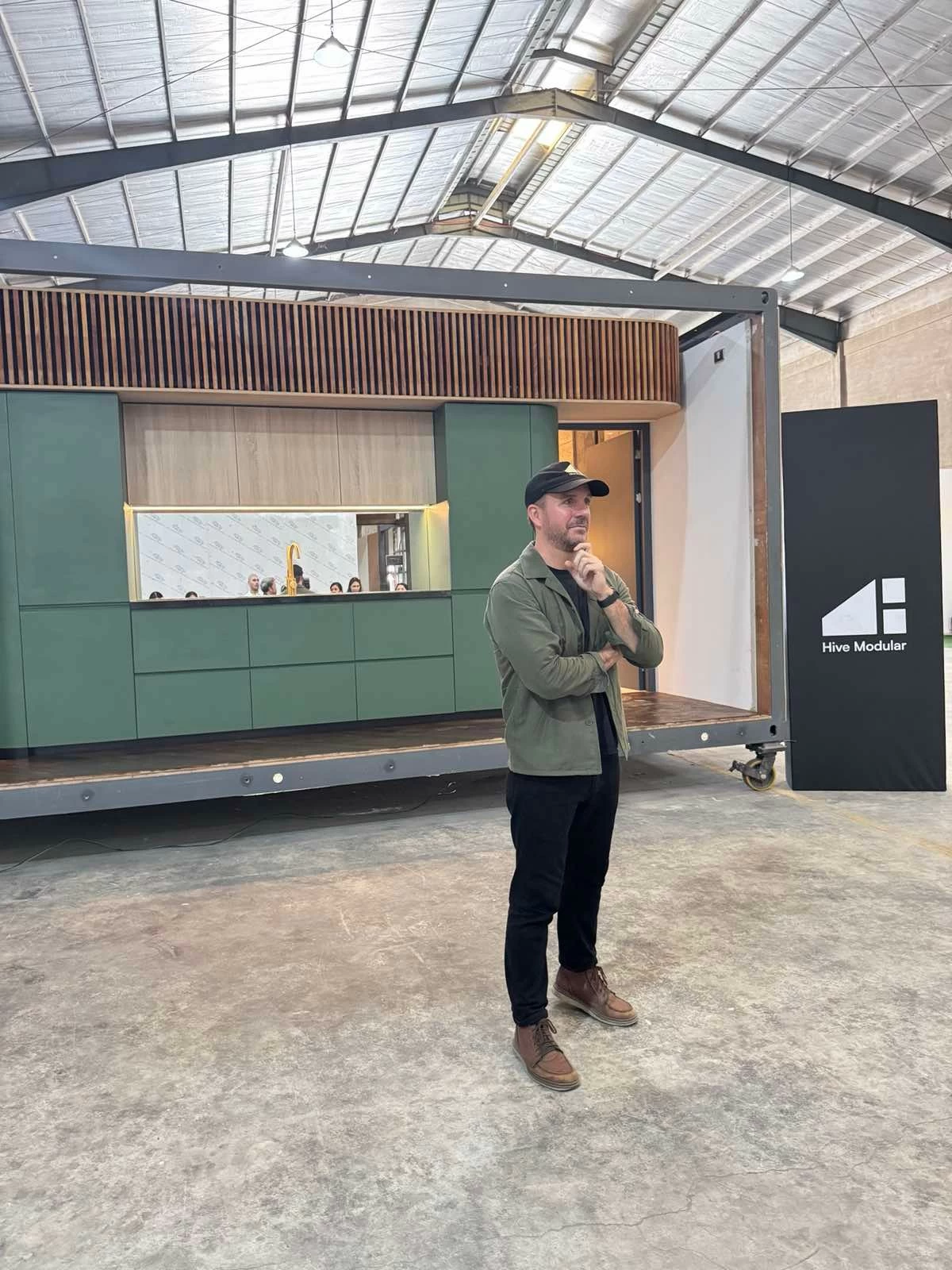
Tagged ‘the future of housing,’ Hive Modular’s sustainable homes in Silang, Cavite impressed us during a tour with CEO John Avrett.
Four years ago, we sent an inquiry to Hive Modular out of pure curiosity.
At the time, modular homes still felt unfamiliar in the Philippine setting. We were used to concrete, rebar, hollow blocks — structures that rise slowly from the ground up, often exposed to weeks of rain and delays before they even take shape. But Hive’s homes looked different. Clean lines. Contemporary finishes. And more than anything, they appeared solid — not just stylish, but resilient.
Last week, that curiosity came full circle.
In Silang, Cavite, inside a high-ceiling manufacturing warehouse humming with quiet precision, a fully built home was nearly ready to leave the facility. Not months from now. Not “under construction.” It was scheduled to be shipped out in two days.
Unlike traditional housing developments, where construction begins on-site and unfolds under unpredictable weather conditions, Hive Modular builds its homes in a controlled factory environment. The shift may sound simple, but the environmental implications are significant.
Building inside a warehouse dramatically reduces material waste. Measurements are precise. Off-cuts are minimized. Inventory is controlled. Rain doesn’t damage exposed materials mid-construction. There’s less rework, fewer discarded supplies, and tighter quality control. In an industry known globally for producing enormous amounts of waste, efficiency alone becomes a sustainability strategy.
But sustainability, especially in the Philippines, is not just about waste reduction. It is about climate adaptation.
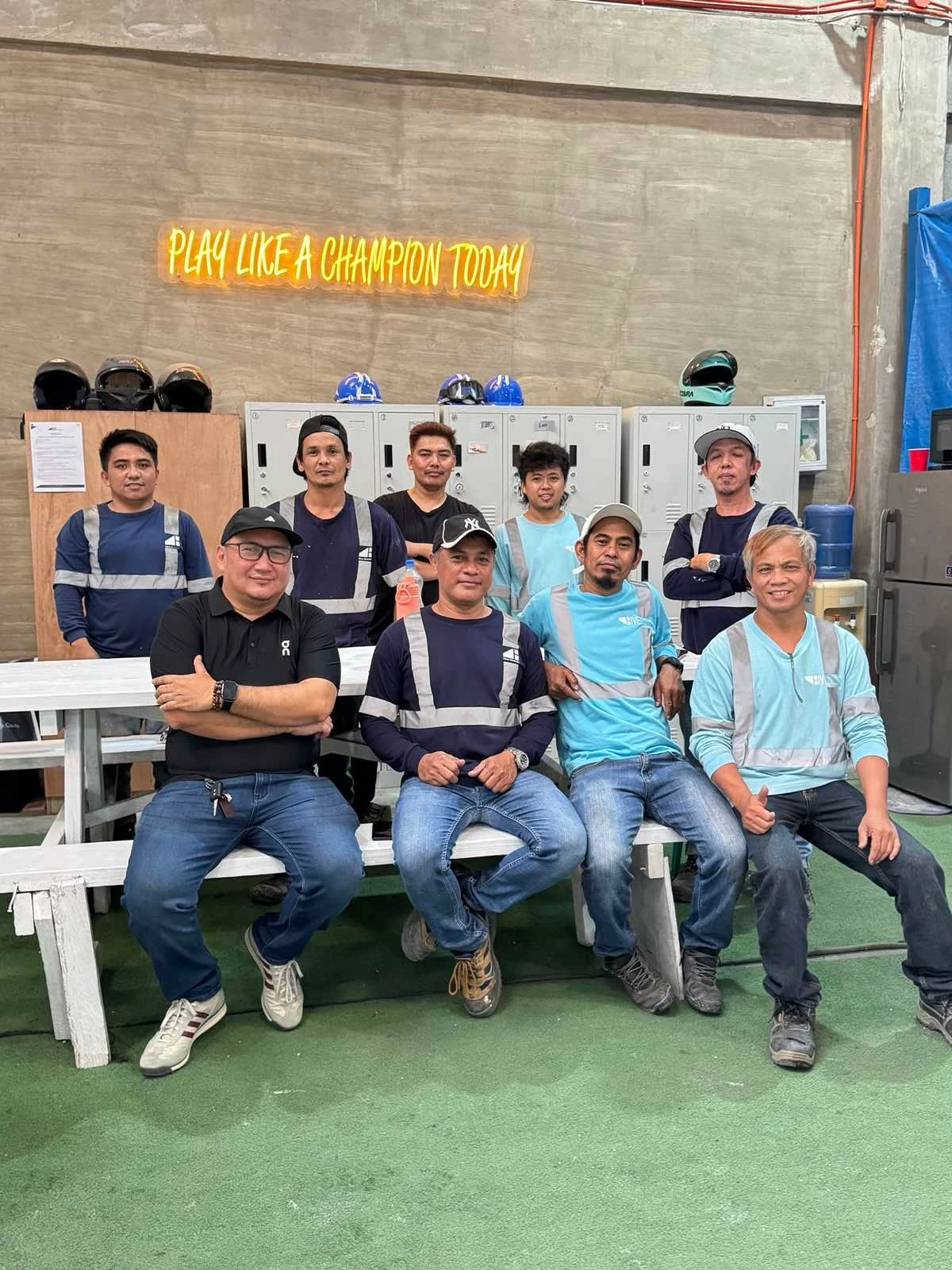
Hive Modular — a name inspired by the beehive — reflects the vision of CEO John Avrett and his wife, who spent 200 words brainstorming before settling on ‘Hive.’
We sat down with John Avrett, CEO of Hive Modular, who shared how the company’s beginnings were rooted in rethinking how homes are built for tropical realities. In a country that experiences roughly 20 typhoons a year, where humidity levels remain high year-round, and where flooding is an increasing concern, durability is not optional; it is essential.
Hive’s homes are engineered specifically for Philippine conditions. Structural systems are designed to handle high wind loads. Materials are selected to resist corrosion and prolonged moisture exposure. Sealing and insulation systems help regulate interior temperatures, reducing reliance on air-conditioning, a small but meaningful contribution to lowering long-term energy consumption.
Inside the modular unit we toured, every element felt intentional. Walls were insulated and tightly sealed. Windows were positioned to optimize natural light. The finishes were modern but practical, built to endure humidity without warping or degrading easily. For flood-prone areas, elevated configurations are possible, offering another layer of climate resilience.
And then there is the question of speed.
A modular home, once completed in the factory, can be transported and installed on-site in a fraction of the time required for a conventional build. That means shorter construction timelines, reduced neighborhood disruption, and fewer emissions from extended machinery use and repeated delivery trips. Sustainability, in this context, becomes not just about materials — but about process.
There is also a subtle cultural shift happening here. For decades, the idea of a “strong” home in the Philippines has been tied to concrete. Heavy. Permanent. Immovable. Modular challenges that perception. It suggests that strength can also come from engineering precision, advanced materials, and smarter systems.
Four years ago, when we first reached out, Hive Modular felt like an interesting concept. Unique. Forward-thinking. Different from the norm.
Standing inside a finished unit in Silang, watching final checks being completed before shipment, it no longer feels experimental. It feels deliberate.
Sustainability in housing cannot simply be about installing solar panels or adding greenery after the fact. It must begin at the design table. It must consider waste, climate, longevity, and the lived experience of homeowners in a country defined by humidity, storms, and rising environmental pressures.
Hive Modular’s approach does not claim to solve every housing challenge. But it does pose an important question: What if sustainability in the Philippines meant building homes that are not only energy-efficient, but engineered from the ground up to survive and adapt to our climate?
As one modular unit prepares to leave Silang, bound for its future homeowner, the idea feels less theoretical.
It feels ready. And perhaps that is what sustainable housing should look like, not just environmentally conscious, but practical, climate-aware, and built with the long view in mind.