







ICC prosecutors have no 'smoking gun' vs Duterte, defense says
Published Feb 26, 2026 07:02 pm


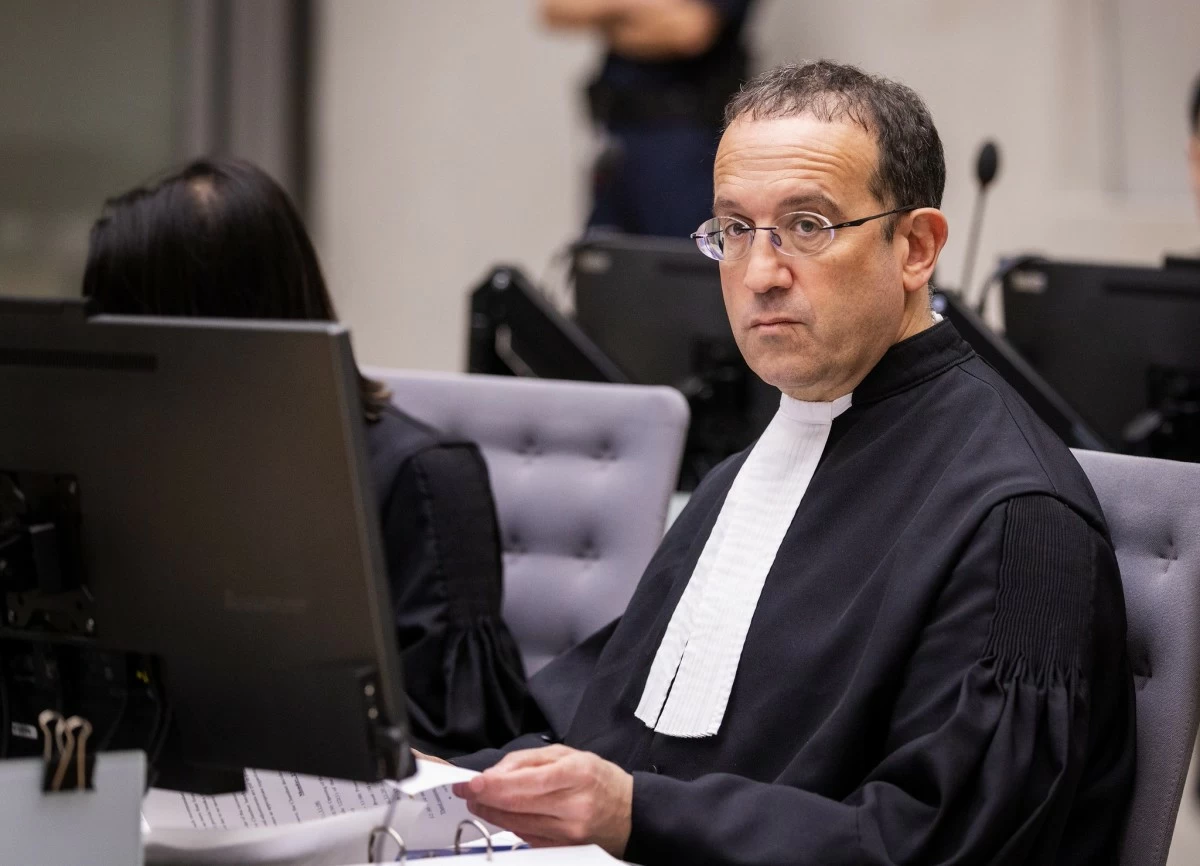
Former president Rodrigo Duterte's lead defense counsel Nicholas Kaufman (Photo courtesy of ICC)
Former president Rodrigo Duterte’s defense team told judges of the International Criminal Court (ICC) that there is “no smoking gun” linking him directly to any of the killings cited in the prosecution’s charges.
During the third day of the confirmation of charges hearing on Thursday, Feb. 26, defense counsel Nicholas Kaufman argued that the prosecution failed to establish a clear causal link between Duterte’s alleged statements or orders and the 49 incidents involving 78 victims.
“There is no smoking gun in this case,” Kaufman told Pre-Trial Chamber I.
He said the prosecution was required to demonstrate which specific statement, order, or command allegedly issued by Duterte led a particular individual to “pull the trigger” in any of the charged incidents.
“But the prosecution cannot show such a causal link — they were never able to do that,” Kaufman said.
“Not one of the 49 incidents mentioned in the document containing the charges manifests such a causal link between a speech, an order, and one of the charged incidents,” he added.
Kaufman further claimed that “not one witness relevant to any of the 49 incidents” would testify that he received a direct order from Duterte to kill.
“This, in and of itself, should be sufficient to convince any reasonable bystander observing the conduct of these proceedings that Rodrigo Duterte is innocent of these charges leveled at him,” he added.
The defense maintained that the prosecution’s evidence was “not substantial, rather totally inadequate.”
Duterte, arrested in March last year, is charged with crimes against humanity of murder and attempted murder, allegedly committed between Nov. 1, 2011, and March 16, 2019, in connection with his administration’s war on drugs.
The confirmation hearing will determine whether there are substantial grounds to believe he committed the crimes charged, a threshold required before the case proceeds to trial.
Speeches ‘cannot prove criminal intent’
Kaufman also challenged the prosecution’s reliance on Duterte’s public speeches as proof of criminal intent.
He said the Office of the Prosecutor presented 20 speeches in its document containing the charges, but argued that several of these actually contained references to the lawful use of self-defense.
“Relying on the former prosecutor’s speeches as a means of proving criminal intent is impossible,” he said.
He added that journalists and editors “have a tendency to fixate on the salacious elements of a person’s speeches while ignoring the less interesting parts,” saying this was also true in Duterte’s case.
‘Hardly widespread’ in Davao
On the contextual elements of crimes against humanity, the defense questioned whether the alleged killings met the threshold of being “widespread or systematic.”
Kaufman noted that Count 1 involves nine incidents of murder in Davao City, which he described as “hardly widespread.”
He also downplayed references to alleged mass graves, saying authorities “could have dug up the entire city of Davao” but instead only produced references to remains that “could have belonged to World War II Japanese soldiers.”
Defense says not attacking victims
Meanwhile, at the start of his presentation, Kaufman emphasized that the defense was not making light of the loss of life.
“The defense does not disrespect the soul of any deceased person, nor does it make light of the loss of life,” he said.
He added that any criticism would be directed solely at the prosecution’s document containing the charges, “not at the loved ones” of those who died, including a “tearful relative” he saw in the gallery earlier in the week.
Kaufman said the defense’s role was not to present an alternative narrative, but “simply to persuade your honors that Mr. Rodrigo Duterte should not remain in detention for years to come simply because the prosecution cannot make up substantial grounds to believe that this individual committed the crimes of which he is charged.”
Pre-Trial Chamber I is expected to decide within 60 days after the conclusion of the hearing whether to confirm the charges and send the case to trial.