






Manila Bulletin
 Philippines
National
DepEd sets AI rules for schools, puts teachers and learners at the center
Philippines
National
DepEd sets AI rules for schools, puts teachers and learners at the center
Philippines
National
DepEd sets AI rules for schools, puts teachers and learners at the center
DepEd sets AI rules for schools, puts teachers and learners at the center
New DepEd policy allows AI in classrooms but bans high-risk uses, requires disclosure, and keeps teachers in control
Published Feb 26, 2026 09:13 am


At A Glance
- DepEd issued its first national guidelines regulating the use of AI in basic education
- AI may assist learning but must not replace teachers and must be used responsibly, DepEd Secretary Sonny Angara stressed
- The new policy bans harmful AI applications and requires human oversight to protect student safety, privacy, and fairness
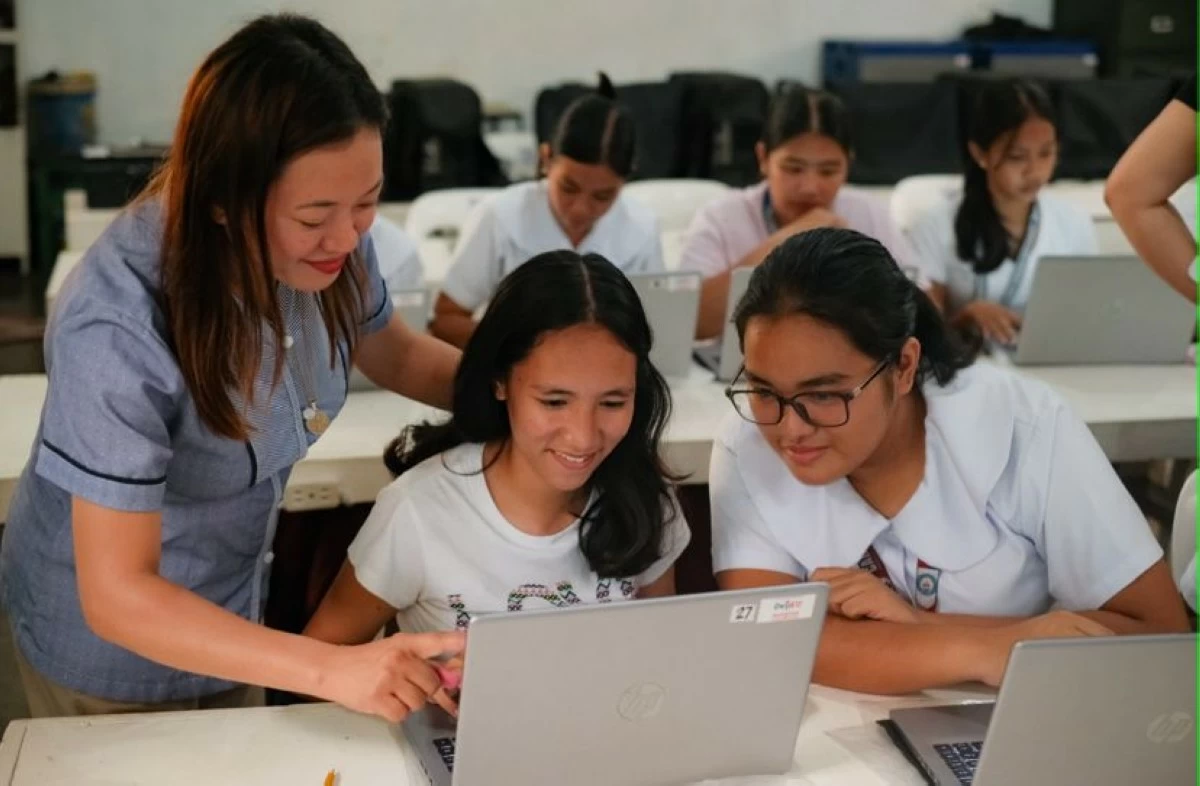
The Department of Education (DepEd) issues new guidelines allowing artificial intelligence (AI) in public schools while ensuring teachers and learners remain at the center of the education process. (DepEd file photo)
Artificial intelligence (AI) is rapidly entering Philippine classrooms—helping students draft essays, check grammar, and brainstorm ideas—but as the technology spreads faster than policies can keep up, the Department of Education (DepEd) is drawing the line: AI may assist learning, but it must never replace the human mind.
With the issuance of Department Order No. 003, series of 2026, DepEd Secretary Sonny Angara has introduced the country’s first comprehensive guidelines on the use of artificial intelligence in basic education—rules designed to harness innovation while protecting learners, teachers, and the integrity of education itself.
A response to AI’s rapid rise
In a 49-page directive dated February 20, Angara acknowledged what many classrooms are already experiencing: artificial intelligence is no longer a distant concept but a daily tool.
From lesson planning and research to grammar correction and presentation design, both teachers and students have begun integrating AI into their work, DepEd noted.
Some learners use tools such as chatbots for homework support, while educators experiment with AI to improve instructional materials and assessments, it added.
However, DepEd noted that this rapid adoption has come with risks.
Angara pointed out that the use of AI in classrooms has “outpaced the ability of the basic education system to put in place clear, unified, and enforceable policies.”
Without clear rules, DepEd warned, learners could face data privacy breaches, exposure to inaccurate information, and inconsistent practices across schools.
Human-centered learning remains the priority
At the heart of the new policy, DepEd said, is a simple but firm principle: AI is a tool, not a teacher.
DepEd emphasized that teachers and learners must remain at the center of education, with artificial intelligence serving only as support.
AI may help educators design lessons, generate quizzes, or analyze data—but human judgment will remain paramount, especially in evaluating student performance.
Angara, in an interview on February 25, stressed that AI must strictly function as an auxiliary “tool” and not “replace” the essential role of teachers.
DepEd also noted that the newly issued policy encourages students to use AI responsibly and transparently.
As stated in the policy, DepEd said learners are now required to disclose when and how AI tools were used in assignments—from brainstorming ideas to editing and research.
This move aims to promote honesty, accountability, and critical thinking in an age when answers can be generated instantly, DepEd noted.
Protecting learners from harm
Angara pointed out that DepEd’s guidelines draw clear boundaries, especially when it comes to student safety and rights.
High-risk uses of AI—including grading, admissions, scholarship decisions, and disciplinary actions—will require strict human oversight, the department added.
Meanwhile, DepEd said certain applications are outright prohibited.
These include AI systems that use facial recognition scraping, biometric categorization, emotion detection, social scoring, and manipulative chatbots targeting minors.
DepEd warned that such tools could “compromise” the privacy, safety, and emotional well-being of learners.
AI, DepEd stressed, must not weaken essential human abilities.
Instead, DepEd said it should help students develop critical 21st-century skills such as analysis, communication, creativity, and problem-solving.
Making AI accessible—and equitable
Beyond safety, DepEd said it is also looking at inclusion.
DepEd stressed that AI integration must benefit all learners, including those from disadvantaged communities, and must respect linguistic and cultural diversity.
The goal, DepEd said, is not just technological advancement—but equitable access to opportunities.
To support this, DepEd earlier launched Project AGAP.AI (Accelerating Governance and Adaptive Pedagogy through Artificial Intelligence), which aims to train more than learners, teachers, and parents in AI literacy through partnerships with global organizations.
Preparing schools for the future
In Philippine schools, DepEd stressed that AI may be powerful—but human learning should always come first.
As classrooms evolve, DepEd said the role of teachers will not disappear.
Instead, they will become even more essential—not as sources of information alone, but as mentors guiding students to think critically in a world where machines can generate answers in seconds.
Angara said DepEd’s move also reflects a broader shift in education worldwide, where artificial intelligence is becoming part of everyday learning.
DepEd noted that its policy aligns with global standards, including frameworks from ASEAN and UNESCO, and adopts a risk-based approach similar to international AI regulations.
For Angara and DepEd, the message is clear: the future of education will involve AI — but it must remain guided by human values.