






Manila Bulletin
 Business
Trade & Industry
ADB: US tariffs reshaped Asia trade, but deepened regional integration
Business
Trade & Industry
ADB: US tariffs reshaped Asia trade, but deepened regional integration
Business
Trade & Industry
ADB: US tariffs reshaped Asia trade, but deepened regional integration
ADB: US tariffs reshaped Asia trade, but deepened regional integration
Published Feb 26, 2026 06:30 pm
|
Updated Feb 26, 2026 03:27 pm


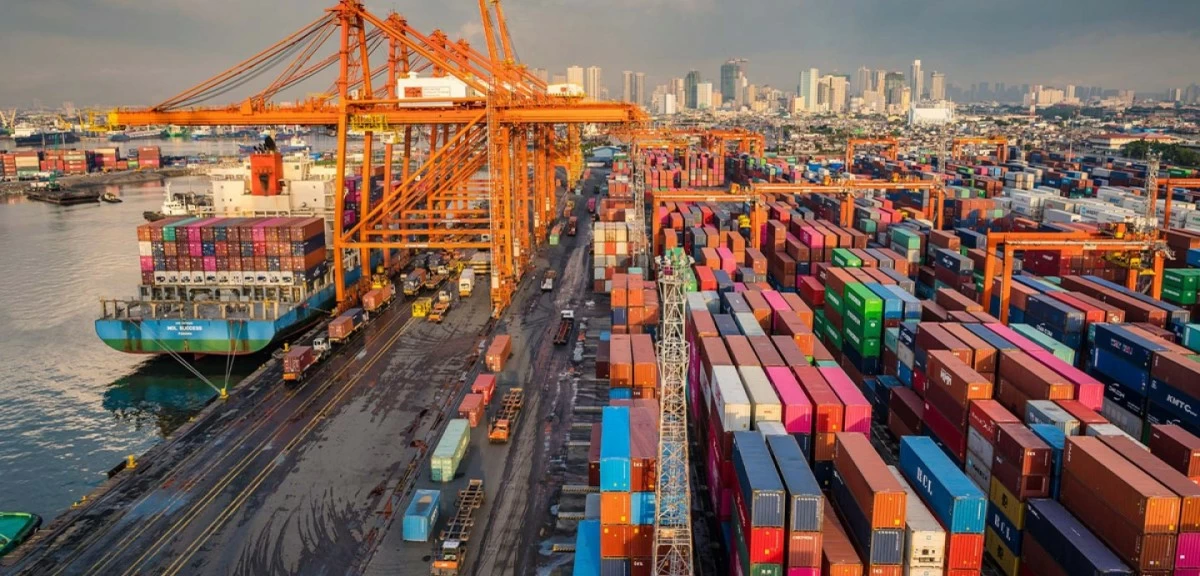
Reciprocal tariffs imposed by the United States (US) in 2025 added volatility to trade flows across Asia-Pacific but ultimately reinforced regional economic integration, according to the Asian Development Bank (ADB).
In its “Asian Economic Integration Report 2026: Leveraging Regional Cooperation and Integration to Navigate Global Uncertainties” published on Thursday, Feb. 26, the Manila-based multilateral lender said that economies across the region adapted to the new protectionist measures by redirecting trade and strengthening intra-Asian linkages.
The ADB noted that “most major Asian economies faced uneven reciprocal tariffs ranging from 10 percent to 34 percent,” with measures targeting key industrial inputs such as metals, vehicles, and other strategic sectors.
Despite these trade barriers, regional integration proved resilient. “Economies in Asia and the Pacific have shown strong resilience in trade despite the reciprocal tariffs introduced by the US,” the ADB said, adding that export growth was sustained as countries diversified markets and adjusted supply chains.
Rather than causing a broad contraction in trade, US tariffs accelerated a shift toward intraregional commerce, the ADB said, as its report showed that exports from several economies declined toward the US but expanded elsewhere, particularly within Asia. For instance, while shipments from China to the US fell sharply, global exports still increased as trade with other Asian economies and Europe grew.
According to the ADB, exporters responded by reassessing strategies—absorbing higher costs, diversifying markets, or rerouting shipments through alternative destinations—helping sustain overall export momentum. This adjustment, the report said, deepened regional production networks and reinforced Asia’s role in global value chains.
“The region’s resilience has been driven by redirecting trade toward alternative markets, which has sustained export growth even as shipments to the US have declined in some economies,” the ADB said.
The report showed that Southeast Asia remains the most economically integrated subregion within Asia, benefiting from stronger trade connectivity, digital cooperation, and cross-border investment flows.
“Stronger regional cooperation and integration offers a buffer against the impact from external shocks and will likely be increasingly important in helping navigate the region’s economic and geopolitical challenges,” the ADB said, adding that external pressures—including US tariff actions—may have unintentionally accelerated regional cooperation rather than weakened it.
The Philippines was cited as one of the economies that maintained solid export performance despite heightened uncertainty. ADB data showed that Philippine exports grew by 15 percent in 2025, placing the country among Southeast Asia’s stronger performers alongside Vietnam and Thailand. Sales of Philippine goods abroad reached a record high last year.
For the ADB, sustained export growth reflected successful market diversification and integration into regional supply chains, even as global trade conditions became more uncertain.
The ADB said that geopolitical tensions and evolving trade policies—including US tariffs—underscore the need for deeper regional cooperation. “The challenging global policy environment underscores the need for renewed emphasis on regional cooperation and integration,” the report said, noting that stronger regional ties can cushion external shocks and sustain growth through expanded cross-border trade and investment flows.
While US tariffs introduced short-term disruptions, they also accelerated structural shifts already underway—pushing Asian economies to diversify partners, strengthen regional value chains, and deepen economic integration across Asia-Pacific, according to the ADB.