ADVERTISEMENT

UN launches regional initiative to accelerate Southeast Asia's energy transition

Published Feb 25, 2026 12:58 pm  |  Updated Feb 25, 2026 01:12 pm
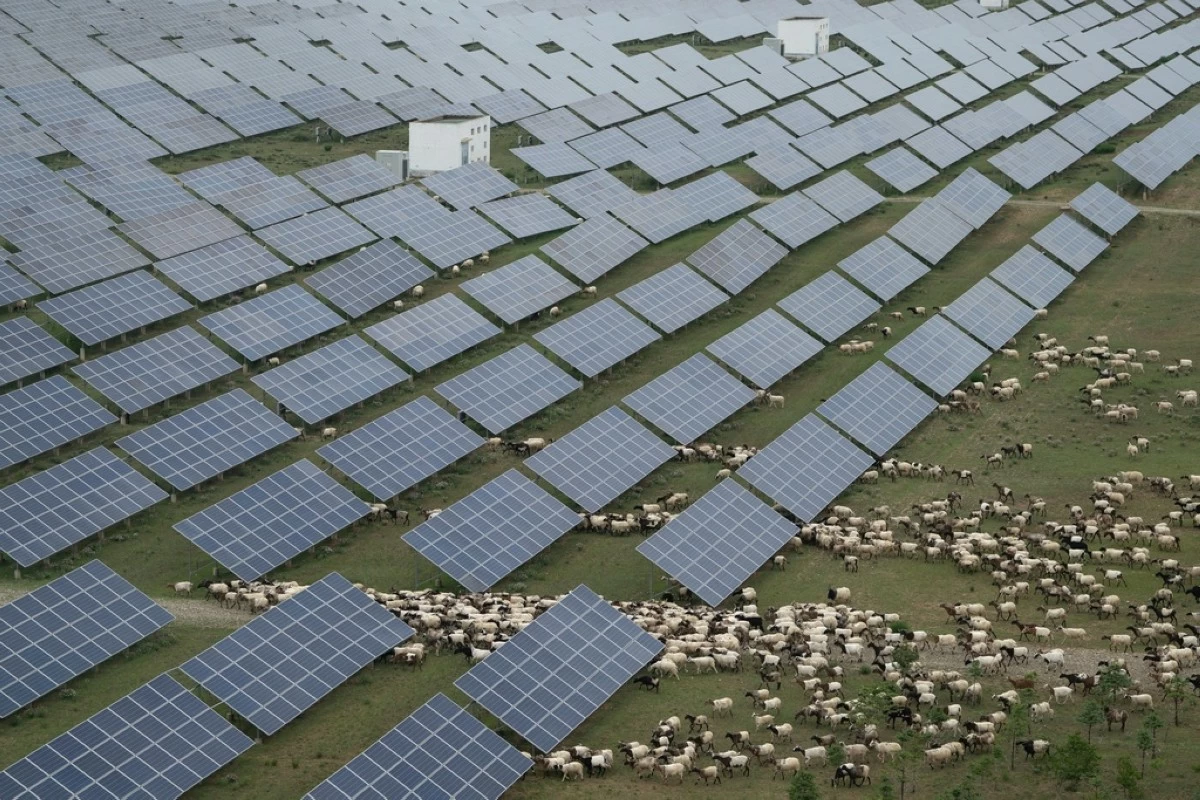
FILE - Tibetan sheep graze at a solar farm in Hainan prefecture of western China's Qinghai province on July 1, 2025. (AP Photo/Ng Han Guan, File)

The United Nations Economic and Social Commission for Asia and the Pacific (UNESCAP) on Wednesday, Feb. 25, launched the Energy Transition for Green Growth and Prosperity (ETGGP), a new three-year initiative aimed at helping Southeast Asian countries accelerate clean energy transitions while promoting economic growth, job creation, and social inclusion.

The initiative aligns with UNESCAP’s mandate to support member states, including the Philippines, in achieving the 2030 Agenda for Sustainable Development, including Sustainable Development Goal (SDG) 7 on sustainable energy. It is backed by more than $4 million in initial contributions from four philanthropic foundations: Children’s Investment Fund Foundation, ClimateWorks Foundation, Sequoia Climate Foundation, and Tara Climate Foundation.

In a statement, UNESCAP said ETGGP comes at a critical moment, as Asia-Pacific account for around 60 percent of global greenhouse gas (GHG) emissions and 80 percent of global coal supply, while regional energy demand is projected to rise significantly by mid-century.

“Countries around the region are considering how to reduce emissions while safeguarding growth, jobs, economic resilience and social inclusion. Governments must navigate this transition under multiple constraints—legacy infrastructure, limited fiscal space, evolving regulatory environments, varying institutional capacity, and persistent financing gaps,” said UN undersecretary-general and UNESCAP executive secretary Armida Salsiah Alisjahbana at ETGGP’s launch in Bangkok, Thailand.

She added that ETGGP “will address this for countries in Southeast Asia by connecting policy analysis, institutional strengthening, regional cooperation and green finance.”

The initiative is structured around three pillars: analytical work to strengthen the knowledge and evidence base for long-term planning at the intersection of energy, economy, and industry; support for regional power connectivity through green power corridors; and green finance mobilization to build investable project pipelines and facilitate larger-scale capital flows.

UNESCAP plans to work closely with ministries of energy, finance, transport, environment, and social development across the region to integrate energy transition with green industrialization and job creation. Development partners, financial institutions, knowledge organizations, and regional experts will be engaged to develop evidence and policy solutions, it said.

Expected outcomes include stronger policy coordination, better evidence for decision-making, improved investment readiness, and greater access to public and private finance for clean energy and enabling infrastructure, UNESCAP said, adding that lessons learned from participating countries will also shape regional energy policy dialogue.

The initiative comes as the Philippines pursues an ambitious renewable energy (RE) target, aiming for 35 percent of its energy mix to come from renewables by 2030 and 50 percent by 2040.

ADVERTISEMENT
.most-popular .layout-ratio{ padding-bottom: 79.13%; } @media (min-width: 768px) and (max-width: 1024px) { .widget-title { font-size: 15px !important; } }

{{ articles_filter_1561_widget.title }}

.most-popular .layout-ratio{ padding-bottom: 79.13%; } @media (min-width: 768px) and (max-width: 1024px) { .widget-title { font-size: 15px !important; } }

{{ articles_filter_1562_widget.title }}

.most-popular .layout-ratio{ padding-bottom: 79.13%; } @media (min-width: 768px) and (max-width: 1024px) { .widget-title { font-size: 15px !important; } }

{{ articles_filter_1563_widget.title }}

{{ articles_filter_1564_widget.title }}

.mb-article-details { position: relative; } .mb-article-details .article-body-preview, .mb-article-details .article-body-summary{ font-size: 17px; line-height: 30px; font-family: "Libre Caslon Text", serif; color: #000; } .mb-article-details .article-body-preview iframe , .mb-article-details .article-body-summary iframe{ width: 100%; margin: auto; } .read-more-background { background: linear-gradient(180deg, color(display-p3 1.000 1.000 1.000 / 0) 13.75%, color(display-p3 1.000 1.000 1.000 / 0.8) 30.79%, color(display-p3 1.000 1.000 1.000) 72.5%); position: absolute; height: 200px; width: 100%; bottom: 0; display: flex; justify-content: center; align-items: center; padding: 0; } .read-more-background a{ color: #000; } .read-more-btn { padding: 17px 45px; font-family: Inter; font-weight: 700; font-size: 18px; line-height: 16px; text-align: center; vertical-align: middle; border: 1px solid black; background-color: white; } .hidden { display: none; }
function initializeAllSwipers() { // Get all hidden inputs with cms_article_id document.querySelectorAll('[id^="cms_article_id_"]').forEach(function (input) { const cmsArticleId = input.value; const articleSelector = '#article-' + cmsArticleId + ' .body_images'; const swiperElement = document.querySelector(articleSelector); if (swiperElement && !swiperElement.classList.contains('swiper-initialized')) { new Swiper(articleSelector, { loop: true, pagination: false, navigation: { nextEl: '#article-' + cmsArticleId + ' .swiper-button-next', prevEl: '#article-' + cmsArticleId + ' .swiper-button-prev', }, }); } }); } setTimeout(initializeAllSwipers, 3000); const intersectionObserver = new IntersectionObserver( (entries) => { entries.forEach((entry) => { if (entry.isIntersecting) { const newUrl = entry.target.getAttribute("data-url"); if (newUrl) { history.pushState(null, null, newUrl); let article = entry.target; // Extract metadata const author = article.querySelector('.author-section').textContent.replace('By', '').trim(); const section = article.querySelector('.section-info ').textContent.replace(' ', ' '); const title = article.querySelector('.article-title h1').textContent; // Parse URL for Chartbeat path format const parsedUrl = new URL(newUrl, window.location.origin); const cleanUrl = parsedUrl.host + parsedUrl.pathname; // Update Chartbeat configuration if (typeof window._sf_async_config !== 'undefined') { window._sf_async_config.path = cleanUrl; window._sf_async_config.sections = section; window._sf_async_config.authors = author; } // Track virtual page view with Chartbeat if (typeof pSUPERFLY !== 'undefined' && typeof pSUPERFLY.virtualPage === 'function') { try { pSUPERFLY.virtualPage({ path: cleanUrl, title: title, sections: section, authors: author }); } catch (error) { console.error('ping error', error); } } // Optional: Update document title if (title && title !== document.title) { document.title = title; } } } }); }, { threshold: 0.1 } ); function showArticleBody(button) { const article = button.closest("article"); const summary = article.querySelector(".article-body-summary"); const body = article.querySelector(".article-body-preview"); const readMoreSection = article.querySelector(".read-more-background"); // Hide summary and read-more section summary.style.display = "none"; readMoreSection.style.display = "none"; // Show the full article body body.classList.remove("hidden"); } document.addEventListener("DOMContentLoaded", () => { let loadCount = 0; // Track how many times articles are loaded const offset = [1, 2, 3, 4, 5, 6, 7, 8, 9, 10]; // Offset values const currentUrl = window.location.pathname.substring(1); let isLoading = false; // Prevent multiple calls if (!currentUrl) { console.log("Current URL is invalid."); return; } const sentinel = document.getElementById("load-more-sentinel"); if (!sentinel) { console.log("Sentinel element not found."); return; } function isSentinelVisible() { const rect = sentinel.getBoundingClientRect(); return ( rect.top < window.innerHeight && rect.bottom >= 0 ); } function onScroll() { if (isLoading) return; if (isSentinelVisible()) { if (loadCount >= offset.length) { console.log("Maximum load attempts reached."); window.removeEventListener("scroll", onScroll); return; } isLoading = true; const currentOffset = offset[loadCount]; window.loadMoreItems().then(() => { let article = document.querySelector('#widget_1690 > div:nth-last-of-type(2) article'); intersectionObserver.observe(article) loadCount++; }).catch(error => { console.error("Error loading more items:", error); }).finally(() => { isLoading = false; }); } } window.addEventListener("scroll", onScroll); });

Sign up by email to receive news.