






Manila Bulletin
 Environment and Sustainability
The hidden ecosystems supporting the Banaue Rice Terraces
Environment and Sustainability
The hidden ecosystems supporting the Banaue Rice Terraces
Environment and Sustainability
The hidden ecosystems supporting the Banaue Rice Terraces
The hidden ecosystems supporting the Banaue Rice Terraces
Published Feb 25, 2026 02:48 pm


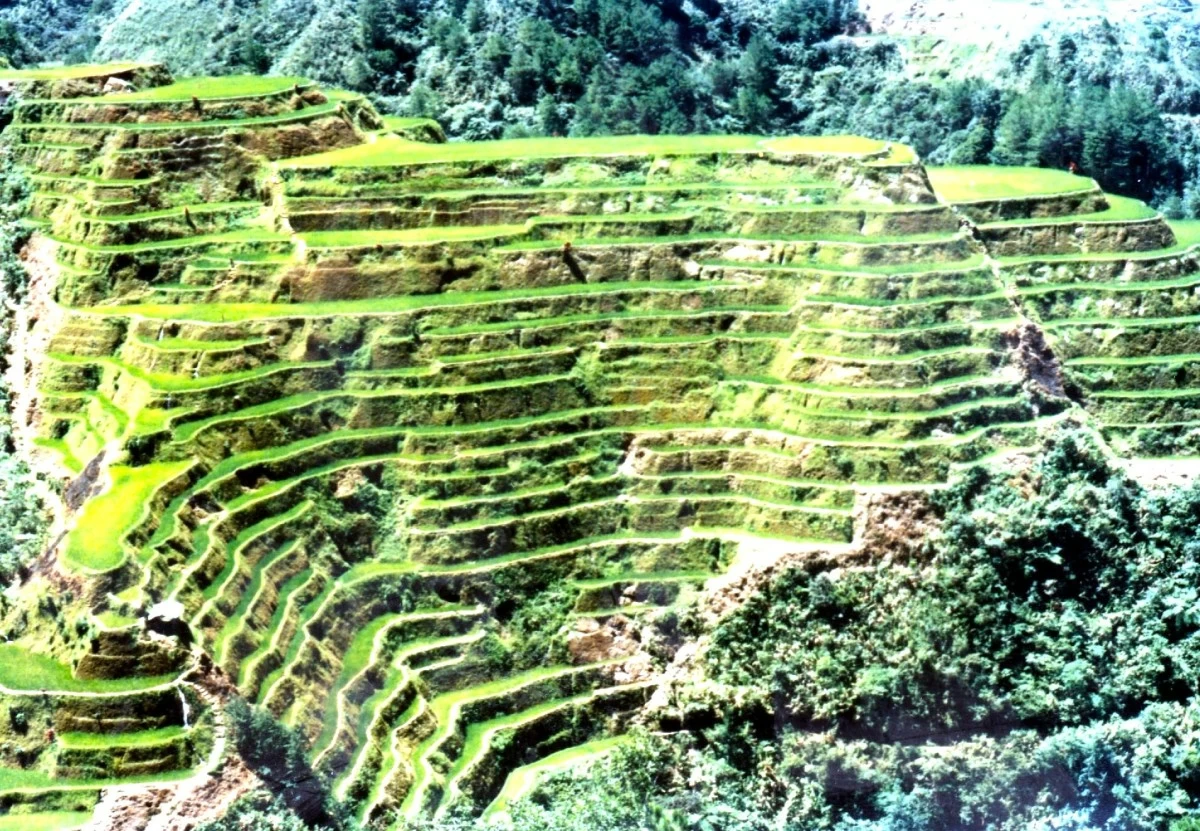
Many Filipinos are familiar only with the Banaue Rice Terraces – the agricultural fields sculpted into the mountainsides. However, there is much more to payoh, as they are referred to by locals, than merely these stunning rice terraces.
Often overlooked are the muyongs, which are patches of forest typically surrounding or adjacent to Ifugao communities. A muyong – privately owned and managed with clearly defined boundaries – is an untilled slope primarily covered with timber, fruit trees, climbing rattan, bamboo, palms, and other related natural vegetation, frequently utilized as a source of fuelwood.
“It is only recently that outsiders have come to recognize and appreciate the critical roles of the muyongs in sustaining the land-use system of the Ifugao, and their lives and culture,” wrote Rogelio C. Serrano and Ernesto A. Cadaweng. “Muyongs are an essential part of the agroforestry system in the steep mountainous region, protecting lower farmlands from runoff and erosion.”
The muyongs are highlighted in the book, “In Search of Excellence: Exemplary Forest Management in Asia and the Pacific Region,” published by the United Nations Food and Agriculture Organization (FAO). Serrano and Cadaweng are the authors of the case study.
There are, however, no records as to when and where the practice of maintaining muyongs started. “It is believed that, as in the case of the rice terraces, the Ifugao - in response to their specific needs - developed muyongs as an environmental intervention,” the two authors wrote.
Ownership of large areas of payoh and muyong is an indicator of high social status or affluence in Ifugao culture. “In their own way and using local resources, the Ifugao developed their muyongs over generations, sharing and exchanging planting materials and labor in the process,” wrote Serrano and Cadaweng.
There are three types of muyong classified on the basis of their establishment: those that were planted and handed down through generations; those recently established on fallow swidden (or uma) land; and those established within the natural forest through a long usage claim.
“The area of a single muyong ranges from half a hectare to three hectares, and muyongs are generally located at a distance of up to one kilometer from the home, depending on where ancestral uma were first established,” Serrano and Cadaweng wrote.
The boundary separating neighboring muyongs is defined by a strip of cleared land measuring one-and-a-half meters in width. The owners are responsible for maintaining this boundary by periodically trimming any saplings and shrubs that may grow along it.
The transition from uma to muyong requires the owner to regularly care for and safeguard the developing shrubs and forest trees. As natural succession occurs, the vegetation in the uma evolves from cogon (Imperata cylindrica) to talahib (Saccharum spontaneum), followed by the growth of ferns and, subsequently, the emergence of various shrubs and medium-sized trees.
“This succession to larger and taller vegetation is indicative of improving soil fertility and a better microclimate, signifying more stable conditions,” Serrano and Cadaweng wrote.
Eventually, dipterocarp tree species such as lauan (Shorea contorta), guijo (Shorea guiso), and bagtikan (Parashorea malaanonan) may begin to grow, which leads to the muyong reaching its climax, or most stable ecological condition.
“This process of natural succession may take 20 years or more depending on initial soil conditions,” Serrano and Cadaweng wrote. “The owner may, however, accelerate the process by planting preferred tree species or by transplanting wildlings from nearby natural forest.”
According to the two authors, the Ifugao devote considerable time to the care and maintenance of the muyongs once the rice-planting season has finished. They take turns, through a system of shared labour called ub-ubbo, in developing silviculture in the muyongs.
Thinning and pruning are performed during the dry season. Pruning enhances the shape of the trees and increases the amount of clearwood, while the pruned branches are collected for fuelwood. The thinned materials are utilized for fence posts or for light construction and home repairs.
Mature trees are felled only when there is a need for large-dimension construction materials. The choice of which trees to cut is based on the intended purpose of the harvested timber.
Tree species like baku-og, bultik-gotapan, and bultiktangayaan are favored for use in studs and flooring. Dalakan (Alstonia scholaris), known for its relatively rapid growth, is utilized for non-load-bearing construction applications due to its softer wood, which is less durable compared to many other hardwood varieties.
Directional felling techniques are implemented to prevent harm to surrounding trees. Rattan fruits are collected each year and either sold in local markets or transported to other municipalities for trade.
“Considering the values, benefits, and attachment of the muyong to Ifugao families and the community, it is understandable that these small, forested areas are valued highly,” Serrano and Cadaweng wrote.
Indeed, the Ifugao are prepared to engage in battle and risk their lives to safeguard their muyongs. The tribe has developed customary laws to resolve disputes regarding the ownership and utilization of muyongs, according to the two authors.
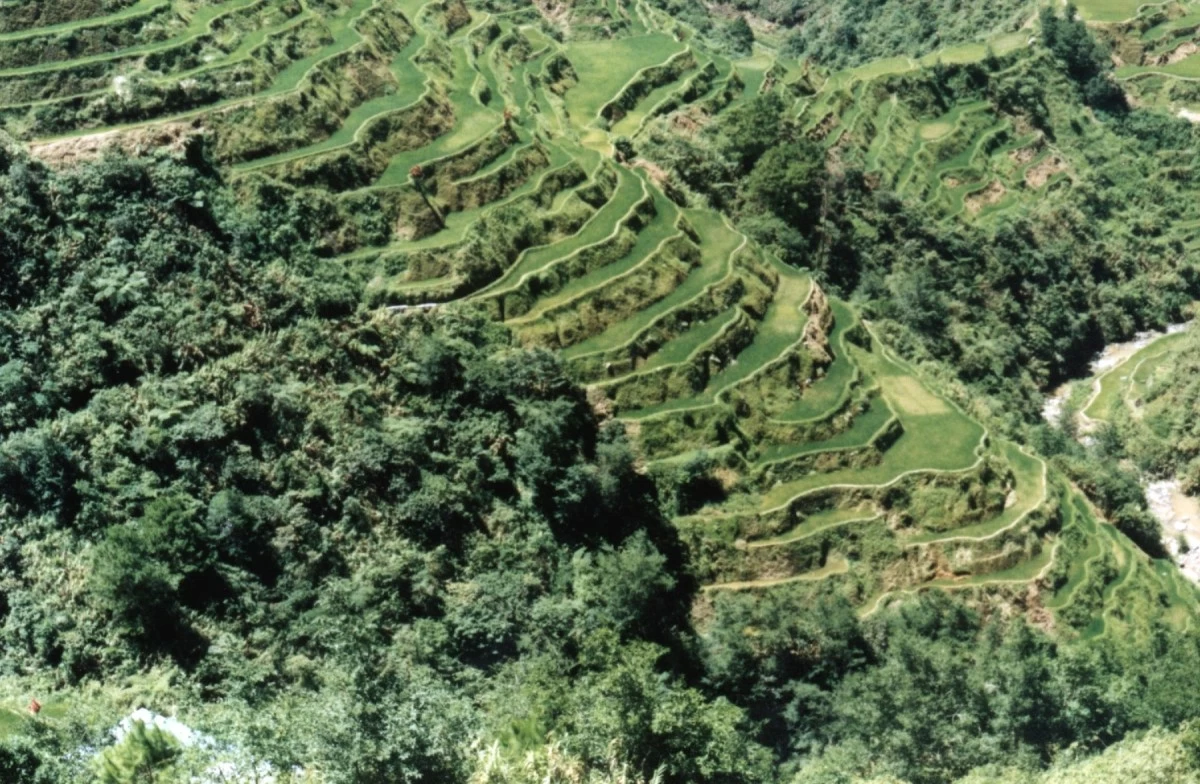
The Banaue Rice Terraces are located about 350 kilometers north of Manila. They continue to be a major tourist attraction in the country, contributing significantly to the growth of the tourism industry.
Awe-struck tourists, both international visitors and locals, continue to travel to the Ifugao Rice Terraces, often referred to as “the Eighth Wonder of the World.”
Historians say the rice terraces were ingeniously carved out of the mountains by the Ifugao for rice farming. Some archaeologists believe that the Ifugao began constructing the terraces about 2,000 years ago, migrating from regions in mainland Southeast Asia to Luzon.
The rice terraces, described as “the stairway to heaven,” are a living monument to the ingenuity of tribal Filipino farmers who have tilled the steep slopes. They have been listed as a UNESCO World Heritage Site since 1995.
The FAO has designated the terraces as one of the Globally Important Agricultural Heritage Systems.
Aside from the Banaue, there are four other terraces located in Batad, Mayoyao, Hungduan, and Kiangan. In agriculture, a terrace refers to a leveled section of a hilly cultivated area, designed as a method of soil conservation to slow or prevent the rapid surface runoff of irrigation water. Such land often forms into multiple terraces, giving a stepped appearance.
Terraced agricultural fields are common in Asia: on the Himalayan foothills, in Central and South China, Java, Sumatra, and Sulawesi, northern Indochina, the highlands of Pacific islands, including Hawaii, as well as on the Andes mountains of South America.