






Manila Bulletin
 Business
Banking & Finance
Marcos admin spends extra ₱160 billion to fund 2025 projects
Business
Banking & Finance
Marcos admin spends extra ₱160 billion to fund 2025 projects
Business
Banking & Finance
Marcos admin spends extra ₱160 billion to fund 2025 projects
Marcos admin spends extra ₱160 billion to fund 2025 projects
By Derco Rosal
Published Feb 25, 2026 05:25 pm


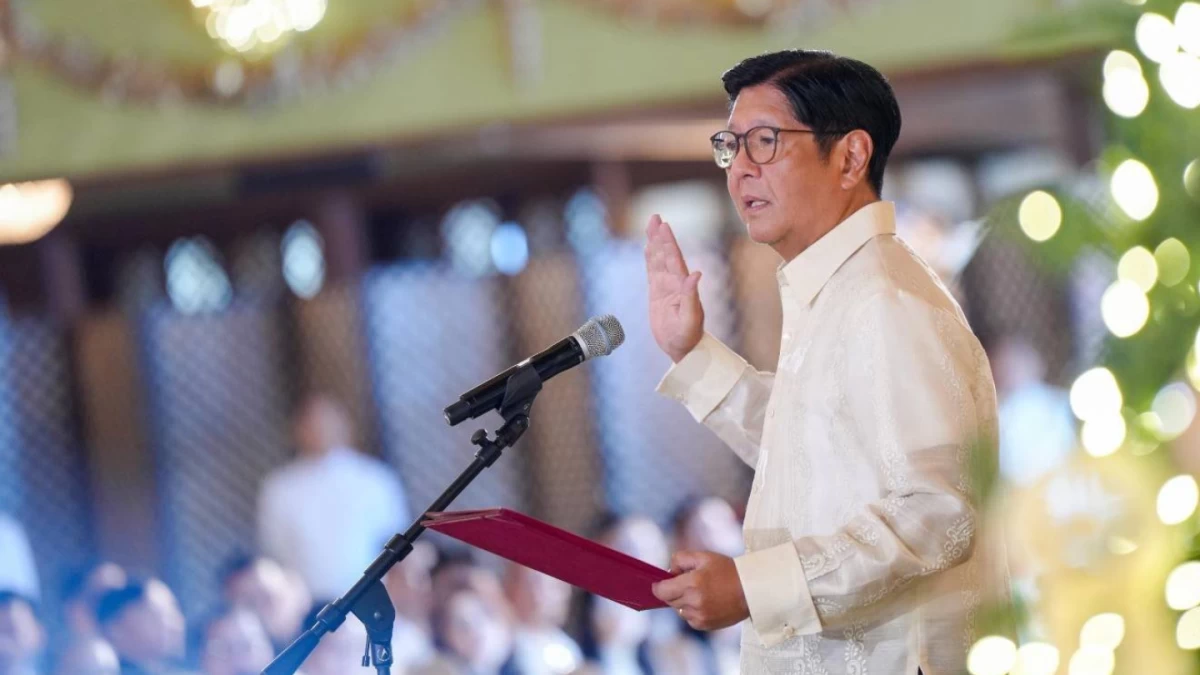
The national government’s spending exceeded its original fiscal targets in 2025 as the Marcos administration tapped into contingency reserves to fund additional state projects.
Total allotment releases reached ₱6.487 trillion by the end of the fiscal year, according to preliminary data from the Department of Budget and Management (DBM). The figure represents the entirety of the government’s adjusted spending program, surpassing the initial ₱6.326 trillion benchmark set at the start of the year.
he expansion was driven primarily by the activation of ₱160.6 billion in unprogrammed appropriations, which are standby funds utilized when realized revenues exceed targets or when additional foreign loans are secured.The pace of deployment underscores the DBM’s efforts to accelerate the distribution of funds to line agencies amid ambitious infrastructure and social services agenda.
Under the 2025 General Appropriations Act, the budget office released ₱4.09 trillion, or approximately 97.2 percent of the year’s ₱4.21 trillion adjusted allocation.
Of that amount, ₱3.6 trillion was funneled directly to executive departments, while special purpose funds—often used for disaster relief and specific localized projects—accounted for ₱495.6 billion in releases.
Automatic appropriations, which are mandated by law and do not require annual legislative approval, totaled ₱2.07 trillion. This segment of the budget includes ₱78.8 billion for the retirement and life insurance premiums of state employees.
The government also completed the full transfer of the ₱1.03 trillion national tax allotment and the ₱83.4 billion block grant, ensuring that local government units and the Bangsamoro autonomous region received their statutory shares of national revenue.
Debt servicing remained a significant component of the fiscal landscape. Interest payments for the year reached ₱800.5 billion, representing 94.4 percent of the ₱848 billion adjusted program. Net lending releases, which involve advances to state-owned corporations, stood at ₱21.5 billion, or roughly three-quarters of the planned ₱28.7 billion.
Infrastructure and education continued to dominate the administration’s priorities. The Department of Public Works and Highways received the largest share of the budget at ₱1.13 trillion to support the "Build Better More" program.
This was followed by the Department of Education, which saw ₱704.1 billion in releases. Other high-priority sectors included the Department of Health, with ₱225.7 billion, and the Department of Social Welfare and Development, which utilized ₱214.3 billion to maintain various poverty-alleviation and cash-transfer initiatives.