






Manila Bulletin
 Spotlight Features
From sugarcane to furniture: How this envirosocial initiative provided alternative livelihoods for farmers
Spotlight Features
From sugarcane to furniture: How this envirosocial initiative provided alternative livelihoods for farmers
Spotlight Features
From sugarcane to furniture: How this envirosocial initiative provided alternative livelihoods for farmers
From sugarcane to furniture: How this envirosocial initiative provided alternative livelihoods for farmers
By Poch Eulalia
Published Feb 25, 2026 05:07 pm


Handmade with care, these furniture items from Hacienda Crafts do more than just elevate living spaces. They promote the skilled handicraft of Filipinos and provide a proper livelihood for their families.
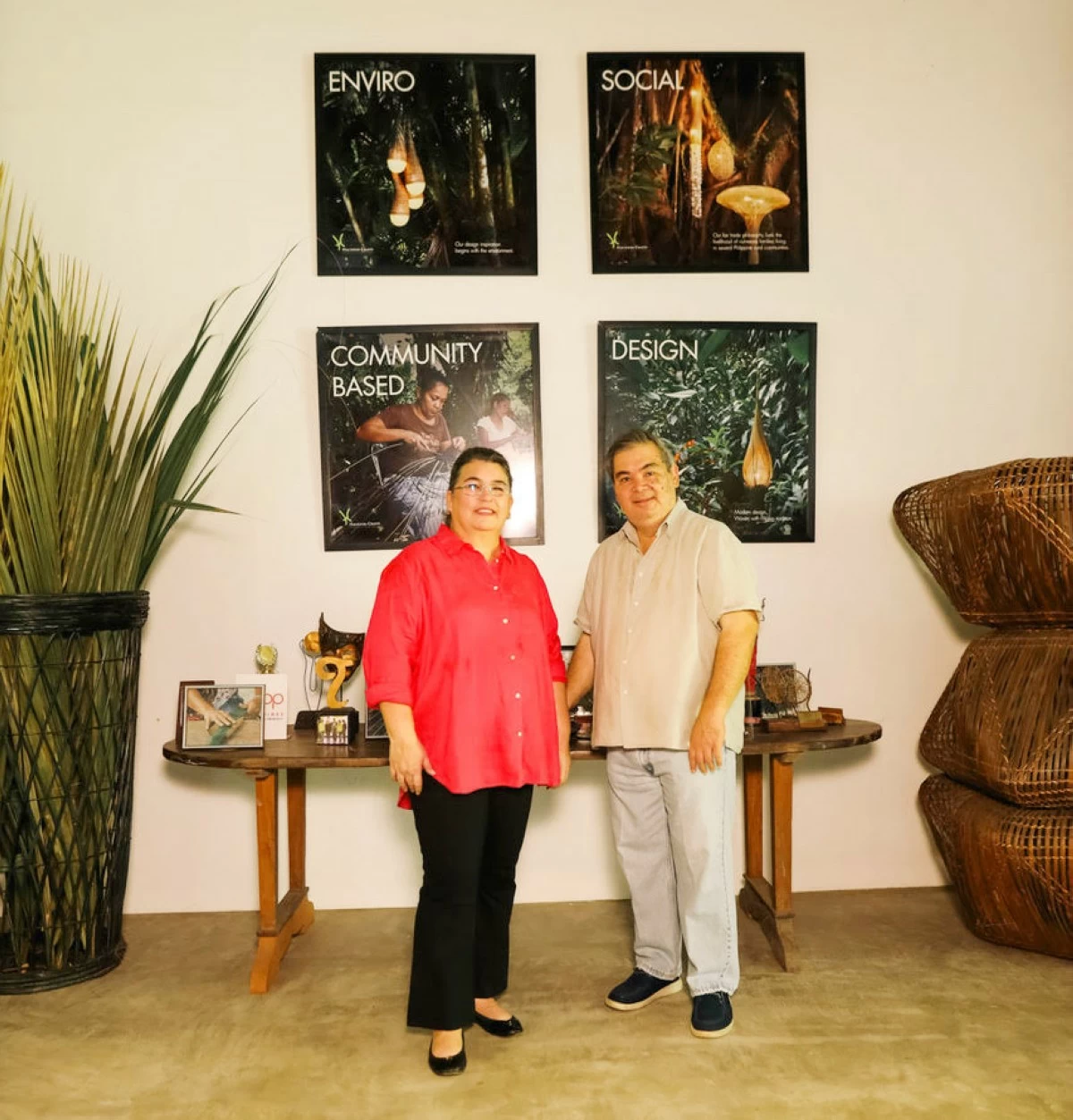
Christina Borromeo-Gaston and Joey Gaston are at the Hacienda Crafts central workshop in Manapla, Negros Occidental, with their company values—enviro, social, design, and community—on display.
Established in 1994, Hacienda Crafts was born out of a sugar crisis that struck Negros Occidental in the ’80s. At the time, farmers of Hacienda Santa Rosalia relied heavily on sugarcane farming for their livelihoods. However, planting sugarcane also places them in a lull during what is referred to as “tiempo muerto” or the dead season. This is the 10 to 12 months where sugarcane take their time to grow, leaving the farmers with nothing else to do. Hoping to find an additional means of livelihood for the farmers during this period, Christina Borromeo-Gaston and Joey Gaston came up with the enviro social design company.
In its early stages, Hacienda Crafts had a focus on creating simple tabletop items such as placemats, trays, and coasters. These items were made using coconut twigs. As time went on, the company found other natural resources that could be utilized and ventured further into crafting bigger projects. These include making use of abaca, bamboo, banana bark fiber (locally referred to as bacbac), buri, capiz shells, coconut, cotton, nito vines, raffia, pandan, rattan, and tiger grass (udyong). Using these locally-sourced materials, they started to create accent furniture items like side tables, stools, and lighting fixtures, making use of waste materials that are easily replenished as much as possible.
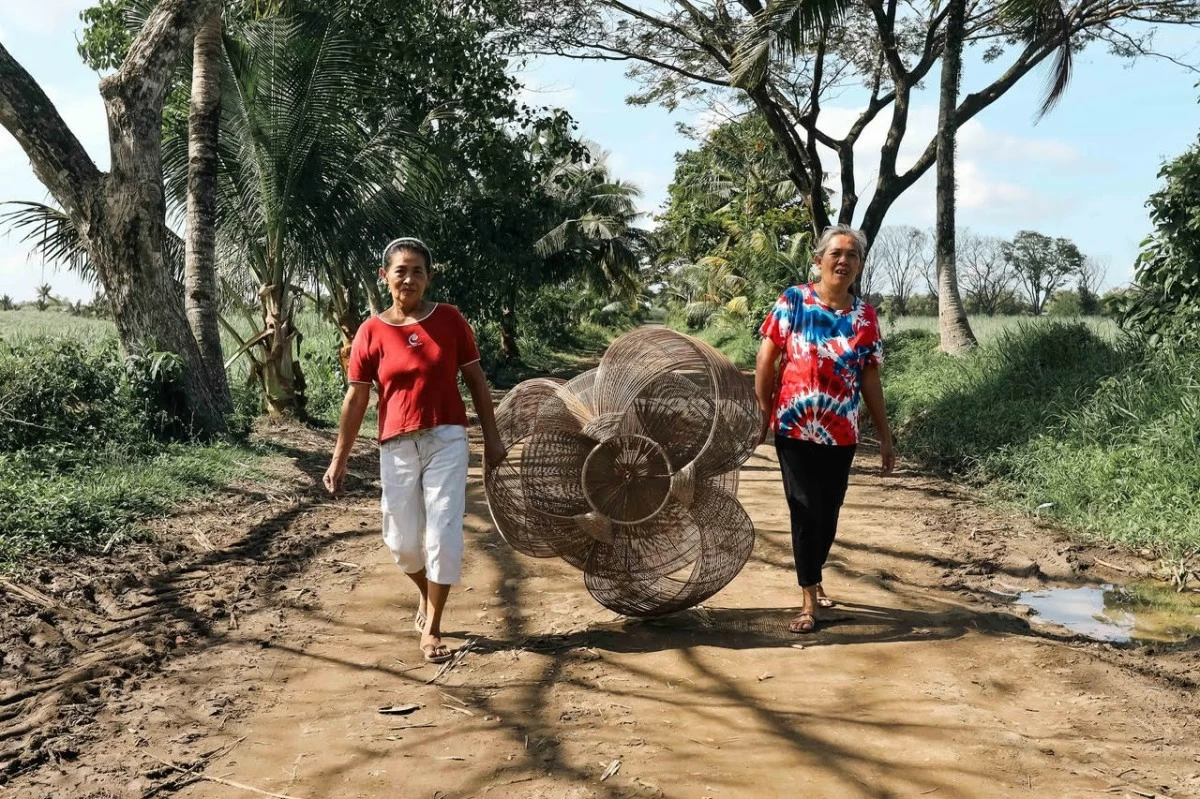
Artisans of Hacienda Crafts working together to deliver their work to the central facility
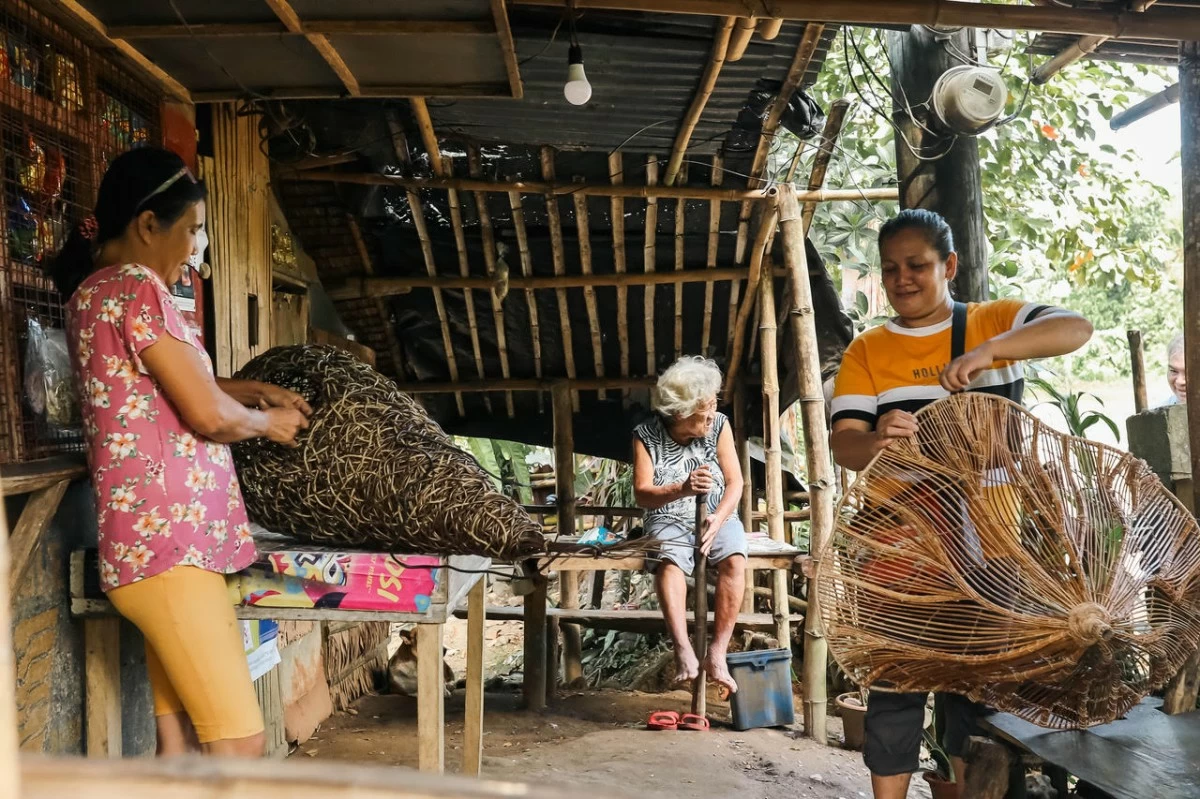
Since its establishment, countless families have been supported through this artisan livelihood. Most of the artisans are women at home who use their spare time to create more crafts. There is a big emphasis on fostering the community, as one of Hacienda Craft’s goals is to uplift communities and other locales within the province. Much of the materials used are also sourced from farmers of indigenous communities from other parts of the country.
Now, you’ll find most of the handicrafts of the farmers in homes, hotels, resorts, and restaurants. One of its recent clients is the popular burger restaurant Shake Shack in Makati City. Take a look at the restaurant’s interior, and you’ll recognize the distinct lighting fixtures as none other than the handiwork of Hacienda Crafts’s artisans.
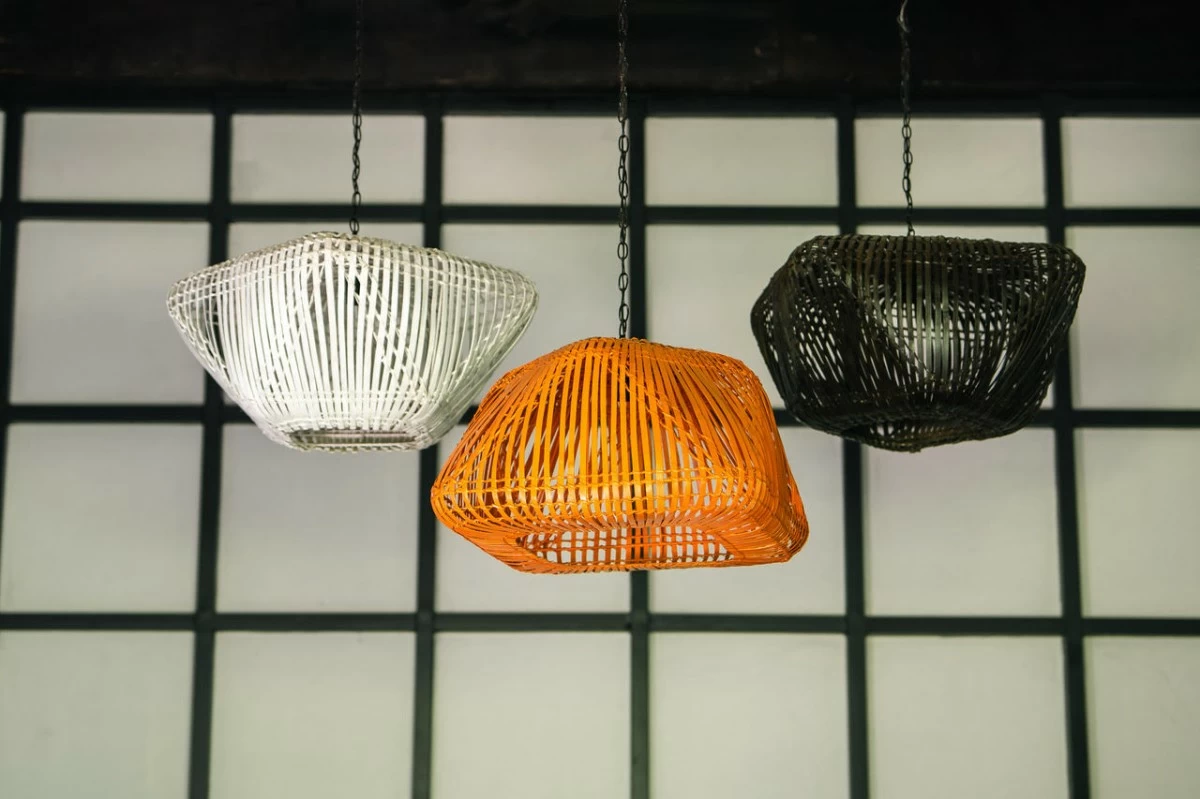
Biscornu hanging lamps in split bamboo are inspired by stuffed ornamental pin cushions and were designed by Rita Nazareno and Gabby Lichauco.
Aside from creating bespoke Filipino furniture, Hacienda Craft has also started local initiatives to help support locals and maintain sustainable business practices. Joining other manufacturers and designers from Cebu, Hacienda Craft is one of the co-founders of the Holistic Coalition of the Willing (Holicow). Working with the Cebu Chamber of Commerce and Industry, Cebu Furniture Industries Foundation, and AFOS Foundation, Holicow collaborates with partner communities to develop, produce, and market sustainable, fair trade products. They work closely with select areas to ensure sustainable practices are followed and are able to supplement the livelihoods of the community. This is done by partnering up with local designers and manufacturers to develop products from excess materials that are often discarded, meaning no items go to waste as they find a new purpose.
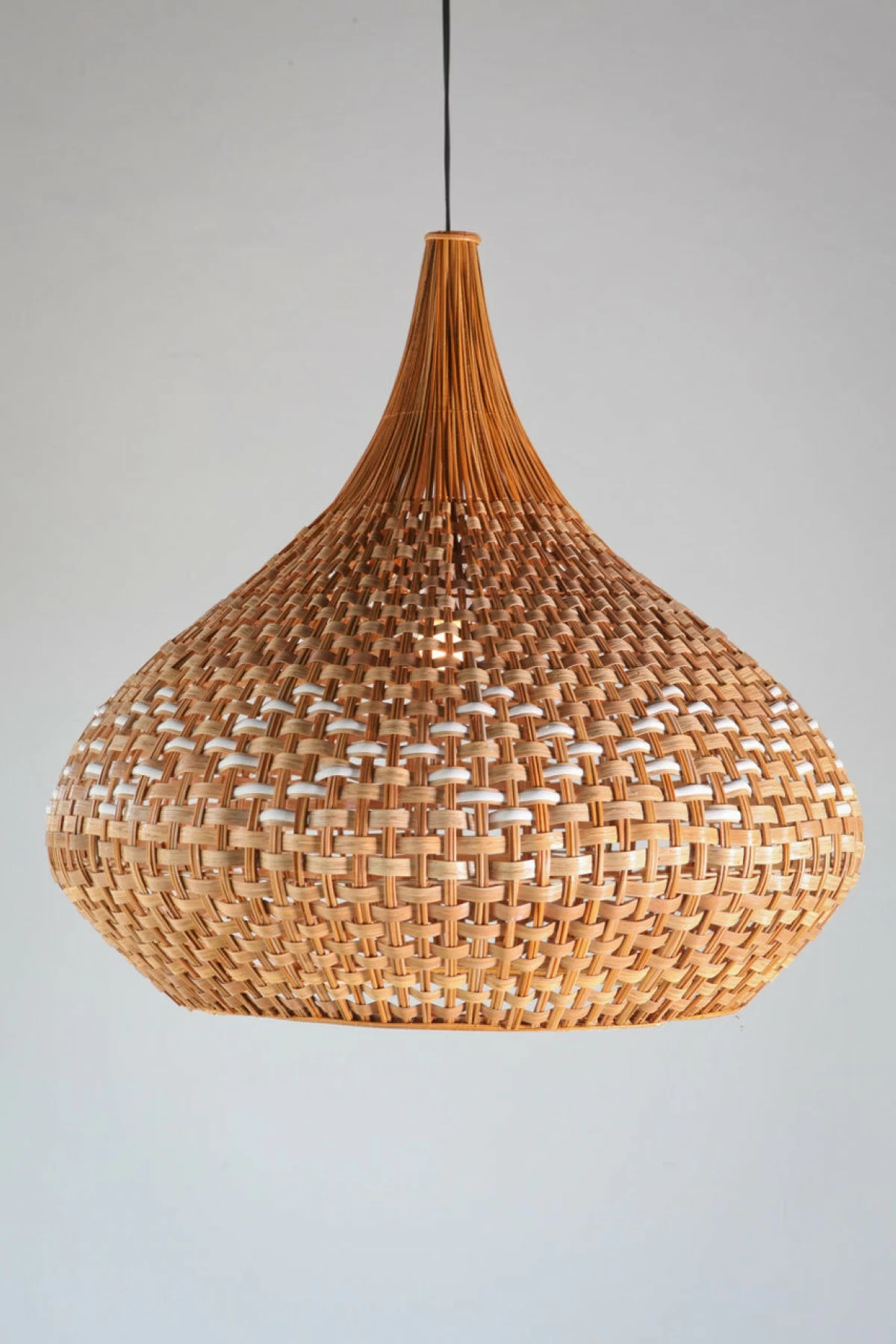
The Lala Uno hanging lamp in buri and bamboo, inspired by Philippine mat weaving traditions, was designed by Christina Gaston.
Hacienda Craft’s success is a testament to how taking care of our community and observing sustainable business practices can benefit everyone. Through the use of natural resources that would often just be discarded, these items find new life by being turned into bespoke furniture pieces. This alternative means of livelihood has also helped support many families of farmers, with some stories sharing how it has helped get their children through school. May their success story serve as an inspiration to other communities nationwide.