







EDSA People Power spirit lives on in Filipinos' hearts and minds
Published Feb 25, 2026 12:05 am
|
Updated Feb 24, 2026 04:20 pm


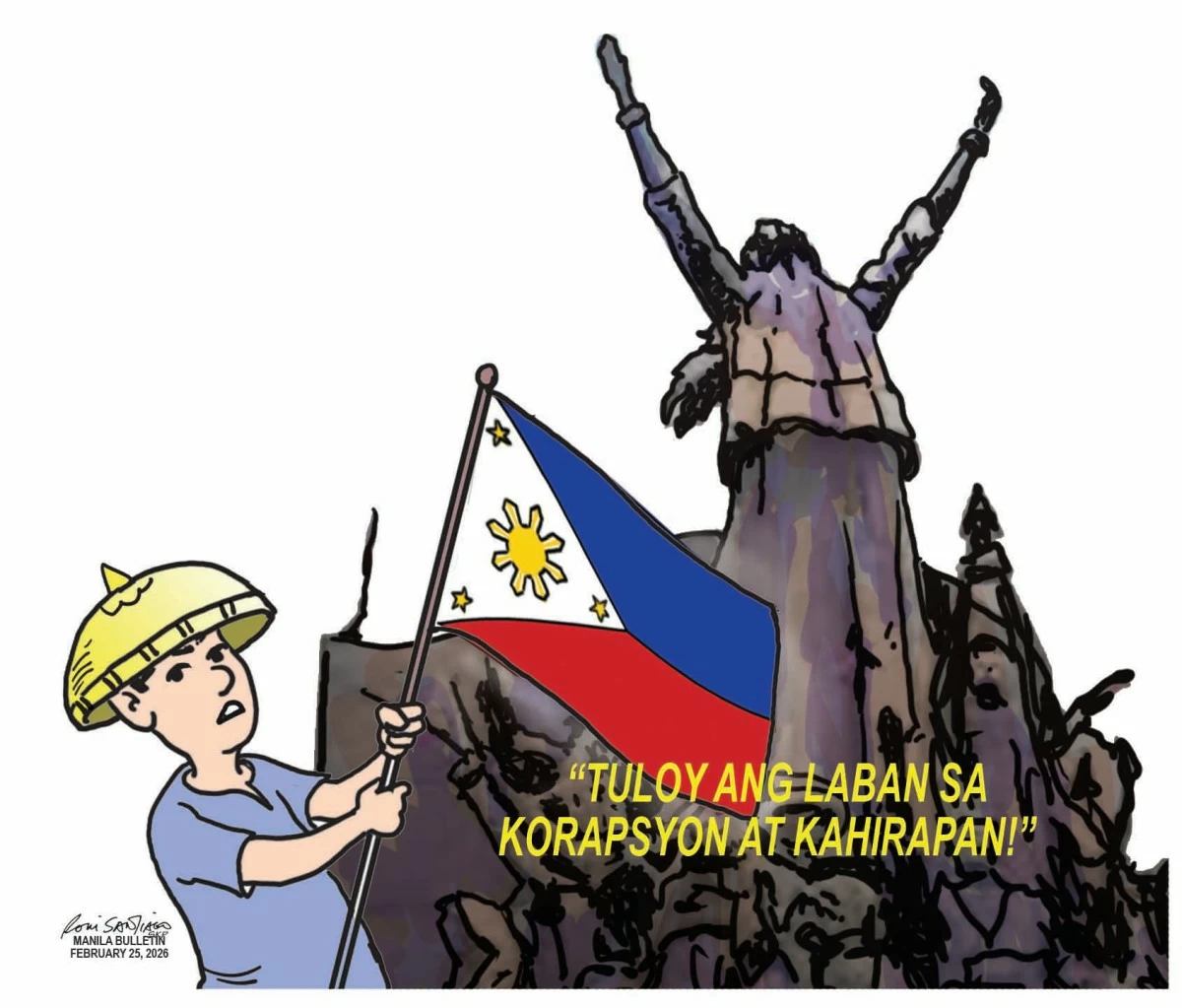
Today marks the commemoration and the celebration of the 40th anniversary of the EDSA People Power Revolution.
It was a watershed moment that marked the revival of the most vibrant democracy in Southeast Asia after 14 years of martial rule. In the nation’s postwar history, it was the biggest crowd that gathered in a public demonstration of a powerful sentiment: Bring back democracy to our country.
In early February 1986, a snap presidential election was held. In its aftermath, the largest rallies were mounted in Luneta to protest the proclamation of its results.
On Saturday night, Feb. 22, Jaime Cardinal Sin called on the faithful to go to Camp Aguinaldo to protect then Defense Minister Juan Ponce Enrile and then AFP Vice Chief of Staff Fidel Ramos who had declared their breakaway from the Marcos regime. For the next three days, hundreds of thousands manifested their sentiments by filling up the entire stretch of Epifanio de lo Santos Avenue (EDSA) between Ortigas avenue and Santolan street — then carried out a vigil for the restoration of democracy that lasted until the evening of Tuesday, Feb. 25.
This site will be revisited today by those echoing the call: “Tuloy ang laban sa korapsyon at kahirapan! (Carry on the struggle against corruption and poverty!).”
National Artist Nick Joaquin wrote a stirring memoir in the book, “The Quartet of the Tiger Moon: Scenes from the People Power Apocalypse.” In the four decades since then, several historical sites have emerged: the Our Lady of EDSA Shrine, a church built on the site where valiant Filipinos stared down tanks sent to disperse them; Club Filipino in Greenhills, the venue for the oath taking of Corazon Aquino as President of the Philippines; and the Bantayog ng mga Bayani (Monument of the Heroes) along Quezon Avenue near the corner of EDSA.
Present-day history students — and Filipinos in general — who wish to rekindle the spirit of EDSA People Power would do well to visit these sites that evoke the deeply-embedded sentiments of love of country and fidelity to the tenets of democracy.
When the 25th anniversary was observed in 2011 during the incumbency of then President Benigno S. Aquino, Jr., the theme was “EDSA 25: Pilipino Ako. Ako ang Lakas ng Pagbabago (I am a Filipino. I am the Force of Democracy).” The theme underlined unity, patriotism, and the continuing responsibility of citizens to uphold democracy and drive progress. It may be noted that since then, there has been increasing national concern over unbridled graft and corruption and poverty among the poorest classes.
While the Duterte and Marcos, Jr. administrations have dutifully carved out opportunities for nationwide observance of EDSA People Power, it is people’s organizations that have endeavored to maintain their vibrancy. Indeed, for democracy to thrive and flourish, the people must rededicate themselves to its tenets and principles, chief among which is responsible citizenship.
The children at the time of EDSA People Power are now in their forties. What could they tell their children in terms of the significance of those fateful four days in February 1986? Hopefully, they will be staunch advocates of democracy, and that they, too, like their forebears, will uphold the primacy of the basic freedoms of speech and assembly.
In this way, that momentous event would not have been in vain. It will truly be a legacy for future generations of Filipino who will commit themselves, too, to serve as vigorous exponents of democracy’s tenets.