






Manila Bulletin
 Spotlight Features
EDSA at 40: How a new generation keeps the spirit of People Power alive
Spotlight Features
EDSA at 40: How a new generation keeps the spirit of People Power alive
Spotlight Features
EDSA at 40: How a new generation keeps the spirit of People Power alive
EDSA at 40: How a new generation keeps the spirit of People Power alive
Published Feb 25, 2026 04:55 pm


What is the EDSA People’s Power Revolution to citizens who were not yet born 40 years ago, or who were too young to remember how a peaceful gathering initiated change in our country’s political structure?
On Feb. 22, 1986, people from all walks of life dropped everything and heeded the calls of Jaime Cardinal Sin, then Defense Minister Juan Ponce Enrile, and then Philippine Constabulary chief Fidel V. Ramos. They urged citizens to gather along Epifanio de los Santos Avenue (EDSA) to shield soldiers who had withdrawn support from President Ferdinand E. Marcos and pledged allegiance to the Filipino people.
In four historic days — from Feb. 22 to 25, 1986 — massive crowds stood in peaceful protest, calling for Marcos to step down as commander in chief and President of the Republic. By Feb. 25, government troops had lined up outside military camps, and the dictatorship that had lasted more than two decades gave way to a restored democracy which had elected Corazon C. Aquino as President in the snap elections earlier that month.
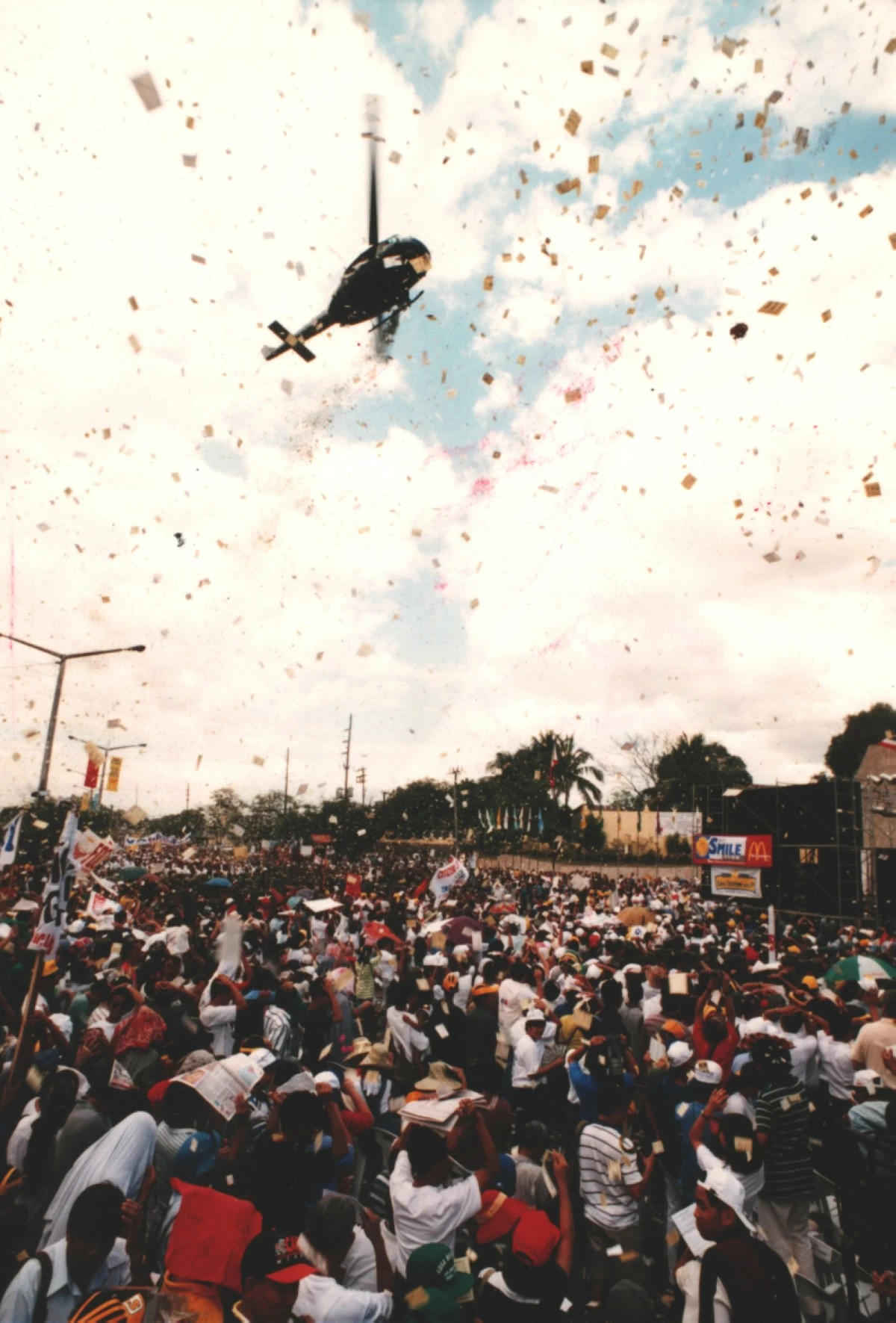
PHILIPPINE AIR FORCE helicopters drop confetti on thousands of people gathered on EDSA for the 10th anniversary program of People Power Revolution. (MB Photo)
People know that now as history. My generation knew that as a lived experience.
Forty years after the historic EDSA People’s Power Revolution, we interviewed our colleagues in Manila Bulletin who are 40 years old today, some even younger, how they came to know the story of People Power — and why, four decades later, they still stand with the multitude in pledging that the spirit of EDSA will never be forgotten.
Forty years on, EDSA lives differently in each generation.
For some, it is a memory etched in radio broadcasts and rosaries clasped in prayer along a highway. For others, it is a story discovered in textbooks, retold in family conversations, and reflected upon in newsrooms committed to truth.
But across generations, one thread remains constant: the belief that democracy requires participation, vigilance, and courage.
The young may not remember the four days of February 1986. Yet in their work, their reflections, and their resolve, the spirit of EDSA endures — not as a relic of the past, but as a continuing call to protect the freedoms won on a crowded highway, four decades ago.
Lessons from the pages of history
By Ramon Bonilla
Sports EditorEDSA People Power has always been a reminder of the Filipino victory over tyranny, of the courageous fight against oppression, and the key role of journalists even in times of struggles and injustice.
While I was born in 1994, eight years after EDSA ‘86, textbooks during my education years gave me proper knowledge of how martial law put the country in shackles and how the brave ones — journalists are the perfect example — rode through the storm they all knew would come to an end.
Stories of abuse during martial law and the triumph through peaceful demonstration on EDSA taught me lessons on protecting the integrity of media and how words that are printed or videos posted could shape opinions and influence directions in this modern world.
Through these means we all hope martial law would only be a chapter in history.
From indifference to understanding
By Len Amadora
Environment & Sustainability EditorI was in high school when the EDSA Revolution happened. Much like any teenager in the 1980s whose world revolved around music, fashion, and socializing, my only concern at that time was, perhaps, the struggle of fitting in. I did not care much about politics. That is probably why, during the EDSA Revolution, I barely paid attention.
At a time when there was no internet or social media, I was not exposed to the real-life struggles of many Filipinos. I remember it felt much like Holy Week, when the only thing on television was the Passion of Christ. During the EDSA Revolution, there was nothing on but the news. I recall my parents being glued to the radio and television, trying to find out what was happening.
As far as I can remember, my parents did a good job of shielding my siblings and me from what was really happening in the country. It was not that I was indifferent. It was that I was not fully aware of what was happening to our country. It was only when I was in college that I truly grasped and appreciated the magnitude of the EDSA Revolution.
My parents lived through martial law, and seeing its legacy end was a relief for them. For my parents, the EDSA Revolution was not just a peaceful overthrow of a dictatorship or the restoration of democracy. To them, it was a promise of a hopeful and better future for us, their children.
Now that I am a parent, fully aware of what is happening in the country, I carry that same promise for my own children – to protect the freedoms once fought for.
EDSA Revolution from the classroom
By Rey Ilagan
Lifestyle EditorDuring the EDSA Revolution, I was four years old, living in Malabon. At that age, I had no real understanding of what was happening in the country. I only grasped its significance years later when I learned about it in a Jesuit school.
In the classroom, the EDSA Revolution was presented not just as a political event but as a moral turning point as well. I began to associate it with Jaime Cardinal Sin, the historic call over Radio Veritas, and the prayer rallies that seemed to define those days. The images were powerful: rosaries raised in the air, nuns standing before tanks, and civilians offering flowers to soldiers.
The EDSA Revolution wasn't history yet. It was still recent memory many Filipinos like my teachers and neighbors had lived through it. I would hear stories about relatives and family friends who had joined the rallies along EDSA, giving more color to the significance of the EDSA People Power Revolution.