






Manila Bulletin
 Philippines
National
Civil vigilance key in fight vs corruption, Brian Poe tells NMYL convention participants
Philippines
National
Civil vigilance key in fight vs corruption, Brian Poe tells NMYL convention participants
Philippines
National
Civil vigilance key in fight vs corruption, Brian Poe tells NMYL convention participants
Civil vigilance key in fight vs corruption, Brian Poe tells NMYL convention participants
Published Feb 25, 2026 05:45 pm


At A Glance
- Civic vigilance is the strongest safeguard against corruption. This was among the key takeaways of FPJ Panday Bayanihan Party-list Rep. Brian Poe's speech during the 27th National Convention of the National Movement of Young Legislators (NMYL) at the Manila Hotel.
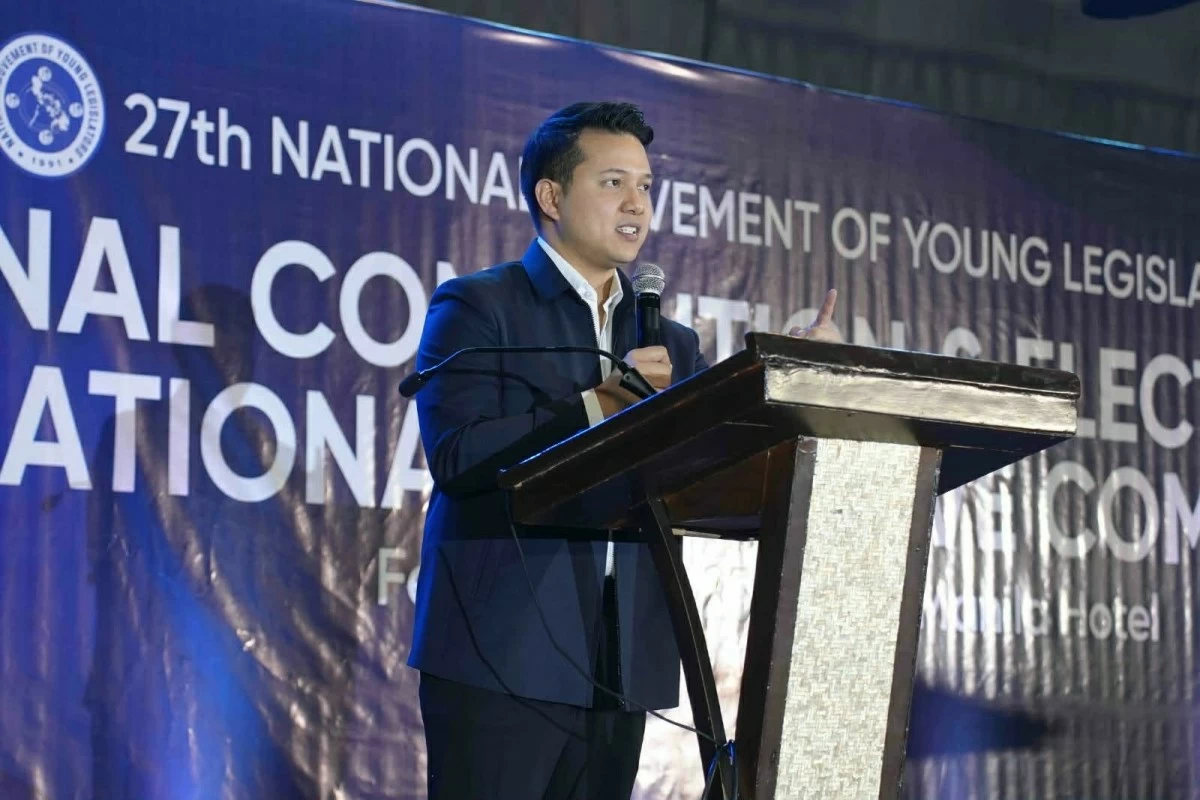
FPJ Panday Bayanihan Party-list Rep. Brian Poe (Contributed photo)
Civic vigilance is the strongest safeguard against corruption.
This was among the key takeaways of FPJ Panday Bayanihan Party-list Rep. Brian Poe's speech during the 27th National Convention of the National Movement of Young Legislators (NMYL) at the Manila Hotel.
The three-day event, which began last Monday, Feb. 23, drew nearly 2,000 young elected leaders composed of vice governors, board members, vice mayors, councilors, Sangguniang Kabataan leaders, and Liga ng mga Barangay presidents from across the country.
While highlighting the importance of digital technology in promoting transparency in government, Poe reckoned the person or the user of such technology was just as important.
“The strongest safeguard against corruption is not any algorithm or platform. It is civic vigilance. It is young leaders who refuse to look the other way when something is wrong,” the 33-year-old neophyte congressman said.
“Let us be the generation that finally turns the promise of good governance into reality—not someday, but now. Not somewhere else, but right here, starting in our own communities,” Poe challenged the participants.
Poe, who hailed from Pangasinan, underscored that corruption was not an abstract issue but a lived reality in local communities.
“In the 2024 Corruption Perceptions Index, the Philippines scored 33 out of 100 and ranked 114th out of 180 countries. The most recent 2025 index places us at 32, now ranked 120th. These are not just numbers. Behind every point are Filipinos who did not receive the services they needed,” he said.
He emphasized that young legislators stand at the frontlines of governance and are uniquely positioned to drive reform through digital tools and grassroots vigilance.
Poe highlighted groundbreaking digital reforms, including the Department of Information and Communications Technology’s (DICT) Digital Bayanihan Chain, which aimed to integrate blockchain technology into the national budget process from approval to disbursement. He also cited the Integrity Chain initiative of the Department of Public Works and Highways (DPWH) and the eGov PH Super App, which he described as not merely technological upgrades but “accountability upgrades".
“Technology is a tool. Like any tool, it can be used to build or to destroy. Our job as legislators is to make sure it builds trust,” Poe said.
In the House of Representatives, Poe is translating these digital initiatives into statutory safeguards. As presiding officer of the technical working group (TWG) of the Committee on Public Information, he recently led the deliberations on the proposed Right to Information (RTI) Act.
The measure seeks to operationalize Article III, Section 7 of the 1987 Constitution and institutionalize a uniform access-to-information regime. It is now on the cusp of approval by the mother committee.
Tracing the legacy of transparency advocacy to his grandfather, Fernando Poe Jr. (FPJ) and his mother former senator Grace Poe--the former principal sponsor of the Freedom of Information Act in the Senate--Poe further challenged the young legislators to institutionalize transparency in their own jurisdictions.
“You are digital natives. You understand how data flows and how information can be manipulated and protected. Do not wait for the national government to hand you reform. Be the reform,” he said.