






 Business
The Economy
EIU: Sluggish growth, corruption scandals could help Sara Duterte win in 2028
Business
The Economy
EIU: Sluggish growth, corruption scandals could help Sara Duterte win in 2028
EIU: Sluggish growth, corruption scandals could help Sara Duterte win in 2028


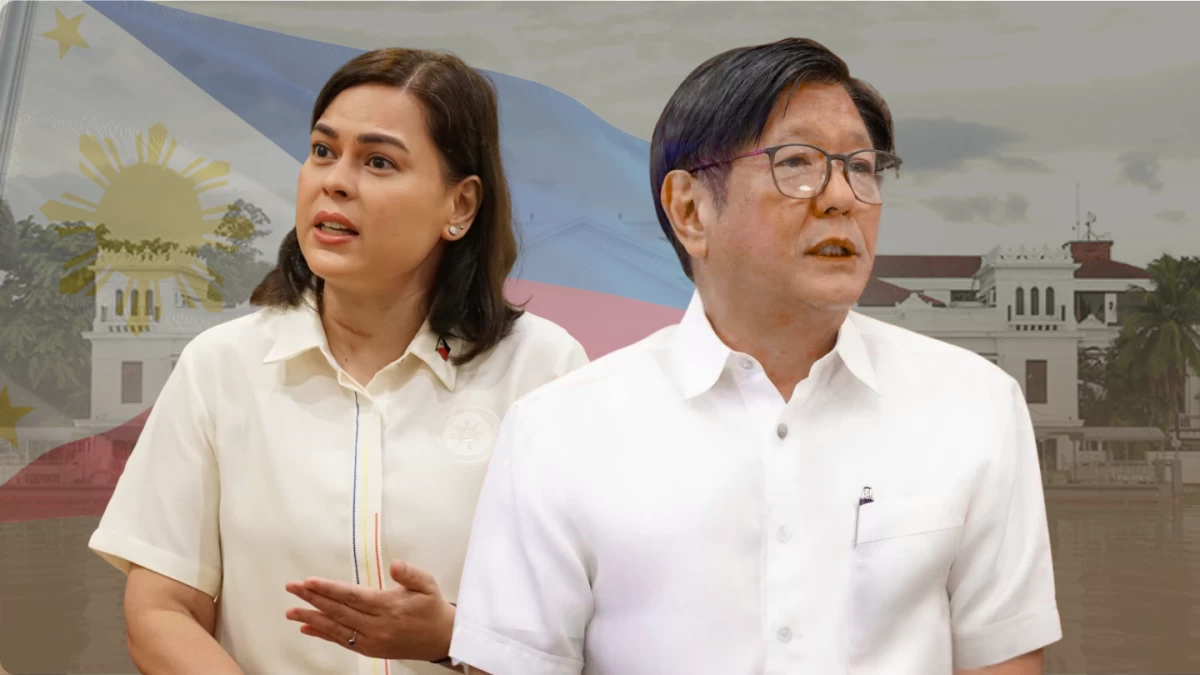
A subpar economic performance for the rest of the Ferdinand R. Marcos Jr. administration, which not even expectations of further interest rate cuts could reverse, would likely pave the way for a Sara Duterte presidency in 2028, according to the Economist Intelligence Unit (EIU).
“Our baseline remains that Ms. Duterte will win the 2028 election. There is a high degree of uncertainty to this forecast, as more than two years are considered a very long time in politics. However, her popularity continues to climb above that of Mr. Marcos, whose standing has been hit hard by the flood-control corruption scandal,” EIU Asia-Pacific regional director Alex Holmes and Asia analyst Kalyani Honrao said in a Feb. 23 report obtained by Manila Bulletin.
For EIU, “Mr. Marcos is likely to struggle until 2028, remaining politically constrained” or a lame duck president until the end of his term amid “legislative gridlock and the Duterte camp swaying public opinion against him.”
For the remainder of Marcos’ presidency, “we do not expect a significant downgrade to our economic outlook, which is already poor,” EIU said.
EIU had forecast Philippine gross domestic product (GDP) growth to improve only slightly, to 4.5 percent in 2026 from the post-pandemic low of 4.4 percent in 2025. The government targets a downgraded growth range of five to six percent this year.
In an earlier Feb. 20 report obtained by Manila Bulletin, EIU said the Bangko Sentral ng Pilipinas’ (BSP) latest interest rate cut, which lowered the policy rate by 25 basis points (bps) to 4.25 percent, “reflects weak growth momentum.”
“Growth is likely to stay subdued as investment spending remains weak,” such that EIU expects the BSP to reduce key rates by 25 bps twice more this year, ending 2026 with a policy rate of 3.75 percent.
“This will be contingent on economic momentum remaining sluggish, which we expect. Upside growth surprises from strong export growth, or a more forceful rebound in investment would probably prompt the Philippine central bank to pause instead,” EIU said.
It would not help that Duterte’s early announcement of her 2028 presidential candidacy would not only intensify the feud between her family and the Marcoses, but also “continue to undermine policymaking and policy execution” for the rest of the current administration.
EIU believes that a de-escalation of political tensions appears unlikely, as Duterte sharply criticized Marcos—her running mate during the 2022 national elections—while the vice president’s father, former president Rodrigo Duterte, remains detained at International Criminal Court (ICC).
For EIU, Duterte’s unusually early announcement likely aimed to consolidate lawmakers’ support amid four impeachment complaints, though the risk of removal remains low given her strong Senate backing and early positioning for the 2028 race.
But another Duterte as Philippine president two years from now would not be an easy achievement, EIU said, as tensions with China or a strong economic rebound could also shift political dynamics in favor of the Marcos camp, even as these scenarios may be unlikely, given current political alignments and weak economic momentum.
“We do not believe that [a strong economic upturn] will happen owing to the softness of recent economic momentum. If it does, the most likely trigger would be a virtuous upturn from household balance sheet repair that leads to a revival in consumption growth,” EIU said.
In January, EIU said that while the Philippine economy’s top growth driver, household consumption, “should perform a little better in 2026,” it cautioned that “balance sheet repair will remain a drag.”
“The backdrop is favorable, with inflation set to remain low owing to continued falls in global oil and food commodity prices. The benefits of past and future interest-rate cuts from the BSP will continue to feed through. However, the extent to which higher disposable incomes are spent versus saved will remain the crucial variable,” EIU noted.
EIU’s estimates “assume a long tail of deleveraging to repair the lingering damage to savings and personal debt levels” due to the socioeconomic crises inflicted by the Covid-19 pandemic from 2020 to 2022.