






Manila Bulletin
 Philippines
National
PCG: Underwater search of MV Trisha Kerstin 3 completed after 27 days; 14 individuals still missing
Philippines
National
PCG: Underwater search of MV Trisha Kerstin 3 completed after 27 days; 14 individuals still missing
Philippines
National
PCG: Underwater search of MV Trisha Kerstin 3 completed after 27 days; 14 individuals still missing
PCG: Underwater search of MV Trisha Kerstin 3 completed after 27 days; 14 individuals still missing
Published Feb 24, 2026 02:49 pm


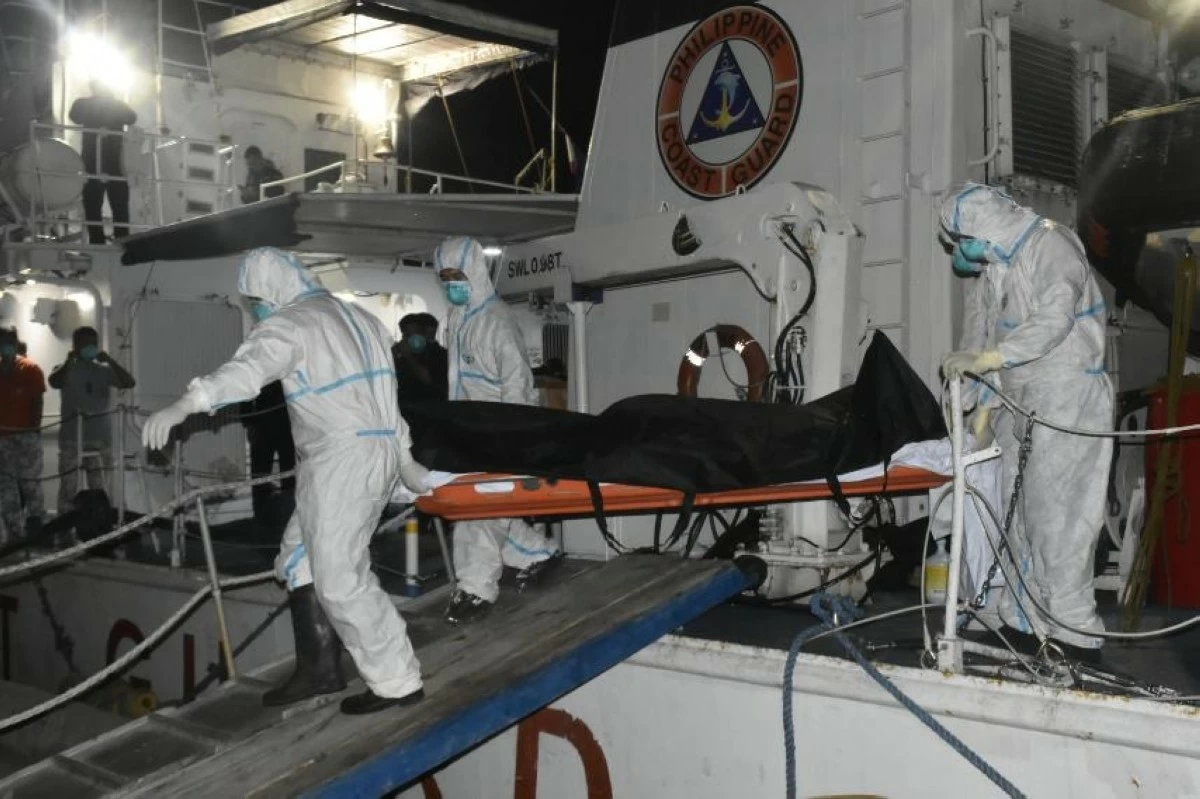
Authorities carry one of the four cadavers recovered from the wreck site of the sunken ferry MV Trisha Kirsten 3 off Baluk-Baluk Island in Basilan on Feb. 17, 2026. (Photo: Philippine Coast Guard)
The Philippine Coast Guard (PCG) said on Tuesday, Feb. 24, that its technical diving group has completed a full underwater search of the sunken MV Trisha Kerstin 3 after 27 days of high-risk deep-water operations off Baluk-Baluk Island in Basilan.
The diving operations started on Jan. 28 and ended on Feb. 23, where 22 bodies were recovered in different parts of the sunken ferry.
In total, 65 people died in the incident, 14 remained missing, while 293 others survived. MV Trisha Kerstin 3, operated by Aleson Shipping Lines, sank on Jan. 26 about 2.75 nautical miles northeast of Baluk-Baluk Island after departing from Zamboanga City Port.
Despite the completion of the underwater search, the PCG’s joint response teams will continue to conduct surface search, coastal or fishing community coordination, and other similar operations to locate the remaining missing individuals, said PCG spokesperson Capt. Noemie Cayabyab.
Cayabyab noted that the technical wreck divers would also perform “re-swiping procedures” inside the MV Trisha Kerstin 3 until Feb. 26.
Re-swiping procedures involve divers returning to previously searched sections of the wreck to conduct a second and more deliberate inspection. They re-enter decks, cabins, the engine room, and the car deck to visually and physically re-check spaces.
Divers would also clear silt, debris, and collapsed materials that may have shifted due to currents or earlier movements underwater. Meanwhile, blind spots such as tight corners, areas under vehicles, behind bulkheads, and beneath scattered debris are examined again.
Cayabyab explained that the process also includes confirming negative findings to ensure that no trapped victims or evidence remain in areas already cleared.
“We will conduct re-swiping procedures throughout the entire vessel to ensure that no location or area where an individual may have been trapped is left unchecked,” she said.
Divers' ordeal
Commodore Rejard Marfe, commander of Coast Guard District Southwestern Mindanao, said the 19 technical wreck divers who performed deep-diving operations worked in “extreme conditions.”
“Since January 28, 2026, PCG technical divers have worked through strong underwater currents, near-zero visibility due to heavy siltation, submerged hazards, and the vessel’s structural instability for the recovery of 22 cadavers from various sections,” he said.
He said the team systematically searched all accessible sections of the vessel including the ship’s deck A, deck B, the car deck with vehicles still onboard, and the engine room which was penetrated despite oil contamination and scattered debris, causing limited visibility.
Underwater assessment showed the vessel is listing to port or its left side while both exposed sides of the hull, including the ramps, remain intact with no visible external fractures on them.
On the car deck, partially collapsed vehicles leaned toward the left side which created obstructions that made interior access more challenging.
Marfe said all dives were documented through underwater video recordings to support the ongoing investigation.
Identification of bodies
Meanwhile, some of the recovered bodies have yet to be identified, according to Cayabyab.
She said the remains were turned over to the Philippine National Police-Scene of the Crime Operations (PNP-SOCO) for proper disposition.
“Some of the bodies have yet to be identified. What we do is turn them over to the PNP-SOCO. The relatives have provided DNA samples to PNP-SOCO,” Cayabyab shared.
“In some instances, the recovered bodies have IDs so we automatically inform the families. But if they can no longer be readily identified, that’s when PNP-SOCO conducts identification through the DNA samples provided by the relatives,” she added.