







Marcoleta disputes claim that Tomas Cloma discovered Spratlys
By Dhel Nazario
Published Feb 24, 2026 03:59 pm


Senator Rodante Marcoleta on Tuesday questioned whether the Armed Forces of the Philippines (AFP) is teaching what he described as a “distorted” historical narrative about Filipino seafarer Tomas Cloma and the discovery of the Spratly Islands
During the hearing of Senate Committee on National Defense and Security, Peace, Unification and Reconciliation, Marcoleta raised concerns over claims made during a recent Commission on Appointments (CA) hearing that Cloma discovered the Spratly Islands and later donated them to the Philippine government — assertions he said are historically inaccurate.
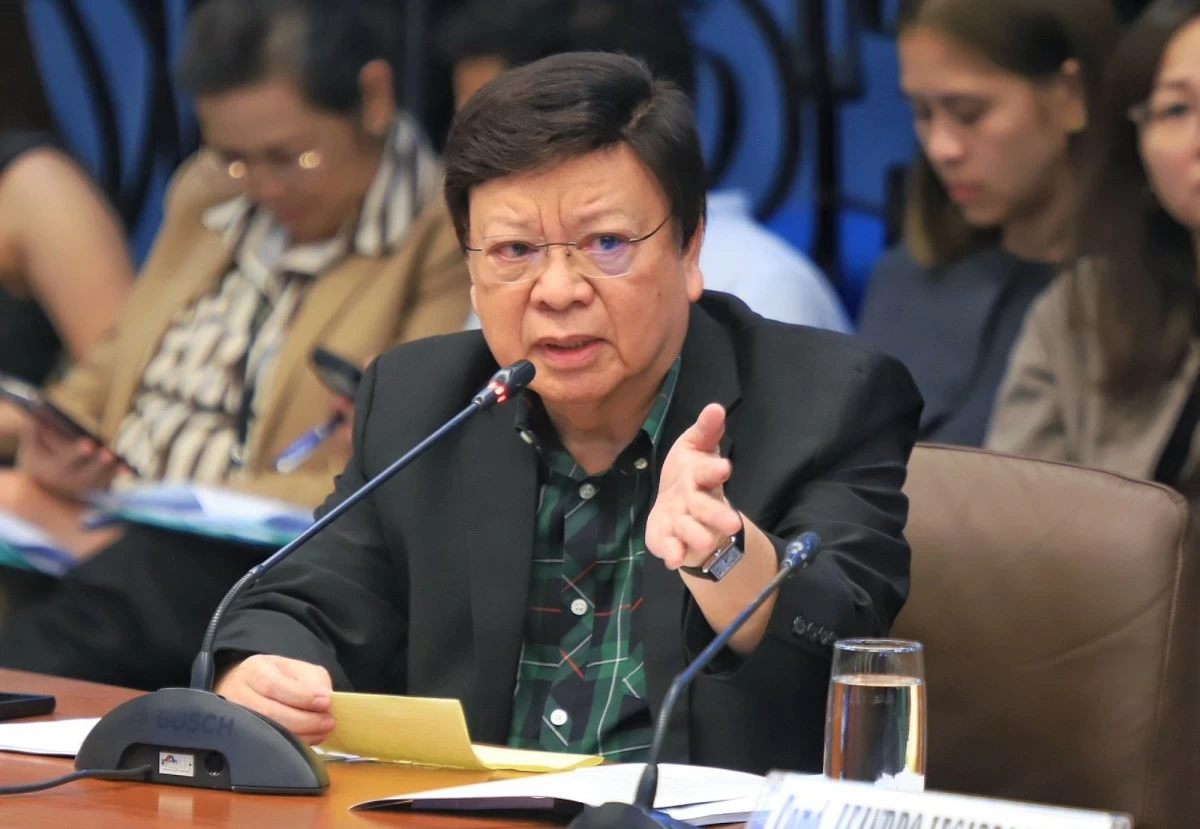
Senator Rodante Marcoleta (Senate PRIB photo)
Marcoleta said the issue surfaced during the CA hearing on February 4, when Senate President Pro Tempore Panfilo Lacson mentioned Cloma while questioning AFP officers undergoing confirmation. According to Marcoleta, a military officer present during the hearing appeared to affirm Lacson’s narrative, prompting him to seek clarification.
“Yun ba yung history na pinag-aaralan dito sa Command and General Staff Course? (Is that the history being taught here in the Command and General Staff Course?)” Marcoleta asked, referring to the AFP’s Command and General Staff Course (CGSC).
“Ito ba yung tinuturo sa course na siya ang nag-discover at dinonate niya ito sa gobyerno? (Is this what is being taught in the course—that he discovered it and donated it to the government?)” he added.
National Defense College of the Philippines (NDCP) President Christine June Cariño initially responded that if the statement came from the AFP Command and General Staff College, its officials would be better positioned to answer. Senate Committee on Finance Chairperson
Senator Loren Legarda clarified that the CGSC is distinct from the NDCP, prompting AFP Education, Training and Doctrine Command representative Brig. Gen. Alexander Gigantone to address the query.
Gigantone said the CGSC curriculum consists of seven modules that do not include military history, and that the alleged narrative about Cloma is not part of their official instruction.
“We don’t have military history module in our CGSC,” Gigantone said, adding that he would verify the matter with course directors to confirm.
Marcoleta welcomed the response but stressed the need to correct what he described as a longstanding historical distortion.
“Tomas Cloma is a seafarer, he’s not a discoverer,” Marcoleta said.
He explained that Cloma declared a “Freedomland” claim over parts of the Spratly Islands in 1956, but this move was met with objections from several countries, including the Philippines.
Marcoleta traced earlier historical claims over the Spratlys, citing British, French, and Japanese assertions dating back to the late 19th and early 20th centuries. He said these records contradict the claim that Cloma discovered the islands or possessed legal ownership.
He further rejected assertions that Cloma donated the territory to the Philippine government, saying no such donation is supported by official records, including Presidential Decree No. 1596, which formally incorporated the Kalayaan Island Group (KIG) into Philippine territory.
According to Marcoleta, Cloma was mentioned only briefly in the 2016 arbitral ruling on the South China Sea dispute, limited to references on pages 250 and 251, noting that Cloma and his associates had some activities in the Spratlys.
Marcoleta emphasized that Philippine ownership over certain features in the Spratly Islands rests on actual occupation and effective control, not discovery or private donation.
“Pag-aari natin yung occupied territories simply because nandoon ang mga tao natin and we have effective control under public international law,” he said.
He warned that misrepresenting Cloma’s role risks confusing military officers and undermining historical accuracy, particularly amid ongoing geopolitical tensions in the West Philippine Sea.
KIG removal
He also rejected claims that he sought to remove the KIG from Philippine territory, saying his previous remarks on the difficulty of mapping the West Philippine Sea were taken out of context.
“I never suggested giving up any part of our territory,” he said.
“Napakahirap lang talaga i-plot dahil nasa high seas na ang karamihan (It’s just really very difficult to plot because most of it is already in the high seas),” he added.
Marcoleta pointed to a 2012 administrative order issued by then President Benigno Aquino III instructing the National Mapping and Resource Information Authority (NAMRIA) and the Department of Foreign Affairs to prepare official maps and coordinates of the West Philippine Sea for submission to the United Nations. He said progress on the directive remains lacking.
He criticized NAMRIA’s recent release of what he described as merely an “administrative map,” which shows political subdivisions but lacks technical maritime coordinates required for international recognition.
“That is not the kind of map needed by the United Nations,” Marcoleta said.
Despite his criticisms, Marcoleta reiterated that his central concern was correcting what he called a flawed historical narrative surrounding Cloma.
He urged both the NDCP and the AFP to coordinate to ensure that military education accurately reflects historical records, particularly regarding sensitive territorial issues.