






Manila Bulletin
 Business
Trade & Industry
Manila seeks regional front against Trump's 15% import tariff
Business
Trade & Industry
Manila seeks regional front against Trump's 15% import tariff
Business
Trade & Industry
Manila seeks regional front against Trump's 15% import tariff
Manila seeks regional front against Trump's 15% import tariff
Published Feb 24, 2026 03:53 pm


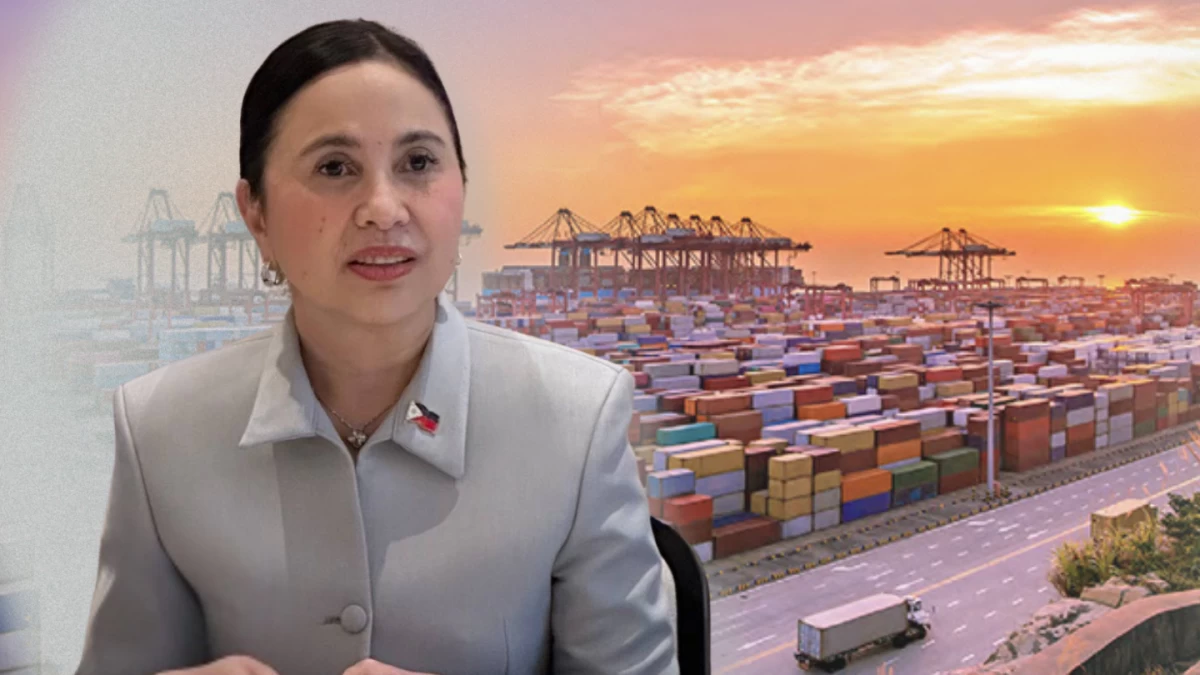
Trade Secretary Cristina Roque
Manila is preparing to lead a unified Southeast Asian push for a preferential trade agreement with the United States (US) following Washington’s decision to impose a 15 percent global tariff on imports.
Trade Secretary Cristina Roque said the government intends to leverage its 2026 chairship of the Association of Southeast Asian Nations (ASEAN) to safeguard the region’s export competitiveness and navigate the sudden shift in American trade policy.
Roque added that the government will also raise this matter during the upcoming ASEAN Economic Ministers (AEM) Retreat in the coming month.
“Definitely that will be one of the topics that we will be talking about,” she told reporters on the sidelines of the ASEAN Editors and Economic Opinion Leaders Forum.
She, however, said the government has yet to formally discuss the region’s position, given that the US’ new sweeping tariffs were just announced over the weekend.
Finance Secretary Frederick Go, on the other hand, said this is an issue that all ASEAN members “love to talk about when we're together.”
“What it made clear to us is that we have to open new markets,” said Go.
The US Supreme Court ruled on Feb. 20 that President Donald Trump’s reciprocal tariffs implemented under the International Emergency Economic Powers Act (IEEPA) were unconstitutional.
In the aftermath of the ruling, Trump immediately slapped a 10 percent surcharge on imports to the US, later raising it to 15 percent.
The new global tariff brings another wave of uncertainty that may undermine the exports of ASEAN members and ultimately their respective economic growth.
The Philippines is taking an active role in calling for deeper regional integration to accelerate investment flows and future-proof the region.
As ASEAN chair, Roque said a major priority is to oversee the passage and entry into force of the ASEAN Digital Economy Framework Agreement (DEFA).
DEFA aims to set the region’s common rules on e-commerce, digital trade, cybersecurity, digital payments, emerging technologies, and cross-border data flows.
The agreement is seen doubling the value of ASEAN’s digital economy, which is already on track to reach about $1 trillion by 2030.
“We recognize the complexity of today’s global environment—geopolitical tensions, technological disruption, supply chain shifts, and climate risks. Yet we remain confident in ASEAN’s collective strength. ASEAN bonded together is a force that cannot be ignored,” said Roque.
For the year, Roque said priorities of the ASEAN chairship also include cross-border mobility of digital talent and industrial development of semiconductors and critical minerals.
She added that they will also focus on developing renewable energy infrastructure, promoting healthcare and innovation, and upgrading micro, small, and medium enterprises (MSMEs).
“The Philippines is honored to steer this journey through innovation, strategic partnerships, and a focus on our people, we are not just navigating the future—we are defining it,” Roque said.