







Justice zones enhance child protection
Published Feb 24, 2026 12:05 am
|
Updated Feb 23, 2026 06:08 pm


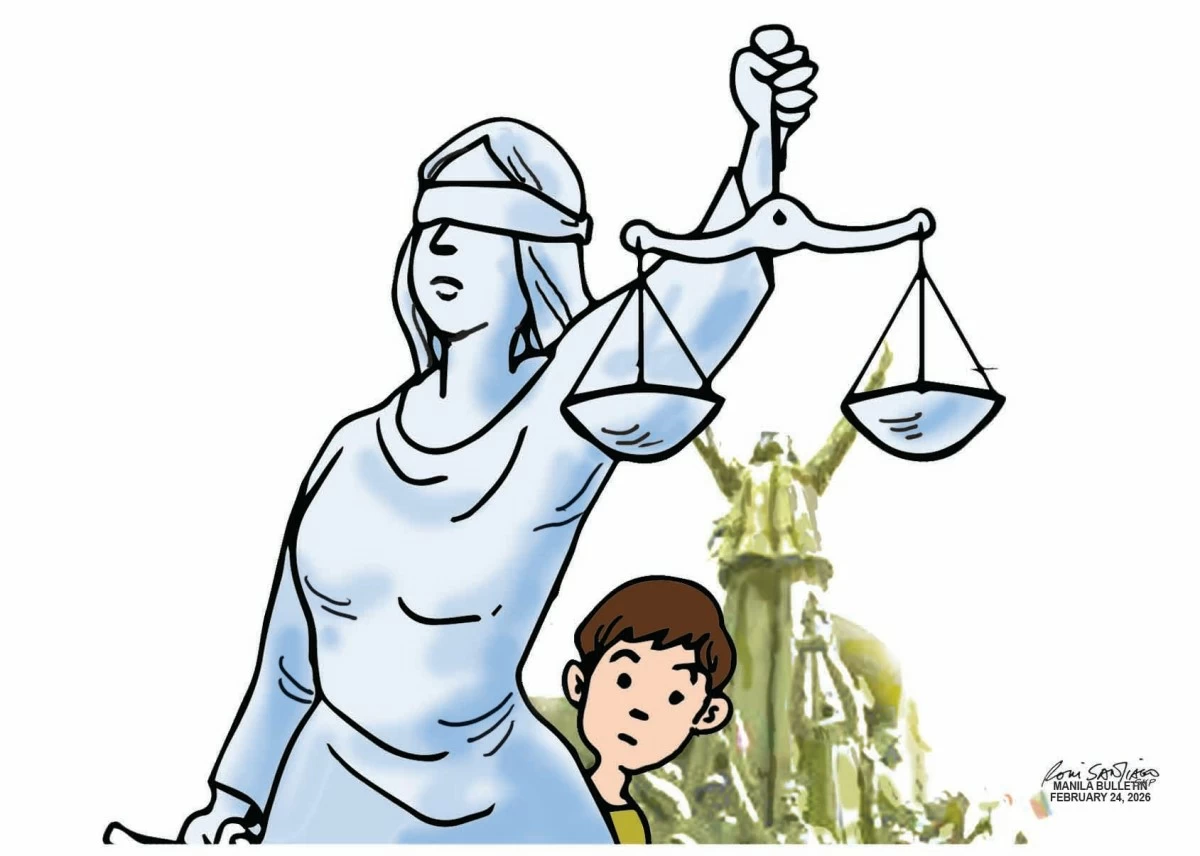
The latest initiative of the Supreme Court of the Philippines gives concrete meaning to the resonant theme chosen for the 40th anniversary of the 1986 EDSA People Power Revolution, “Tuloy ang Laban sa Korapsyon at Kahirapan” (Continue the Struggle against Corruption and Poverty).
The High Court has announced the establishment of three specialized Justice Zones in Tacloban, Ormoc, and Calbayog to intensify the government’s campaign against sexual abuse and exploitation of children in Eastern Visayas. This move underscores a vital truth: the fight against corruption and poverty is inseparable from the defense of the most vulnerable. A justice system that works swiftly and effectively for abused children is a justice system that restores trust in public institutions.
The Justice Zone concept is not new. Under the long-term Strategic Plan for Judicial Innovations (SPJI), the Justice Sector Coordinating Council (JSCC) — composed of the Supreme Court, the Department of Justice, and the Department of the Interior and Local Government — has established Justice Zones in key urban centers to promote close inter-agency collaboration and speed up the resolution of cases.
These zones are currently operational in Quezon City, Cebu City, Davao City, Iloilo City, Cagayan de Oro, Baguio, Bacolod, Tagaytay, Puerto Princesa, Zamboanga City, Naga, and Calamba.
In these areas, prosecutors, judges, law enforcers, public attorneys, and other stakeholders coordinate more closely, track case progress more rigorously, and identify bottlenecks in investigation and adjudication. The result is not only faster case disposition but also a culture of shared accountability across institutions.
It may be noted that the JSCC has established specialized Justice Zones focusing on critical, localized issues to expedite justice, including trafficking in persons (Zamboanga City), economic development tourism (Tagaytay City), environmental protection (Puerto Princesa City's Green Zone), and online sexual abuse/exploitation of children (Tri-City zones in Regions 8 and 10).
Bringing this model to Eastern Visayas — particularly with a specialized focus on child sexual abuse and exploitation — is both timely and urgent. Poverty, displacement, and digital vulnerability have made children in the region particularly susceptible to trafficking and online sexual exploitation. Delays in prosecution compound the trauma of victims and embolden perpetrators.
Justice delayed is justice denied, but for abused children, justice delayed can also mean lifelong scars. By clustering courts and justice agencies within defined zones and aligning them around a shared priority, the Supreme Court is signaling that child protection cases will not languish in crowded dockets.
The creation of these Justice Zones also speaks directly to the spirit of EDSA. The 1986 uprising was not only about removing a dictator; it was about restoring institutions anchored on accountability, transparency, and human dignity. Corruption thrives where systems are slow, opaque, and uncoordinated. Poverty persists where laws meant to protect the weak are not effectively enforced.
A responsive justice system is therefore a powerful weapon against both. When offenders are swiftly prosecuted, impunity diminishes. When children are protected, families are strengthened. When institutions work together rather than at cross-purposes, public confidence grows.
The Eastern Visayas Justice Zones remind us that reform is not sustained by rhetoric alone. It requires structural innovation, steady collaboration, and moral resolve. As we commemorate four decades since EDSA, the message is clear: the struggle against corruption and poverty continues not only in the halls of politics but in courtrooms, prosecution offices, and communities where the rule of law must be felt most deeply.
“Tuloy ang Laban” finds enduring meaning when justice is made real — especially for every Filipino child whose future depends on it.