






Manila Bulletin
 Philippines
National
Duterte, then most powerful man in PH, ordered 'killing spree'; promised protection, promotion, funeral homes sales—ICC prosecutor
Philippines
National
Duterte, then most powerful man in PH, ordered 'killing spree'; promised protection, promotion, funeral homes sales—ICC prosecutor
Philippines
National
Duterte, then most powerful man in PH, ordered 'killing spree'; promised protection, promotion, funeral homes sales—ICC prosecutor
Duterte, then most powerful man in PH, ordered 'killing spree'; promised protection, promotion, funeral homes sales—ICC prosecutor
Published Feb 24, 2026 08:10 pm


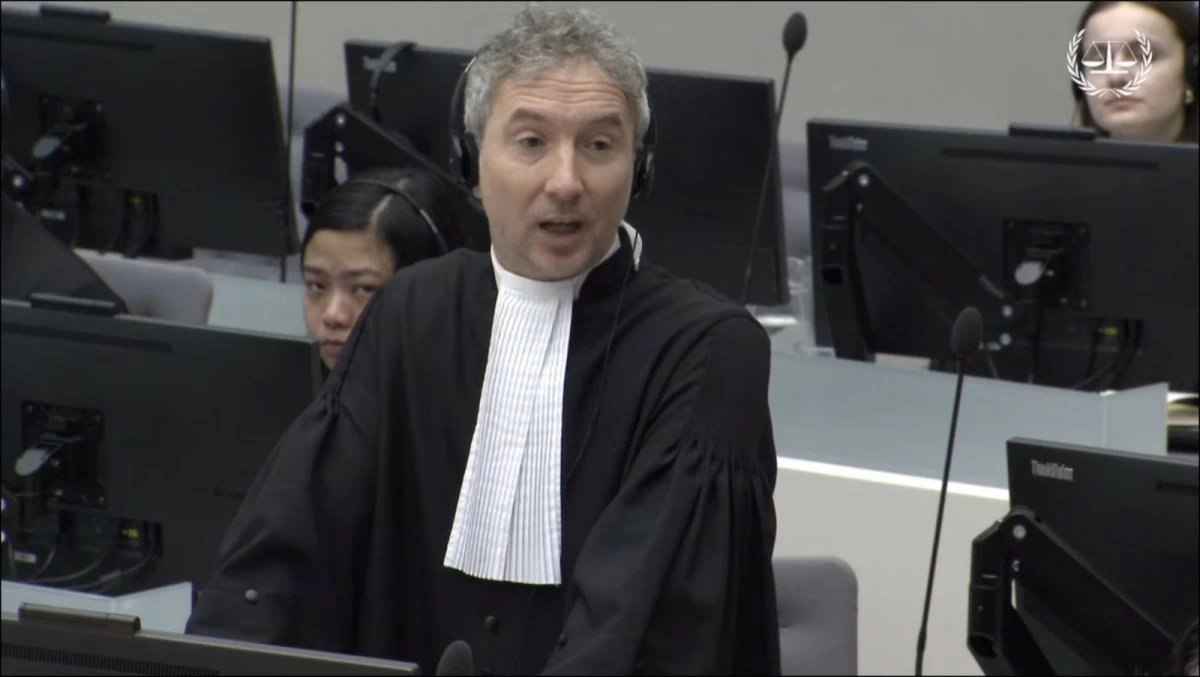
ICC trial lawyer Edward Jeremy of the Office of the Prosecutor
Former president Rodrigo Duterte was indeed “not joking” when he said that, under his presidency, funeral homes would make a lot of money from his deadly war on drugs, which saw children reduced to bodies that funeral homes could profit from, an International Criminal Court (ICC) prosecutor said.
During the resumption of confirmation of charges hearing at the ICC on Tuesday, Feb 24, ICC trial lawyer Edward Jeremy of the Office of the Prosecutor laid out the prosecution's evidence against Duterte, focusing on the alleged "killing spree" that took place in the streets of the Philippines.
Jeremy argued that during Duterte's term, he boasted about murders and assured funeral homes of prosperous business.
The trial lawyer zeroed in on one of Duterte's speeches delivered in Tondo, where he supposedly ordered the people to kill someone else's child over drug addiction.
"[R]egrettably children continued to be the victims of these killings," Jeremy said as he presented a clip of one one Duterte's remarks saying: "If it's someone's child, be the killer yourself. If someone's child is the addict, then you be the one to kill."
"Your honors, it's worth pausing here, taking a step back and reflecting at what we are seeing and what we are hearing. This is the President of the Philippines, a commander-in-chief, the most powerful man in the Philippines, he's pointing directly at the crowd and telling them to kill someone else's child. Kill them, not because they are an alleged drug lord, not even an alleged criminal, but simply they may have an addiction to drugs," Jeremy stressed.
If funeral business declines, 'tell the police, hurry up a little'
Using the defense's argument from yesterday that Duterte speaks "openly from the heart, sincerely and truthfully," the ICC prosecutor said it was indeed seen in his statements when he said that under his watch, funeral homes will earn a lot and that he was "not joking."
"Mr. Duterte also boasted that during his presidency, funeral homes would make a lot of money. Here's the President assuring funeral homes that if their business declines he will 'tell the police, hurry up a little, so people can make money from their business.' And he stressed very clearly, he was 'not joking,'" Jeremy said.
"As your honors know, in the course of these incidents which occurred during 2018 on two separate occasions, the police detained a child aged around 14 or 15 years old. On each occasion, the police wraps the child's head in packing tape so no one could hear them scream and strangle the child to death with wire," Jeremy added.
"It is difficult to imagine a more terrifying end to two lives that have barely even begun," Jeremy went on. "And these murdered children will then be sold to funeral homes, who profited from their bodies."
"Your honors, dead children, police ensuring that funeral homes made money. Mr. Duterte was indeed not joking," Jeremy said.
'Hunting season, killing spree'
Quoting one of the witnesses, Jeremy said Duterte's war on drugs was a "hunting season, a killing spree," guided by the so-called "narco list," also known as the "PRRD list."
During the course of his anti-illegal drug campaign, Duterte, Jeremy said, implemented the operations from the high-value targets to the children on the street through "Oplan Tokhang."
"As we see, Mr. Duterte's message was clear: Stay away from drugs or I will kill you. And the killing in Tondo began almost immediately following this speech," the trial lawyer said as he presented a clip of Duterte speaking before the people of Tondo in Manila.
On one side of the country, just outside Metro Manila, 32 people were killed, an incident that could have easily become a major national issue, but Duterte, Jeremy said, even praised the police for a job well done.
"Your honors, 32 individuals killed by the police in Bulacan in 24-hour period, you would imagine this would be a major national incident. So how did Mr. Duterte react to this shocking news?" Jeremy said.
"So that was the President's message in response to the death of 32 Filipinos in a single day. He essentially said to the police, well done, keep going, let's kill another 32 everyday," he stressed.
And the killings "went on and on," the Prosecutor said. The one-time, big-time operations continued until around the 18th of August 2017, resulting in many more deaths, he added.
"As one witness stated: It was hunting season, a killing spree," Jeremy said.
Then came the Kian delos Santos case. Kian was a 17-year-old student who was fatally shot by police officers during anti-drug operations in Caloocan City.
"This brutal murder led to a massive public outcry across the Philippines. And in these circumstances exceptionally, the direct perpetrators of these murders were prosecuted and they were imprisoned," according to Jeremy.
"And in the face of this public outcry, Mr. Duterte was forced to temporarily withdraw police from drug operations from the 10th of October to 4th December 2017 and this led to the reduction in the frequency of killing," the prosecutor said.
However, less than two months later, Duterte decided to once again scale up operations, ordering the Philippine National Police (PNP) back into the campaign and "the killings once again intensified."
'Nanlaban'
Jeremy argued that police reports during the war on drugs were "repeatedly falsified" in order to "legitimate the operations as act of self-defense."
"And in this context, as the witnesses explained, the police often use the term 'nanlaban' which translates to fighting back to describe incidents in which they supposedly shot a victim in self defense," the trial lawyer said.
"And these reports were often almost identical in essence, copy-paste reports in which victims were frequently blamed for their own deaths," he added.
'Neutralize meant to kill'
The prosecution also brought up the use of "neutralize," which was frequently used in police reports amid the drug war.
Jeremy argued that it meant "to kill," as explained by insider witnesses.
"This word may be open to interpretation. Insider witnesses provide evidence that within law enforcement within the Philippines to neutralize meant to kill," the trial lawyer said, adding that one insider witness explained the significance of the use of the word in Duterte's command memorandum.
"They use the word neutralize to emphasize the kill order of President Duterte because that is the promise of President Duterte even before the campaign," Jeremy said.
He also noted that Duterte has ordered the police and military to "kill" and "I will protect you."
"Duterte made it very clear that this promise of protection related not only to lawful killings," the prosecutor said.
This, as he showed a clip of Duterte speaking before the military telling them to commit massacre, promising them protection and promotion.
Jeremy also noted that Duterte had occasionally sought to "legitimize" his encouragement of violence in his speeches in Davao, and carried it over to his presidency.
"During his speeches in Davao, Mr. Duterte, well-versed of the law, occasionally seeks to legitimize his encouragement of State violence by refences to human rights and self defense. And he continued to do so as president," the prosecutor said.