






Manila Bulletin
 Philippines
National
Duterte, co-perpetrators created 'common plan' to 'neutralize' drug suspects — prosecution
Philippines
National
Duterte, co-perpetrators created 'common plan' to 'neutralize' drug suspects — prosecution
Philippines
National
Duterte, co-perpetrators created 'common plan' to 'neutralize' drug suspects — prosecution
Duterte, co-perpetrators created 'common plan' to 'neutralize' drug suspects — prosecution
Published Feb 24, 2026 09:06 pm


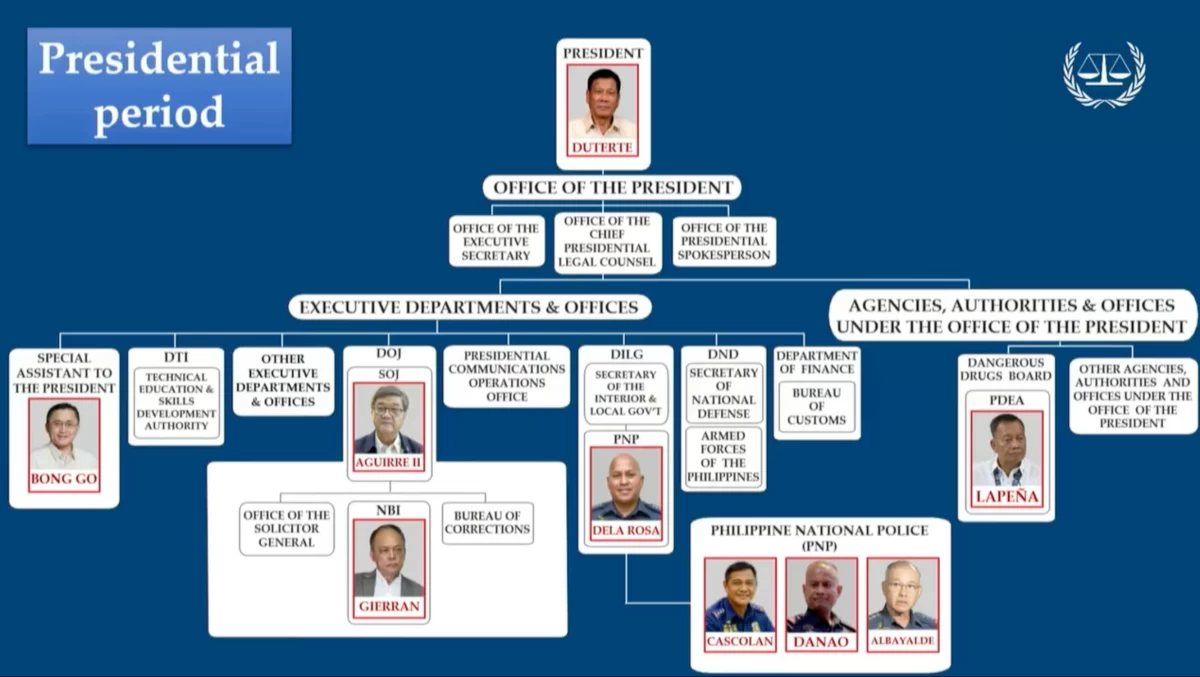
Former president Rodrigo Duterte and his alleged co-perpetrators, including senators Bato dela Rosa and Bong Go, created a "common plan" to "neutralize" suspected criminals at the height of the previous administration's war against drugs.
On the second day of the confirmation of charges against Duterte at the International Criminal Court (ICC), trial lawyer Robynne Croft alleged that the former president also has "individual criminal liability" in the charges of crimes against humanity committed in the Philippines.
This made Duterte a co-perpetrator of the crimes against humanity, along with eight others, namely dela Rosa, Go, former Philippine National Police (PNP) chief of counterintelligence Vicente Danao, National Bureau of Investigation (NBI) director Dante Gierran, former PNP chief of operations Camilo Cascolan and former Justice Secretary Vitaliano Aguirre II.
Together, Croft alleged, they created a "common plan" that was "to neutralize alleged criminals in the Philippines (including those perceived or alleged to be associated with drug use, sale or production) through violent crimes, inlcuding murder."
Croft cited three modes of Duterte's individual liability. They were indirect co-perpetration, ordering and/or inducing as well as aiding and abetting. But during the time-limited and broadcasted prosecution's presentation of merits, Croft focused on the former president's alleged co-perpetration.
According to her, Duterte's essential contribution in the neutralization of drug suspects included designing the policy, establishing and overseeing the Davao Death Squad (DDS), instructing violent acts such as murder, providing personnel with logistical resources and weapons and appointing key personnel to positions.
Duterte also allegedly offered financial rewards and promotions for the killings, created a system of impunity, authorized and condoned killings through public statements, authorized state actors and publicly named targets, including the "high value" ones.
And usually those high value targets belonged to the "PRRD List," which practically means a "Dead List," according to another trial lawyer, Edward Jeremy.
The prosecution on Tuesday, Feb. 24, argued that Duterte committed crimes against humanity through three contextual elements of attack on civilians, a systematic attack and an attack in pursuant of a state policy.
"It was clear that there was an attack on the civilians, it was clear there was a systematic attack because targets were pre-identified and subject to operations, and it was clear there was a state policy because there was a memoranda coming from Duterte's men," Croft argued.
Croft said attacks on civilians and alleged drug suspects were only concentrated in Davao City during Duterte's mayoral term, but it expanded nationwide when he became the president.
And citing the Philippine Drug Enforcement Agency (PDEA)'s figures alone, 5,281 people were killed from 2016 to 2019, making the extrajudicial killings widespread.