ADVERTISEMENT

Church tags cash as root of coal mining in South Cotabato

Published Feb 24, 2026 02:43 pm
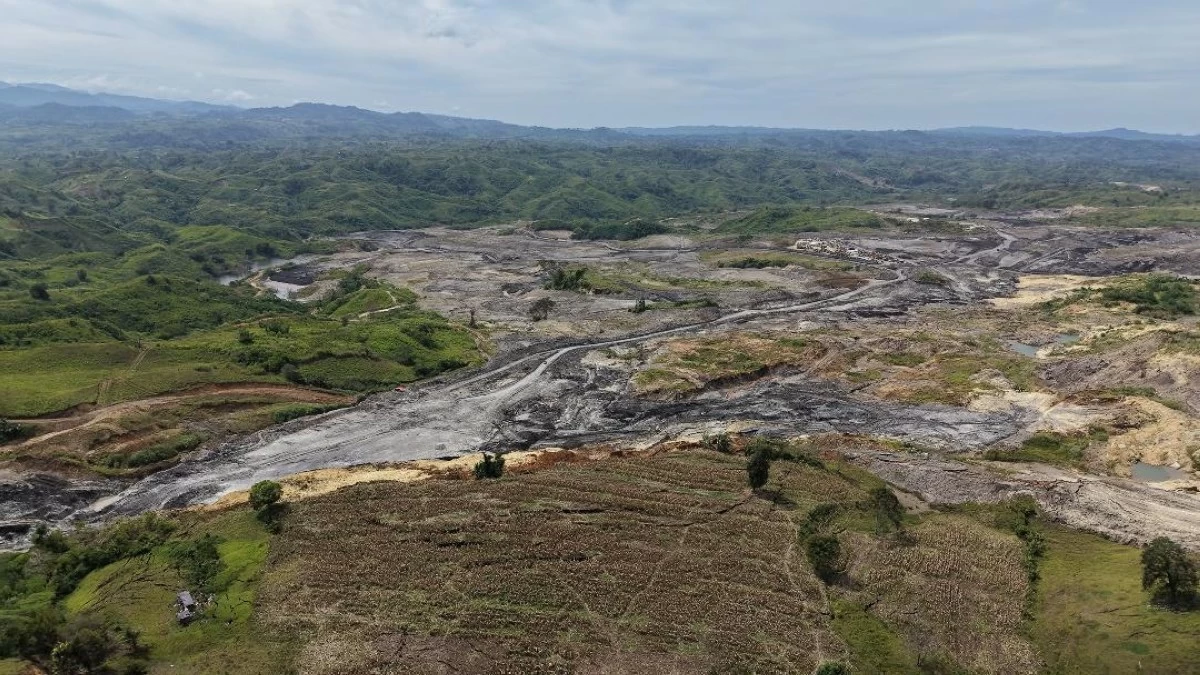
COAL mining in Barangay Ned, Lake Sebu, South Cotabato. (Contributed photo)
DAVAO CITY – The Catholic Church in South Cotabato has insisted that money is the real reason why coal is being extracted in a remote barangay in Lake Sebu, South Cotabato, not because it poses geohazards risks to communities.
In a meeting called by the provincial government of South Cotabato on Monday, Feb. 23, a representative of Daguma Agro Minerals Inc. (DAMI) insisted that coal mining helps mitigate geohazard risks in the area.
DAMI geologist JP Benjamin Fortinez said that ongoing coal mining operations may have contributed to the mitigation of the landslide in Sitio El Dolog in the hinterland Barangay Ned.
Fortinez said that the Mines and Geosciences Bureau has conducted vulnerability and risk assessment in 2016.
In 2019, Fortinez said that the MGB noted that "possible coal extraction” could mitigate the geohazards in the area.
The DAMI geologist acknowledged that coal, which has an impermeable layer, does not absorb water, and thus, was among the contributing factors in the massive landslide last Feb. 13.
However, Archdiocese of Marbel Social Action Center director Fr. Jerome Millian disagreed with Fortinez’s justification, saying that money is the real reason why coal is being extracted.
“Coal is being mined out not because it's a geohazard risk but because of money. The area used to look green but look what’s happening now,” said Millian in a dialogue streamed live on Facebook.
The Church and support groups have been opposing the coal mining project since explorations started nearly 20 years ago.
Environmentalists and indigenous peoples have warned of displacements and irreversible damages once open pit mining operations begin.
The massive landslide sparked a public outcry after it cut-off transportation and hampered movement of goods from farmers and indigenous peoples communities.
Residents blamed the landslide on ongoing mining operations.
But Fortinez said that multiple earthquakes and heavy rains may have triggered the landslide as fissures and slumping have been documented last year. He recalled the earthquake swarms off the coast of Kalamansig in mid-January to the end of January.
Fortinez explained that the overlying layers of coal in the area such as limestone, sandstone, and silk stones act as sponge and acts like a sponge and collapsed during heavy rain.
He added that because of mining operations, coal has been exposed and eventually removed, making the water flow freely.
South Cotabato Vice Gov. Arthur Pingoy Jr. agreed with Millian’s statement, saying that coal is mined out because of money and not because its poses a geohazard risk. “But we have to balance things. The business side and its effect to the environment,” Pingoy said.
Department of Energy-Energy Resource Development Bureau Director Demujin Antiporda assured that they may shut down coal mining operations if the company has committed violations.
Antiporda assured the provincial government that they will submit the findings in the investigation to the DOE Central Office in Manila.
Following the dialogue, the provincial government is eyeing to hold a committee hearing on coal mining operations in Lake Sebu.

Related Tags

Coal mining Lake Sebu South Cotabato
ADVERTISEMENT
.most-popular .layout-ratio{ padding-bottom: 79.13%; } @media (min-width: 768px) and (max-width: 1024px) { .widget-title { font-size: 15px !important; } }

{{ articles_filter_1561_widget.title }}

.most-popular .layout-ratio{ padding-bottom: 79.13%; } @media (min-width: 768px) and (max-width: 1024px) { .widget-title { font-size: 15px !important; } }

{{ articles_filter_1562_widget.title }}

.most-popular .layout-ratio{ padding-bottom: 79.13%; } @media (min-width: 768px) and (max-width: 1024px) { .widget-title { font-size: 15px !important; } }

{{ articles_filter_1563_widget.title }}

{{ articles_filter_1564_widget.title }}

.mb-article-details { position: relative; } .mb-article-details .article-body-preview, .mb-article-details .article-body-summary{ font-size: 17px; line-height: 30px; font-family: "Libre Caslon Text", serif; color: #000; } .mb-article-details .article-body-preview iframe , .mb-article-details .article-body-summary iframe{ width: 100%; margin: auto; } .read-more-background { background: linear-gradient(180deg, color(display-p3 1.000 1.000 1.000 / 0) 13.75%, color(display-p3 1.000 1.000 1.000 / 0.8) 30.79%, color(display-p3 1.000 1.000 1.000) 72.5%); position: absolute; height: 200px; width: 100%; bottom: 0; display: flex; justify-content: center; align-items: center; padding: 0; } .read-more-background a{ color: #000; } .read-more-btn { padding: 17px 45px; font-family: Inter; font-weight: 700; font-size: 18px; line-height: 16px; text-align: center; vertical-align: middle; border: 1px solid black; background-color: white; } .hidden { display: none; }
function initializeAllSwipers() { // Get all hidden inputs with cms_article_id document.querySelectorAll('[id^="cms_article_id_"]').forEach(function (input) { const cmsArticleId = input.value; const articleSelector = '#article-' + cmsArticleId + ' .body_images'; const swiperElement = document.querySelector(articleSelector); if (swiperElement && !swiperElement.classList.contains('swiper-initialized')) { new Swiper(articleSelector, { loop: true, pagination: false, navigation: { nextEl: '#article-' + cmsArticleId + ' .swiper-button-next', prevEl: '#article-' + cmsArticleId + ' .swiper-button-prev', }, }); } }); } setTimeout(initializeAllSwipers, 3000); const intersectionObserver = new IntersectionObserver( (entries) => { entries.forEach((entry) => { if (entry.isIntersecting) { const newUrl = entry.target.getAttribute("data-url"); if (newUrl) { history.pushState(null, null, newUrl); let article = entry.target; // Extract metadata const author = article.querySelector('.author-section').textContent.replace('By', '').trim(); const section = article.querySelector('.section-info ').textContent.replace(' ', ' '); const title = article.querySelector('.article-title h1').textContent; // Parse URL for Chartbeat path format const parsedUrl = new URL(newUrl, window.location.origin); const cleanUrl = parsedUrl.host + parsedUrl.pathname; // Update Chartbeat configuration if (typeof window._sf_async_config !== 'undefined') { window._sf_async_config.path = cleanUrl; window._sf_async_config.sections = section; window._sf_async_config.authors = author; } // Track virtual page view with Chartbeat if (typeof pSUPERFLY !== 'undefined' && typeof pSUPERFLY.virtualPage === 'function') { try { pSUPERFLY.virtualPage({ path: cleanUrl, title: title, sections: section, authors: author }); } catch (error) { console.error('ping error', error); } } // Optional: Update document title if (title && title !== document.title) { document.title = title; } } } }); }, { threshold: 0.1 } ); function showArticleBody(button) { const article = button.closest("article"); const summary = article.querySelector(".article-body-summary"); const body = article.querySelector(".article-body-preview"); const readMoreSection = article.querySelector(".read-more-background"); // Hide summary and read-more section summary.style.display = "none"; readMoreSection.style.display = "none"; // Show the full article body body.classList.remove("hidden"); } document.addEventListener("DOMContentLoaded", () => { let loadCount = 0; // Track how many times articles are loaded const offset = [1, 2, 3, 4, 5, 6, 7, 8, 9, 10]; // Offset values const currentUrl = window.location.pathname.substring(1); let isLoading = false; // Prevent multiple calls if (!currentUrl) { console.log("Current URL is invalid."); return; } const sentinel = document.getElementById("load-more-sentinel"); if (!sentinel) { console.log("Sentinel element not found."); return; } function isSentinelVisible() { const rect = sentinel.getBoundingClientRect(); return ( rect.top < window.innerHeight && rect.bottom >= 0 ); } function onScroll() { if (isLoading) return; if (isSentinelVisible()) { if (loadCount >= offset.length) { console.log("Maximum load attempts reached."); window.removeEventListener("scroll", onScroll); return; } isLoading = true; const currentOffset = offset[loadCount]; window.loadMoreItems().then(() => { let article = document.querySelector('#widget_1690 > div:nth-last-of-type(2) article'); intersectionObserver.observe(article) loadCount++; }).catch(error => { console.error("Error loading more items:", error); }).finally(() => { isLoading = false; }); } } window.addEventListener("scroll", onScroll); });

Sign up by email to receive news.