






 Philippines
National
12 senators sign committee report on Anti-Political Dynasty bill
Philippines
National
12 senators sign committee report on Anti-Political Dynasty bill
12 senators sign committee report on Anti-Political Dynasty bill


At A Glance
- Sen. Risa Hontiveros, chairperson of the Senate Committee on Electoral Reforms and Peoples' Participation, said the panel has opted to come up with a report recommending the prohibition of political dynasties up to the second degree of consanguinity and affinity.
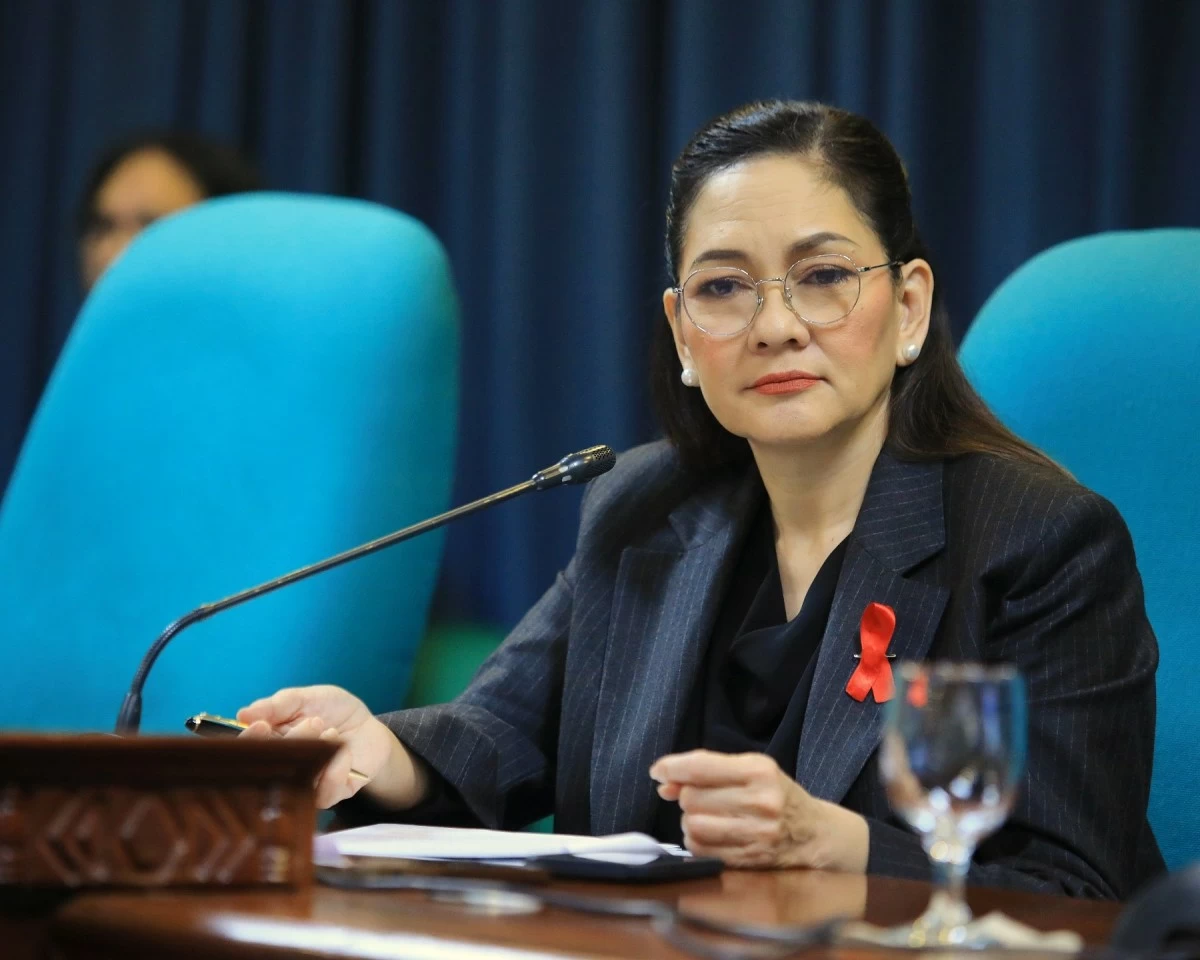
Twelve (12) senators have signed the committee report on the proposed anti-political dynasty bill, Senate deputy majority leader Senator Risa Hontiveros said on Tuesday, February 24.
Hontiveros, chairperson of the Senate Committee on Electoral Reforms and Peoples’ Participation, said the panel has opted to come up with a report that would prohibit dynasties up to the second degree of consanguinity and affinity.
This means that a father, mother, brother, sister, spouse or child would be prohibited to run for public office if one member of the family will already run for a particular elective office.
“We are hopeful that we will be able to pass the measure into law by the end of March,” Hontiveros said in an interview.
The senators who signed the measure include Hontiveros, Erwin Tulfo, Joseph Victor “JV” Ejercito, Francis “Kiko” Pangilinan, Panfilo “Ping” Lacson, Loren Legarda, Sherwin Gatchalian, Robin Padilla, Imee Marcos, Juan Miguel “Migz” Zubiri, Paolo “Bam” Aquino IV and Manuel “Lito” Lapid.
The senator also said that while her own bill seeks to prohibit political dynasties up to the fourth degree of consanguinity, she is willing to make adjustments and accept any concerns that would be raised during the period of interpellations.
“Under the bill, we will separate the national positions from local positions. There would be no prohibition between national and local positions. On the other hand, party-list positions are prohibited if there is a political dynasty that is already holding a national or local position,” she said.
The Senate’s version of the anti-political dynasty bill also prohibits simultaneous and successive holding of positions.
Hontiveros also said the bill gives the family the right of first refusal, so they need to talk within their family who should run for office.
“They need to talk first. Who among them is covered by the ban, who is allowed to run? I suppose, if the family cannot agree for one reason or another, the Comelec can step in. That’s why we are giving the Comelec mechanisms to effectively implement the bill,” she said.
She said the bill provides the Commission on Elections (Comelec) sufficient mechanisms to be able to enforce the prohibitions stated in the proposed anti-political dynasty law.
“It’s a first step. And if the Comelec implements this fully and well, because the ball would now be in the poll body to implement this, it will start in 2028,” Hontiveros said.
“This will be implemented starting in the next election. If they are able to do it, it will shake things up at the local level,” she further said.
Moreover, she said the proposed anti-dynasty bill will also include illegitimate children or children outside of a marriage relationship under the second degree consanguinity.
Also under the committee report, political candidates who are not yet married but are already cohabitating and are already considered, and or living as couples, also covered by the ban.
“So regardless of their civil status and regardless of their SOGIESC (sexual orientation, gender identity, expression and sex characteristics), they should be covered by the ban. (That’s also considered) second degree,” Hontiveros stressed.
The lawmaker said she hopes that the bill would soon be certified by the President as urgent, since it is already part of the priority legislative agenda of the Legislative-Executive and Development Advisory Council (LEDAC).