







Localizing peacebuilding
Published Feb 23, 2026 12:03 am
|
Updated Feb 22, 2026 03:05 pm


PEACE BY PEACE
Having served as Presidential Peace Adviser for almost eight years, I’ve witnessed the launching of various peace and development initiatives that aim to uplift the lives of former combatants who have laid down their arms and returned to the folds of the law.
These range from national government-funded infrastructure projects, to livelihood interventions supported by the international donor community, to multi-stakeholder efforts to boost health, job opportunities and education in our beneficiary communities.
What I have observed about these interventions, particularly the most successful ones, is that they are locally-driven, which means that the members of the community themselves are at the forefront of their implementation.
That is why the recent partnership forged between the Office of the Presidential Adviser on Peace, Reconciliation and Unity (OPAPRU) and the Provincial Local Government of Zamboanga Sibugay goes beyond the signing of a Memorandum of Agreement.
Through the Localizing Normalization Implementation (LNI) Program, the OPAPRU partnered with the Zamboanga Sibugay government to carry out initiatives under the Normalization Program of the Comprehensive Agreement on the Bangsamoro (CAB).
These include skills and technical training, emergency employment, assistance in securing birth certificates, and livelihood support for decommissioned Moro Islamic Liberation Front (MILF) combatants and their families.
The Normalization Program is anchored on the principle that for peacebuilding to be truly effective and make a significant impact, it must be localized. Instead of a purely centralized rollout, the program empowers provincial governments to take the lead.
Zamboanga Sibugay commitment to spearhead the LNI’s roll-out underscores this paradigm shift. This shows that the province is no longer a beneficiary but an active partner in addressing the roots of armed conflict.
Through localization, former combatants and their families, as well as their communities, are placed at the center of the country’s peace agenda. This approach gives provincial governments a greater sense of ownership, thus reducing dependency and rewarding initiative.
For genuine peace to firmly take root, its three pillars must be continuously strengthened: security, socioeconomic transformation, and social cohesion. Zamboanga Sibugay’s approach demonstrates how these pillars reinforce one another.
On the security front, the turnover of 61 loose firearms to authorities under the Small Arms and Light Weapons Management Program sends a clear and powerful message that the people no longer need firearms to guarantee their safety and security.
At the same time, the Armed Forces of the Philippines and the Philippine National Police have reaffirmed their commitment not only to maintain peace and order but also to help sustain the positive transformation of the province.
As suggested by Brigadier General Samuel G. Yunque, commander of the 102nd Brigade of the Philippine Army in the area, we are also looking to further strengthen SALW by establishing the Assistance for Security, Peace, Integration and Recovery for Advancing Human Security. This is a community development with the voluntary turnover of loose firearms. The program has been proven effective in areas such as Basilan.
Equally important is the socioeconomic dimension. Cash-for-work programs, livelihood support, and technical training, as well as securing basic documents, will ensure the successful integration of former combatants into mainstream society.
Fostering social cohesion is perhaps the most delicate but most rewarding aspect of LNI. Strengthening collaboration between the MILF, provincial officials, line agencies, civil society, and the security sector is therefore essential as it builds shared responsibility.
The launch of a unified provincial communication system further strengthens coordination, particularly during emergencies, reinforcing the idea that peacebuilding must be institutionalized and be seen as a collective undertaking.
The Bangsamoro Autonomous Region in Muslim Mindanao (BARMM) is facing a sensitive political transition with the upcoming first parliamentary elections this year. Programs like the LNI can help build the people’s trust in the local political system.
The localization of the Normalization Program’s implementation illustrates that peacebuilding can be adaptive, responsive, and grounded in local realities. Most importantly, it reflects a whole-of-government, whole-of-society approach.
Under the LNI, national agencies provide resources and policy direction, provincial governments tailor their socioeconomic interventions, security forces safeguard the peace gains, while communities actively participate and monitor.
When all of these elements converge and complement each other, peace becomes resilient, inclusive and people-centered. All members of the community shall benefit from the dividends of peace, development and progress.
By choosing to become one of LNI’s implementing partners, Zamboanga Sibugay, under the leadership of Governor Ann K. Hofer is showing to the whole country that it is a trusted and reliable partner in advancing peace.
The best measure of LNI’s success is how it has helped transform the lives of former combatants and their families, while creating the conditions that will turn former conflict-affected communities into show windows of peace and development.
This is the power of localization.
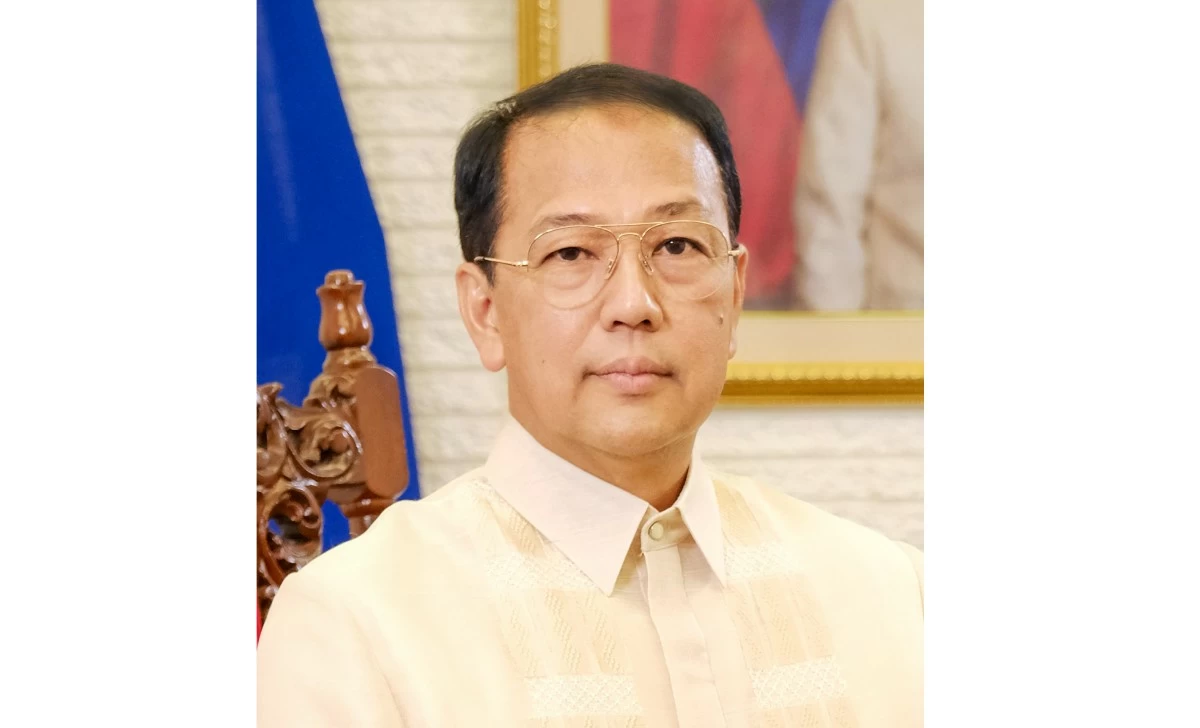
(Secretary Carlito G. Galvez, Jr. is the presidential adviser on peace, reconciliation, and unity.)