ADVERTISEMENT

Japan carmakers seek Philippine relief from 20% import tariff

Published Feb 23, 2026 12:00 am  |  Updated Feb 21, 2026 02:50 pm
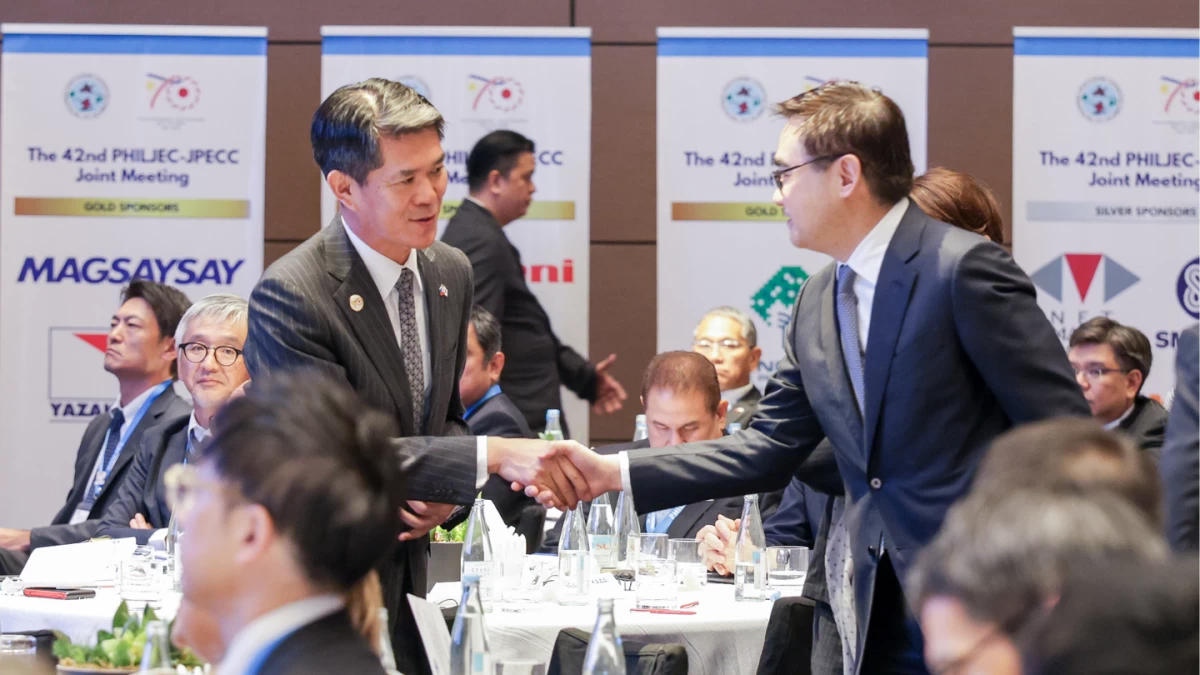
Ambassador of Japan to the Philippines ENDO Kazuya (left) shares a handshake with Finance Secretary Frederick Go during the 42nd Annual Joint Meeting of the Philippines-Japan Economic Cooperation Committees. The summit focused on deepening bilateral trade and infrastructure partnerships between the two nations.
The local units of Japan’s leading automakers are intensifying calls for the government to slash tariffs on vehicle imports, arguing that current trade barriers stifle the growth of hybrid electric vehicles (HEVs) in one of Southeast Asia’s fastest-growing car markets.
Toyota Motor Philippines Corp. (TMP) President Masando Hashimoto relayed the concerns of Japanese automotive brands during last week’s 42nd Annual Joint Meeting of the Economic Cooperation Committees of the Philippines and Japan, which was attended by Finance Secretary Frederick Go.
Hashimoto said companies like TMP, Mitsubishi Motors Philippines Corp., Nissan Philippines Inc., and Honda Cars Philippines Inc. are under “pressure” from the 20-import tariff rate that the Philippines imposes on vehicle imports from Japan.
By comparison, he said vehicles imported from China, the United States, the European Union, and South Korea are subject to a more preferential rate of between zero and five percent.
In response, Go confirmed that Manila and Tokyo are now negotiating potential amendments to the Japan-Philippines Economic Partnership Agreement (JPEPA), which covers the tariff framework between the two countries.
While he stopped short of outlining the adjustment that would address the concerns of Japanese carmakers, Go said the country’s trade policy remains focused on being “open, relevant, and future-oriented.”
At present, TMP Chairman Alfred Ty said the JPEPA particularly places EVs from Japanese brands at a significant disadvantage.
When JPEPA entered into force nearly two decades ago, Ty said the framework was favorable for Japanese firms because the tariffs applied only to vehicles with engines of 3 liters or more, which tend to be luxury models.
He said vehicles with engine displacements of 1.5 to 2.0 liters—which cover more affordable models—can enter the country tariff-free.
However, Ty said JPEPA failed to account for the emergence of HEVs and other EV models, many of which use 2.5-liter engines.
“[JPEPA] was crafted before hybrids came into the picture. Hybrid is 2.5 [liters], so those things have to be taken into account,” said Ty.
Based on sales data from the Chamber of Automotive Manufacturers of the Philippines Inc. (CAMPI) and the Truck Manufacturers Association (TMA), HEVs were the most popular electrified model last year, accounting for 25,737 units or 79 percent of the total EV sales.
For TMP, Ty said HEVs are expected to remain a major sales driver this year, especially as they gain wider adoption outside Metro Manila.
If EVs continue to grow in popularity, he noted that the company is open to participating in the government’s Electric Vehicle Industry Strategy (EVIS).
Similar to the Comprehensive Automotive Resurgence Strategy (CARS) program, which recently regained its budget, EVIS would provide fiscal and non-fiscal support to encourage domestic manufacturing of EVs.
While the incentive scheme is enticing, Ty said sales volume alone will not dictate their participation in the program, as local automotive parts manufacturers must also be ready to support production.
“If there is really an advantage, of course, we're ready to come in,” he said.
ADVERTISEMENT
.most-popular .layout-ratio{ padding-bottom: 79.13%; } @media (min-width: 768px) and (max-width: 1024px) { .widget-title { font-size: 15px !important; } }

{{ articles_filter_1561_widget.title }}

.most-popular .layout-ratio{ padding-bottom: 79.13%; } @media (min-width: 768px) and (max-width: 1024px) { .widget-title { font-size: 15px !important; } }

{{ articles_filter_1562_widget.title }}

.most-popular .layout-ratio{ padding-bottom: 79.13%; } @media (min-width: 768px) and (max-width: 1024px) { .widget-title { font-size: 15px !important; } }

{{ articles_filter_1563_widget.title }}

{{ articles_filter_1564_widget.title }}

.mb-article-details { position: relative; } .mb-article-details .article-body-preview, .mb-article-details .article-body-summary{ font-size: 17px; line-height: 30px; font-family: "Libre Caslon Text", serif; color: #000; } .mb-article-details .article-body-preview iframe , .mb-article-details .article-body-summary iframe{ width: 100%; margin: auto; } .read-more-background { background: linear-gradient(180deg, color(display-p3 1.000 1.000 1.000 / 0) 13.75%, color(display-p3 1.000 1.000 1.000 / 0.8) 30.79%, color(display-p3 1.000 1.000 1.000) 72.5%); position: absolute; height: 200px; width: 100%; bottom: 0; display: flex; justify-content: center; align-items: center; padding: 0; } .read-more-background a{ color: #000; } .read-more-btn { padding: 17px 45px; font-family: Inter; font-weight: 700; font-size: 18px; line-height: 16px; text-align: center; vertical-align: middle; border: 1px solid black; background-color: white; } .hidden { display: none; }
function initializeAllSwipers() { // Get all hidden inputs with cms_article_id document.querySelectorAll('[id^="cms_article_id_"]').forEach(function (input) { const cmsArticleId = input.value; const articleSelector = '#article-' + cmsArticleId + ' .body_images'; const swiperElement = document.querySelector(articleSelector); if (swiperElement && !swiperElement.classList.contains('swiper-initialized')) { new Swiper(articleSelector, { loop: true, pagination: false, navigation: { nextEl: '#article-' + cmsArticleId + ' .swiper-button-next', prevEl: '#article-' + cmsArticleId + ' .swiper-button-prev', }, }); } }); } setTimeout(initializeAllSwipers, 3000); const intersectionObserver = new IntersectionObserver( (entries) => { entries.forEach((entry) => { if (entry.isIntersecting) { const newUrl = entry.target.getAttribute("data-url"); if (newUrl) { history.pushState(null, null, newUrl); let article = entry.target; // Extract metadata const author = article.querySelector('.author-section').textContent.replace('By', '').trim(); const section = article.querySelector('.section-info ').textContent.replace(' ', ' '); const title = article.querySelector('.article-title h1').textContent; // Parse URL for Chartbeat path format const parsedUrl = new URL(newUrl, window.location.origin); const cleanUrl = parsedUrl.host + parsedUrl.pathname; // Update Chartbeat configuration if (typeof window._sf_async_config !== 'undefined') { window._sf_async_config.path = cleanUrl; window._sf_async_config.sections = section; window._sf_async_config.authors = author; } // Track virtual page view with Chartbeat if (typeof pSUPERFLY !== 'undefined' && typeof pSUPERFLY.virtualPage === 'function') { try { pSUPERFLY.virtualPage({ path: cleanUrl, title: title, sections: section, authors: author }); } catch (error) { console.error('ping error', error); } } // Optional: Update document title if (title && title !== document.title) { document.title = title; } } } }); }, { threshold: 0.1 } ); function showArticleBody(button) { const article = button.closest("article"); const summary = article.querySelector(".article-body-summary"); const body = article.querySelector(".article-body-preview"); const readMoreSection = article.querySelector(".read-more-background"); // Hide summary and read-more section summary.style.display = "none"; readMoreSection.style.display = "none"; // Show the full article body body.classList.remove("hidden"); } document.addEventListener("DOMContentLoaded", () => { let loadCount = 0; // Track how many times articles are loaded const offset = [1, 2, 3, 4, 5, 6, 7, 8, 9, 10]; // Offset values const currentUrl = window.location.pathname.substring(1); let isLoading = false; // Prevent multiple calls if (!currentUrl) { console.log("Current URL is invalid."); return; } const sentinel = document.getElementById("load-more-sentinel"); if (!sentinel) { console.log("Sentinel element not found."); return; } function isSentinelVisible() { const rect = sentinel.getBoundingClientRect(); return ( rect.top < window.innerHeight && rect.bottom >= 0 ); } function onScroll() { if (isLoading) return; if (isSentinelVisible()) { if (loadCount >= offset.length) { console.log("Maximum load attempts reached."); window.removeEventListener("scroll", onScroll); return; } isLoading = true; const currentOffset = offset[loadCount]; window.loadMoreItems().then(() => { let article = document.querySelector('#widget_1690 > div:nth-last-of-type(2) article'); intersectionObserver.observe(article) loadCount++; }).catch(error => { console.error("Error loading more items:", error); }).finally(() => { isLoading = false; }); } } window.addEventListener("scroll", onScroll); });

Sign up by email to receive news.