






 Business
Trade & Industry
BYD Philippines sees stronger 2026 sales as Denza luxury EV brand debuts
Business
Trade & Industry
BYD Philippines sees stronger 2026 sales as Denza luxury EV brand debuts
BYD Philippines sees stronger 2026 sales as Denza luxury EV brand debuts


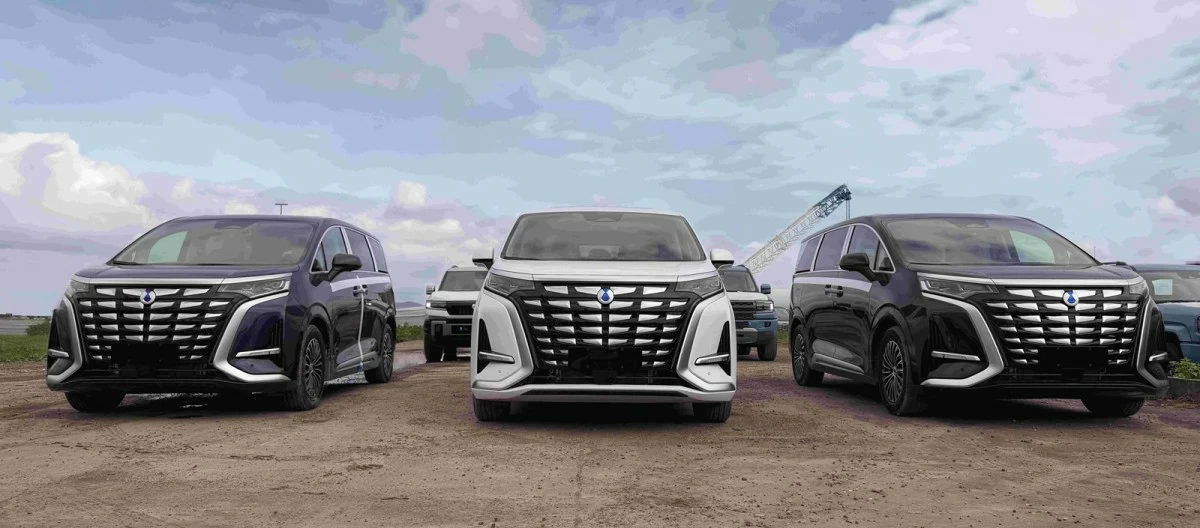
BYD Cars Philippines expects its sales momentum to continue into the year as new energy vehicles (NEVs) gain wider adoption across segments, especially with the debut of its premium brand Denza.
BYD and Denza Philippines country head Adam Hu said their target for the year is to “do much better” than the record sales of 26,122 units in 2025.
The sales figure last year marked a 446-percent increase from the 4,780 units sold in 2024.
With BYD well positioned as the fastest-growing automotive brand in the Philippines, the company aims to further solidify its dominance in the NEV market through Denza.
While BYD offers vehicle models geared more toward the mass market, Denza targets the luxury segment.
Hu said Denza seeks to meet the demand of customers who are constantly on the lookout for advanced technologies that redefine their driving experience.
“For 2026, we are also aiming a good number,” Hu told reporters on Monday, Feb. 23, when asked about Denza’s targets this year.
Hu, however, said they do not yet have a specific sales target, as the company will first assess the market’s response to its premium offerings.
“This year is quite important for us to establish the brand image, to have the service quality built. It’s not a year we should focus on sales number, we should focus on the service,” he said.
With the brand’s upcoming launch on Friday, Feb. 27, Hu said Denza will make its debut in the Philippines with the launch of the plug-in hybrid D9 multi-purpose vehicle (MPV).
Two other plug-in hybrid models—the B8 and B5 sport utility vehicles (SUVs)—will roll out next month.
These vehicles will be made available through BYD dealerships in Makati, Alabang, Greenhills, and Cebu.
Depending on demand, Hu said Denza will eventually introduce its sedan and supercar models in the country, including battery EV variants.
“We will make our Denza lineup in the Philippines as wide as we can to accommodate most of the customer demand,” he said.
Despite an upbeat outlook, Hu said the main hurdle to growth for BYD and Denza remains the country’s insufficient charging infrastructure.
“We have more than 7,000 islands [here] so it’s quite a big challenge for us to establish the charging network in the Philippines. In the other countries, they may easily set a nationwide charging infrastructure. But here, it’s quite a big challenge for us,” he said.
To address this, Hu said BYD is open to becoming a technology partner with a local company—providing the charging products while the partner builds the actual infrastructure.
He said the company has already held discussions with firms interested in this potential partnership.
While there are no concrete plans yet, he added that they are also open to establishing a manufacturing facility in the country.