






Manila Bulletin
 Technews
A roadmap to transform the country from 'fast AI adopters' to 'sovereign builders'
Technews
A roadmap to transform the country from 'fast AI adopters' to 'sovereign builders'
Technews
A roadmap to transform the country from 'fast AI adopters' to 'sovereign builders'
A roadmap to transform the country from 'fast AI adopters' to 'sovereign builders'
By MB Technews
Published Feb 23, 2026 09:22 am


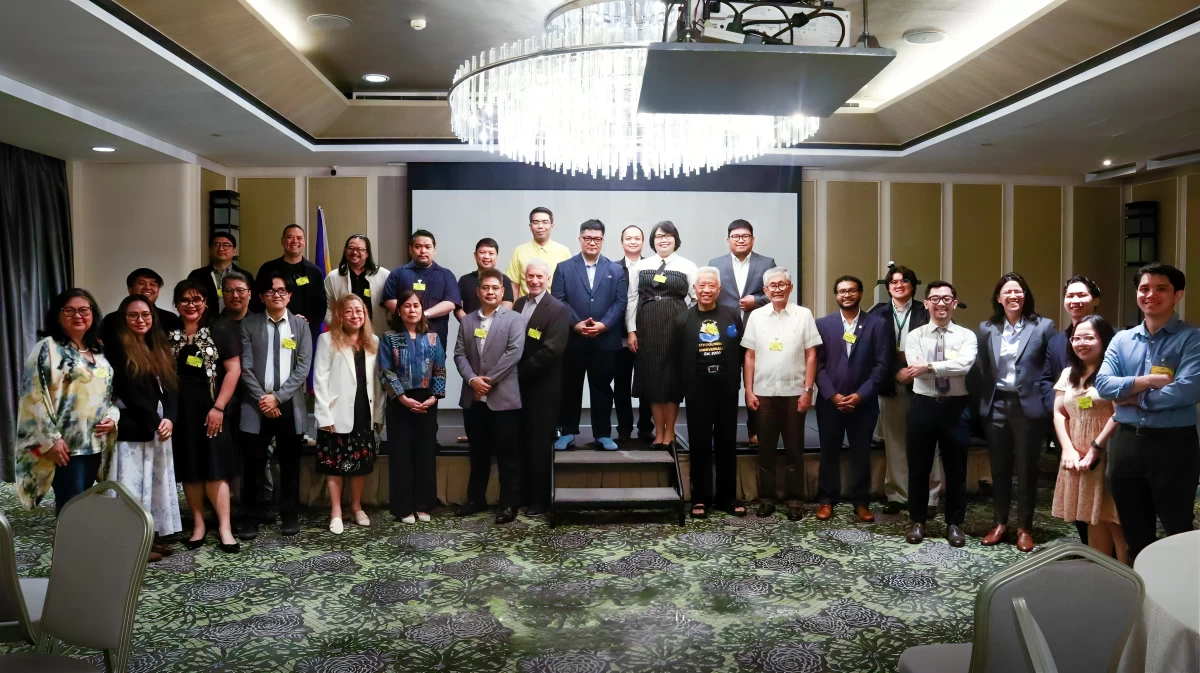
CirroLytix and Data and AI Ethics PH, supported by the Konrad Adenauer Stiftung (KAS), today released the key strategic outcomes from the high-level policy forum held on February 2, 2026. The forum convened a strategic assembly of decision-makers, uniting legislative and executive leaders from Congress, Department of Economy, Planning, and Development (DEPDev), Department of Education (DepEd), Commission on Higher Education (CHED), Commission on Human Rights (CHR), and Legal Education Board (LEB). With industry experts from the Analytics & AI Association of the Philippines (AAP) and Philippine AI Business Association (PAIBA), supported by civil society organizations (CSOs) and international development agencies, the participants established a critical consensus: the Philippines must urgently transition from being a passive consumer of foreign technology to a sovereign builder of its own AI systems to avoid widening the digital divide.
“We are fast adopters but slow builders,” said Dominic Ligot, founder of CirroLytix. “The choice before us is: do we remain consumers of other people's systems, or become architects of our own? If we do not get safer AI, we get shadow AI—unregulated experimentation that exposes our citizens to risk.”
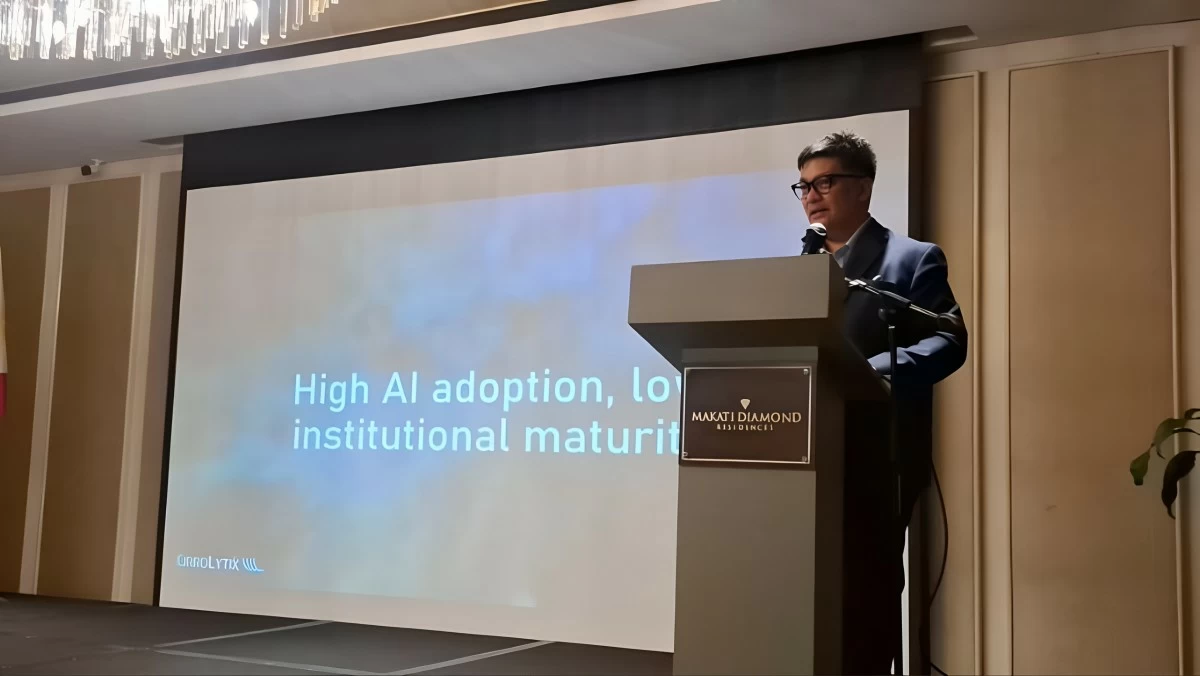
The Core Problem: Avoiding the “Pilot Graveyard”
The roadmap addresses a critical national vulnerability identified in the Grassroots Perspectives report: the Philippines is a "high-usage, low-readiness" environment. While 86% of Filipino knowledge workers use AI, exceeding global averages, the country lacks the institutional ecosystem to scale these experiments.
Frances Claire Tayco, CEO of CirroLytix, warned that without structural support, local innovation faces a dead end. "A lot of the research that comes from the universities... ends up in pilot graveyards," Tayco stated during the forum. "How can there be enough structure for us to continue these great initiatives... to benefit the broader society?"
Strategic Pivots: From Policy to Political Action
The forum moved beyond the report’s technical recommendations to establish specific strategic alignments and collaborative avenues with high-level attendees:
● Legislative Mandate: The roadmap received a strong legislative boost from Rep. Bella Vanessa Suansing (Sultan Kudarat, 2nd District), who commended the report as the country's "first codified, comprehensive blueprint" for AI implementation. Rep. Suansing warned against simply copying foreign regulations like the EU AI Act. Instead, she urged the group to make the roadmap "actionable" by using AI to solve immediate constituent needs, such as depoliticizing social aid distribution and helping vulnerable segments like senior citizens navigate e-governance services.
● Industry as a “Regulatory Sandbox”: Addressing the need for enforcement without stifling innovation, Sherwin Pelayo, Executive Director of the AAP, made a standing offer to the government. “The best way to earn the government’s trust is through successful, responsible AI deployments... Use us as testbeds,” Pelayo stated, offering AAP member organizations as environments to stress-test governance approaches before they are codified into law.
● Education Reform: Validating the report’s Education pillar, DepEd Assistant Secretary Dexter Galban aligned the framework with Project AGAP.AI (Accelerating Governance and Adaptive Pedagogy through AI). He confirmed that an AI-ready curriculum is expected by Q1 2026.
The “4E Framework”: A Technical Blueprint
While the event provided the political mandate, the Grassroots Perspectives report released today provides the necessary technical blueprints to operationalize these commitments, filling critical gaps in national planning:
● EDUCATION (The Foundation): Beyond student curriculum, the report identifies a critical "confidence deficit" among adults, calling for "Parent and Teacher Capacitation". The AAP confirmed that these recommendations are already being moved into execution via the National AI Upskilling Roadmap, a joint initiative of DepEd, CHED, and Technical Education And Skills Development Authority (TESDA) under the EDCOM2 framework.
● ENGINEERING (The Infrastructure): The group moved beyond viewing infrastructure as just hardware. The report introduces a "5-Layer Engineering Framework", spanning physical power, data sovereignty, algorithms, governance, and societal impact. Technical experts Vicky Betita of PAIBA validated this need for "Sovereign AI," ensuring the Philippines captures economic value rather than just renting foreign compute power.
● ENFORCEMENT (The Guardrails): A consensus emerged against creating a new "mega law" for AI. Stakeholders backed the use of Executive Orders and adaptive regulation. The AAP further advocated for Philippine National Standards on AI through the DTI Bureau of Philippine Standards as a faster alternative to legislation. Validating the need for specialized oversight, the roadmap advocates for "sector-specific codes of ethics" to ensure practitioners can navigate AI liability without waiting for omnibus legislation.
● E4: ETHICS (The Defense): Shifting ethics from the philosophical to the practical, the forum highlighted the need for "Citizen Redress Mechanisms". Atty. Jocelle Batapa-Sigue, former Undersecretary for ICT Industry Development of DICT, expanded this pillar to include
Employment and Entrepreneurship, arguing that "inclusion is meaningless if AI does not translate to jobs and investments…especially beyond Metro Manila and in the regions".
The Sectoral Approach
Beyond the keynote agencies, the forum drew technical validation from DEPDev, CHED, CHR, and LEB. The "grassroots" validity of the roadmap was anchored by civil society, academe, and research groups, including University of the Philippines National College of Public Administration and Governance (UP NCPAG), Ateneo Institute for the Science and Art of Learning and Teaching (SALT), Sandiwaan Center for Learning, Sigla Research, Tech for Good Institute, Democracy.Net.PH, Hit Productions, and Data Engineering Pilipinas. International observers from the United Nations Development Programme (UNDP) and Office of the United Nations High Commissioner for Human Rights (OHCHR) ensured alignment with global standards, echoing the 2025 Human Development Report's warning that without deliberate policy choices, AI could drive a "Great Divergence" between nations.
The validated roadmap will be submitted to the agencies driving the National AI Strategy and relevant Congressional committees to inform the crafting of pending legislation and executive policies.