






 Business
Trade & Industry
62 million and rising: Philippine air travel shatters all-time records
Business
Trade & Industry
62 million and rising: Philippine air travel shatters all-time records
62 million and rising: Philippine air travel shatters all-time records


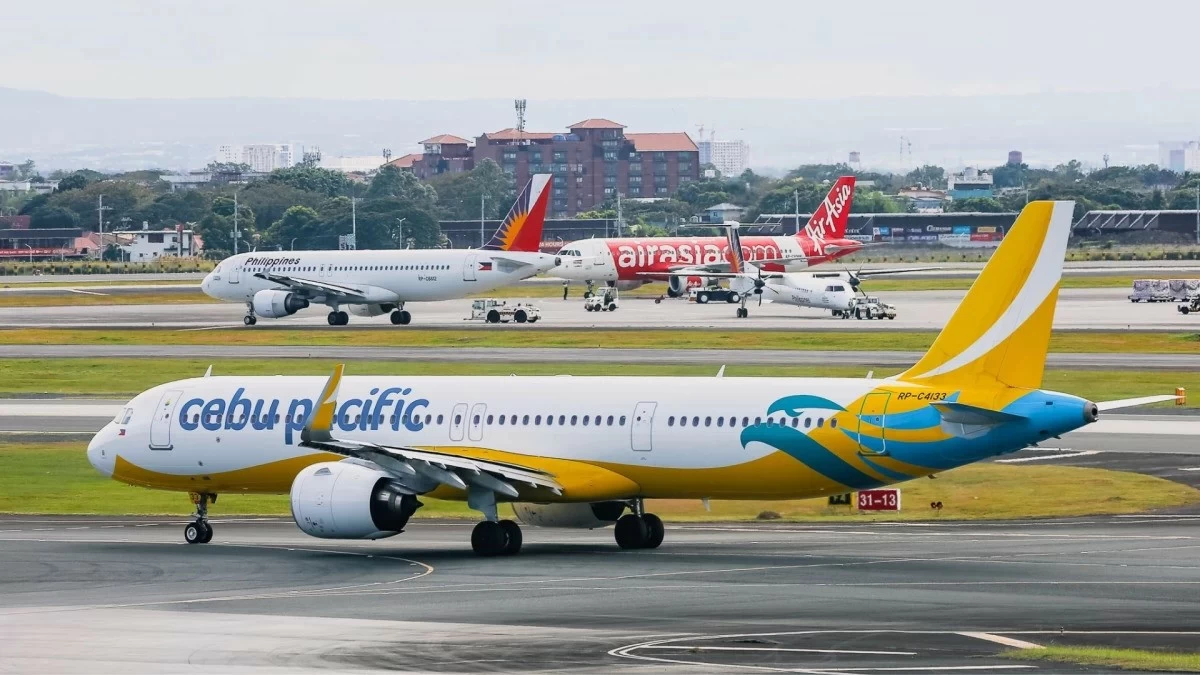
The Philippines’ air passenger volume exceeded pre-pandemic levels last year, soaring to a new record of more than 62 million passengers as travel demand maintained its upward trajectory, according to the Civil Aeronautics Board (CAB).
Based on CAB data, the country’s passenger traffic rose by four percent to 62.34 million in 2025, compared with 59.91 million passengers in the previous year.
Travel demand last year reached the highest level on record, surpassing the 60.06 million milestone set in 2019. The new peak signals the strong recovery of the local aviation sector after years of steep decline during the Covid-19 pandemic.
Still, the rebound remains incomplete, as international passenger traffic has yet to return to its 2019 high of 30.53 million. Nevertheless, last year’s volume of 29.1 million—just five-percent short of the record—signals that a full recovery is well within reach.
Foreign carriers accommodated 15.01 million international passengers last year, or 51 percent of total, while domestic carriers served 14.09 million.
Locally, Lucio Tan-led flag carrier Philippine Airlines (PAL) seized the top spot with 6.51 million passengers, as it offers the widest international connectivity in the country, with 37 destinations across Asia, North America, Australia, and Middle East.
Gokongwei-led Cebu Pacific, the country’s largest carrier by fleet size, was a close second with 6.45 million passengers. Meanwhile, low-cost carrier AirAsia Philippines ranked third with 1.03 million passengers.
In terms of domestic travel, airlines ferried a record 33.24 million passengers to local destinations last year, up 3.5 percent from the previous high of 32.13 million in 2024.
Cebu Pacific, alongside its regional unit CebGo, accounted for nearly 55 percent of the domestic market, with a passenger count of 18.25 million last year.
Boutique carrier AirSwift, which is operated by Cebu Pacific, logged 429,222 passengers in 2025, slightly lower than its 430,996 passengers in 2024, the year the airline was acquired by the budget carrier in a ₱1.75-billion deal.
PAL and its regional unit, PAL Express, registered domestic passenger volume of 9.73 million, while AirAsia Philippines carried 4.6 million passengers.
For the year, air travel demand is widely expected to continue rising as the government focuses on lowering flying costs.
Recently, the country’s largest carriers backed proposed measures to scrap travel tax imposed on passengers as a way to reduce international travel costs.
For domestic flights, the government is ramping up efforts to extend runways at regional airports to accommodate larger jets, amid complaints that flying to island destinations like Siargao is more costly than traveling abroad.
There is also ongoing effort within the Department of Transportation (DOTr) to potentially reduce passenger service charge (PSC) on tickets booked at government-managed airports.
CAB announced last week that fuel surcharge, which airlines may impose on passengers, was kept steady for March. This means that airfares are unlikely to increase in the coming month, a much-welcome development as summer season approaches.