






Manila Bulletin
 Entertainment
Movies and TV
Filipino animation '58th' breaks barriers at IFFR 2026 in the Netherlands
Entertainment
Movies and TV
Filipino animation '58th' breaks barriers at IFFR 2026 in the Netherlands
Entertainment
Movies and TV
Filipino animation '58th' breaks barriers at IFFR 2026 in the Netherlands
Filipino animation '58th' breaks barriers at IFFR 2026 in the Netherlands
Published Feb 22, 2026 09:25 am


Kapuso actress Glaiza de Castro has shared her excitement after attending the International Film Festival Rotterdam (IFFR) in the Netherlands, where the GMA Public Affairs and GMA Pictures documentary film “58th” premiered last January.
The movie "58th" revisits the Maguindanao Massacre through the story of Reynaldo “Bebot” Momay, recognized as its 58th victim.
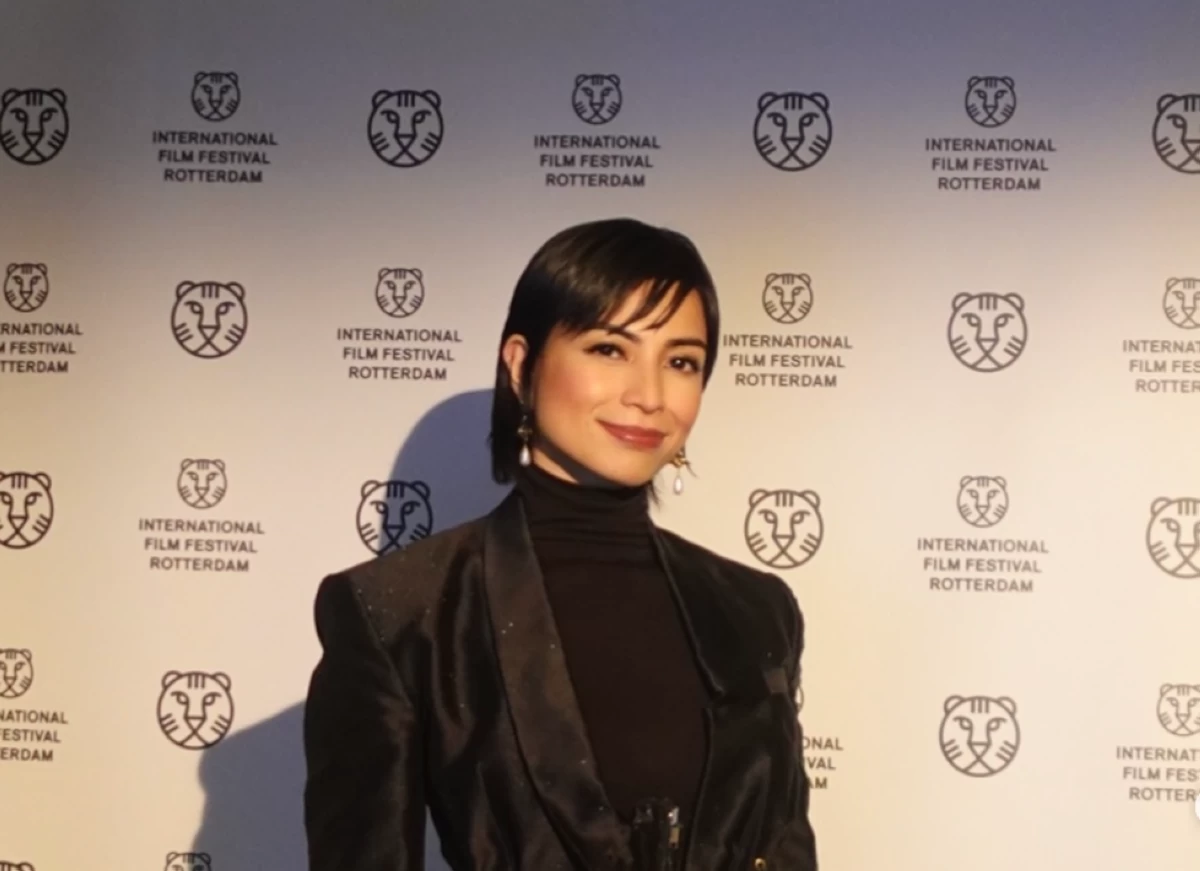
Glaiza de Castro (Images courtesy of Instagram)
Directed by Carl Joseph Papa, "58th" stars Glaiza as Reynafe Castillo, Momay’s daughter, whose story reflects the family’s enduring grief and pursuit of justice following the tragedy.
Blending animation with archival footage, "58th" retells the tragedy for a new generation, ensuring the victims’ stories are not forgotten. The film is also the final project of the late Ricky Davao, who portrayed Reynaldo Momay. The supporting cast includes Mikoy Morales, Marco Masa, Zyren Dela Cruz, and Biboy Ramirez.
While in the Netherlands, Glaiza was accompanied by Nessa Valdellon, Senior Vice President of GMA Public Affairs and Executive Vice President of GMA Pictures, and director Carl Joseph Papa.
The selection of 58th marks the first time a GMA Network film has been chosen for screening at IFFR, highlighting the growing global recognition of Filipino storytelling. Founded in 1972, IFFR is one of the leading international film festivals, deepening appreciation for film in all its forms. It also actively supports emerging and adventurous talent through initiatives such as CineMart, the Hubert Bals Fund, Rotterdam Lab, and other professional programs. 58th screens as part of IFFR’s official selection, alongside a diverse lineup of socially relevant films in Rotterdam, The Netherlands. The 2026 edition of IFFR also featured other Filipino films, including “Quezon,” “Moonglow,” “First Light,” “I Grew an Inch When My Father Died,” “Noodles,” “Our Love Was Instant and Forever,” and “Daughters of the Sea.”
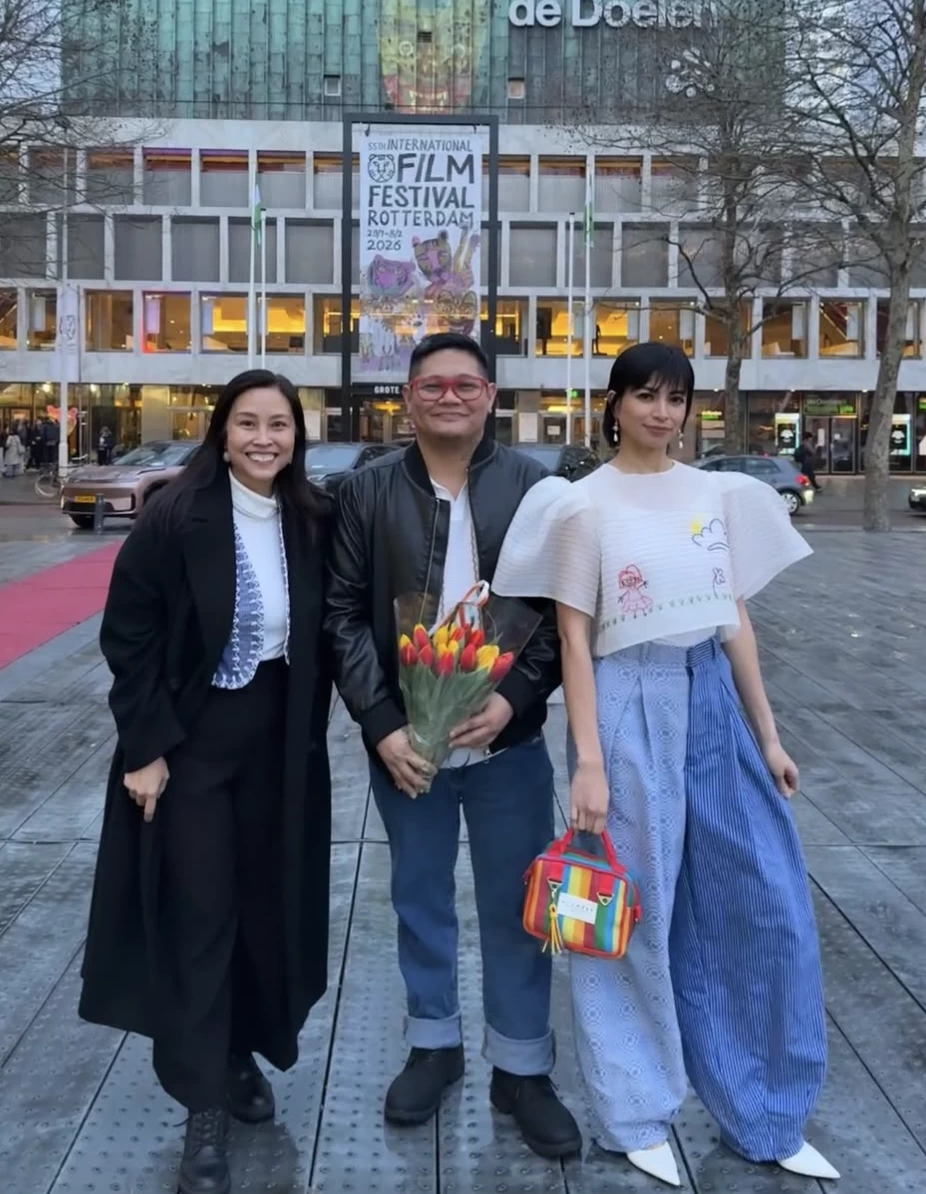
From left: GMA Public Affairs Senior Vice President and concurrent GMA Pictures Executive Vice President Nessa Valdellon, '58th' director Carl Joseph Papa, and actress Glaiza de Castro.
Q&A with Glaiza:
How does it feel to be part of '58th' that participated in a prestigious festival like IFFR?
"Sobrang honored na mapasali ‘yung 58th sa International Film Festival, na ma-premiere siya sa Europe. Ang sarap sa pakiramdam na ma-share ‘yung gawang Pinoy on a global platform, at a global event. Excited din akong mapalabas siya dito sa Pilipinas. (I am so honored to be included in the 58th International Film Festival, to have it premiere in Europe. It feels great to be able to share Filipino work on a global platform, at a global event. I am also excited to have it released here in the Philippines.)"
How did the audience respond to the movie? What were their reactions?
"Of course, hindi rin nila ma-imagine paano nangyari ‘yun. Tapos, s’yempre, on the technical side din, like, how did GMA Pictures come up with an idea of a documentary [na] animated? Sumasagot niyan sila Miss Nessa [Valdellon, EVP of GMA Pictures and SVP of GMA Public Affairs], tapos sila Direk Carl [Joseph Papa]. (Of course, they also can't imagine how that happened. Then, of course, on the technical side too, like, how did GMA Pictures come up with an idea for a documentary [that] was animated? Miss Nessa [Valdellon, EVP of GMA Pictures and SVP of GMA Public Affairs] answered that, then Director Carl [Joseph Papa]."
"And sa akin naman, ang tanong kung may nagbago ba sa acting ko, sa emosyon ko. Pero parang iniisip ko rin kapag ‘yung pinaghuhugutan mo, totoong nangyari, hindi siya mahirap ikuwento. Mahirap siya in a sense na mabigat ‘yung nangyari. Pero fulfilling din siya in a sense na nagawa mo siya at mapapanood siya ng tao. So masaya na na-appreciate nila, masaya na curious sila sa pelikula. They kept on asking questions about the Philippines, kung ano na ang sitwasyon ngayon ng Pilipinas pagkatapos ng nangyari. And kung may ongoing battle pa rin ba for injustice na sinasabi namin na hindi mawawala. Pero ‘yun nga, again, importante na you keep on asking questions, and you keep on sharing facts about our country. (And for me, the question is whether there has been any change in my acting, in my emotions. But I also think that when what you are portraying that really happened, it is not difficult to tell the story. It is difficult because what happened was heavy. But it is also fulfilling, in a sense, that you made it, and that people can watch it. So they are happy that they appreciated it, and they are curious about the film. They kept asking questions about the Philippines: what is the situation there now after [what] happened? And if there is still an ongoing battle for injustice, we say it will never go away. But it's important that you keep asking questions and keep sharing facts about our country.)"
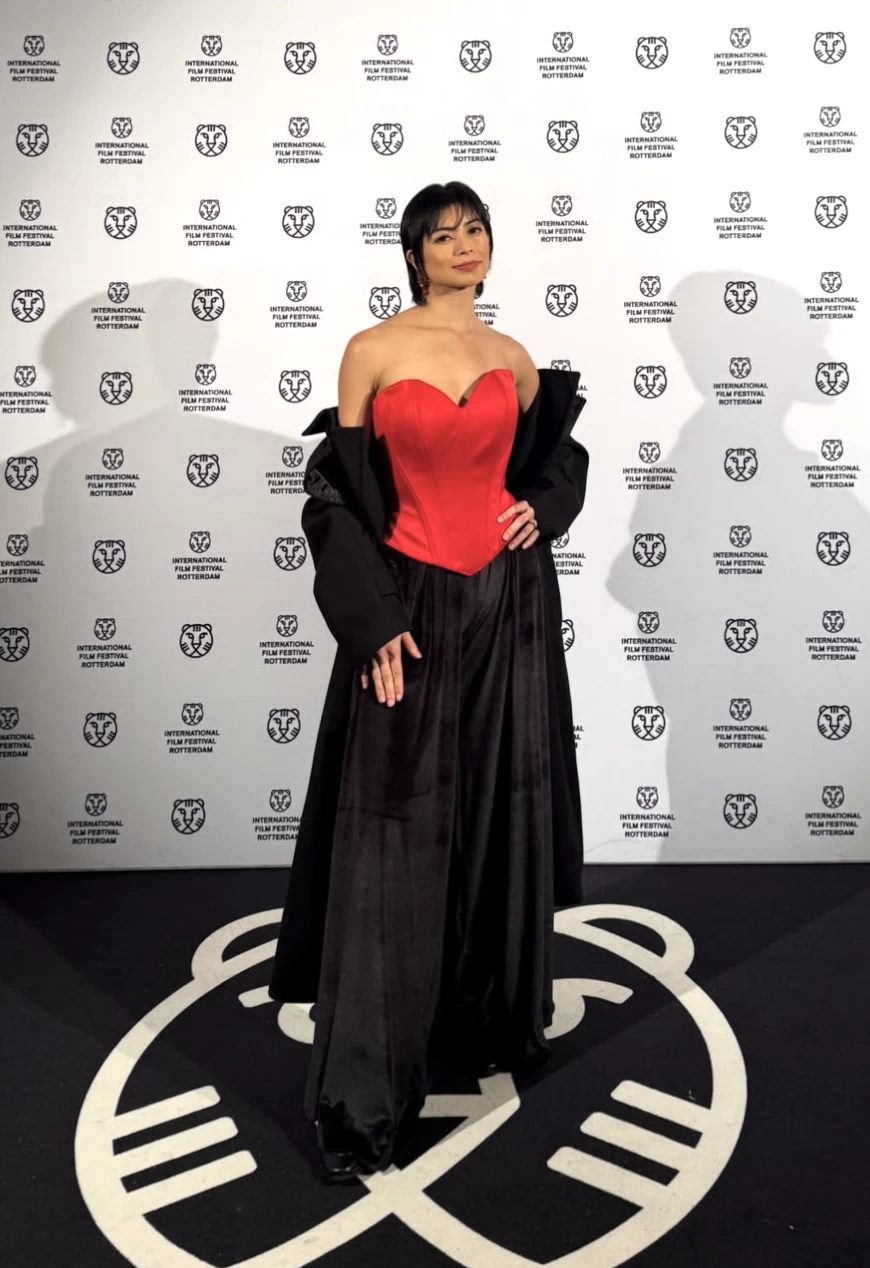
Glaiza de Castro
The film '58th' addresses a sensitive topic, prompting the question: how relevant is it today?
"Kapag pinag-uusapan ‘yung dark subjects like, nasa murder, it will always be relevant. (When talking about dark subjects like murder, it will always be relevant.)" Injustice will always be relevant. Whether that happened a few years ago, [or] it's still happening today.
What prayer do you offer for victims of injustice everywhere?
"I know that it's not easy na pagdaanan ‘yun. And I would like to say na gusto ko sanang ma-attain nila ‘yung peace. Hopefully, after they watch this film, they will feel comfort. May mga taong nakikiramay sa kanila, may mga taong ina-acknowledge ‘yung nangyari sa kanila. Kasi hindi madaling pagdaanan ‘yung death, ‘yung pain noon. Lagi mo siyang maiisip. But ‘yun, ‘yung prayer ko, na [magkaroon sila ng] comfort and peace kahit na masakit ‘yung pinagdaanan. (I know that it's not easy to go through that. And I would like to say that I would like them to attain peace. Hopefully, after they watch this film, they will feel comfort. There are people who sympathize with them, and others who acknowledge what happened to them. Because death is not easy to go through, the pain of that. You always think about it. But that's my prayer, that [they will have] comfort and peace even though what they went through was painful.)"
So, have you met any stars at the film festival? Share with us what happened during the festival.
‘Yung unang-unang artista na nakita ko ay si Jericho Rosales dahil ang isa sa mga pinanood ko noong first day ko doon ay ‘yung Quezon. So, nag-stay din kami after the screening kasi may question-and-answer. The first star I saw was Jericho Rosales because I watched his movie 'Quezon' in his first day. So, we also stayed after the screening because there was a question-and-answer."
"Tapos, may mga young actors akong na-meet. Kasi, parang every day, may mga screening na nagaganap. Tapos hindi lang siya isang beses. May mga few screenings. And then nakakadaupang palad ko sila roon. Nagpapa-picture din sila. Tapos ang saya lang sa pakiramdam na, napapanood ko lang sila. May mga Taiwanese actors akong na-meet. Pero bukod doon, mga directors din, mga producers. Ang saya kasi, you pick their brains out. Kung anong naging proseso nila sa pag-produce ng pelikula, anong mga naging struggle nila, how did they come up with the cast. So, ang daming mga nangyayari. Kaya, masarap sa pakiramdam talaga. Ang daming mga natutunan. (Then, I met some young actors. It seems like there are screenings every day. Then it wasn't just once. There were a few screenings. And then I got to meet them there. They also took pictures. Then it was just a joy to feel, just watching them. I met some Taiwanese actors. But besides that, there were also directors and producers. It was fun because you pick their brains. What was their process in producing the film, what were their struggles, and how did they come up with the cast? So, there was a lot going on. So, it was a really good feeling. I learned a lot.)"