ADVERTISEMENT

Davao flooding that kills 8 blamed on incomplete, unconnected flood control projects – OCD exec

Published Feb 22, 2026 03:30 pm
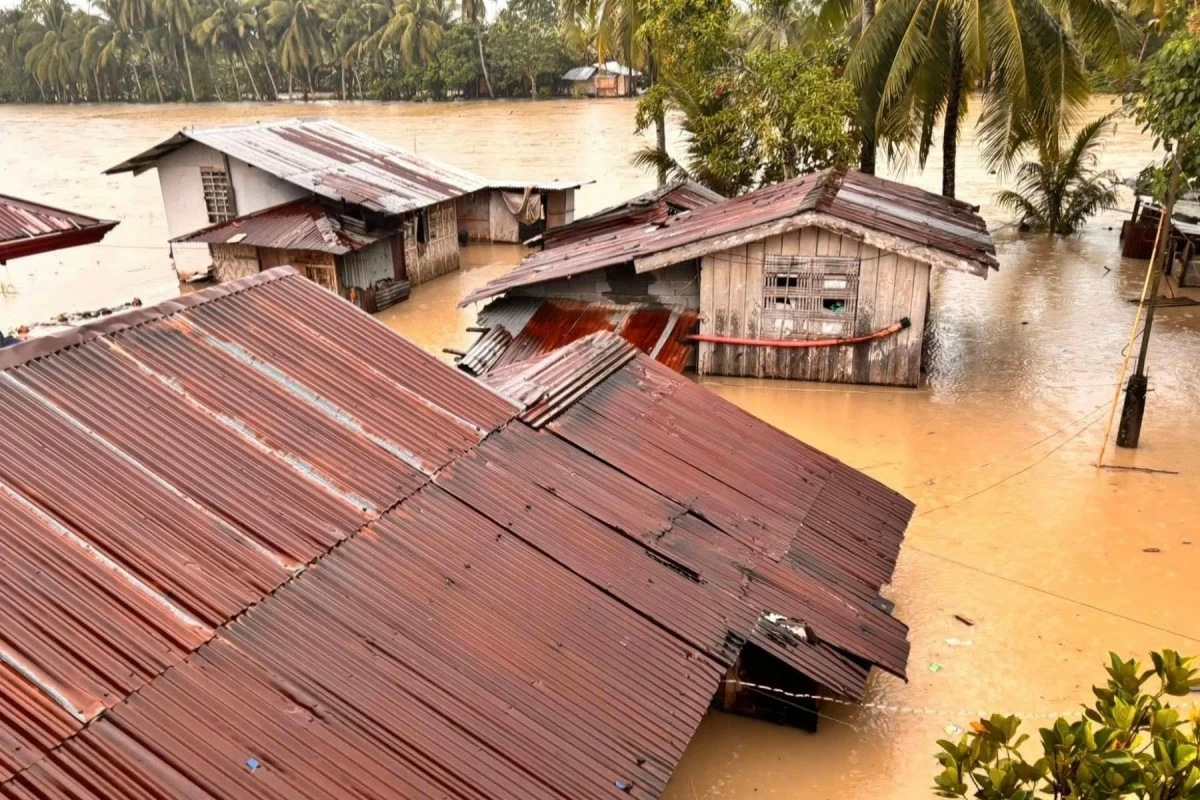
Floodwaters submerge houses due to the swelling of nearby waterways in Brgy. Doña Andrea in Asuncion, Davao del Norte on Friday morning, Feb. 20.

Several areas in the Davao Region are experiencing floods and landslides following continuous moderate to heavy rains since February 19, 2026 caused by the shear line. (Photos courtesy of Ya Lanz via Keith Bacongco)
Floodwaters submerge houses due to the swelling of nearby waterways in Brgy. Doña Andrea in Asuncion, Davao del Norte on Friday morning, Feb. 20. Several areas in the Davao Region are experiencing floods and landslides following continuous moderate to heavy rains since February 19, 2026 caused by the shear line. (Photos courtesy of Ya Lanz via Keith Bacongco)
The widespread flooding that left eight people dead in three provinces in Davao Region (Region 11) has been blamed on supposedly incomplete and unconnected flood control and drainage projects, a ranking official of the Office of Civil Defense (OCD) disclosed on Sunday, Feb. 22.
Dir. Ednar Dayanghirang, regional director of the OCD in Region 11 (OCD-11), said rains continue to affect parts of the region since last week due to the shear line.
“There are still rains because the shear line effect is still present but it is no longer as strong as it was a few days ago since the northeasterly wind has already moved upward,” Dayanghirang said in a radio interview over dzBB.
Initial reports showed the heavy rains caused widespread flooding across Davao del Norte, Davao del Oriental, and Davao de Oro.
The flooding caused various landslides that killed at least eight people: four deaths were recorded in Davao de Oro while four fatailities were also reported in Davao Oriental. The latest fatality was reported in Pantukan, Davao de Oro due to a landslide at a small-scale mining site.
All the bodies of the fatalities have been recovered, according to Dayanghirang.
He pointed to structural weaknesses in road drainage systems as a major factor in the flooding. He said many roads are built along riverbanks but pointed out that drainage systems are incomplete and not interconnected.
“The road system is built along the riverbanks, then when water rushes down from the mountains, it passes underneath since the drainage system is not good,” he explained.
“The drainage system of our national roads is incomplete. I spent six months studying the flooding concerns of the Davao Region and it is very disheartening to see the drainage system. There are drainage structures but they are not complete. It is unclear where the water is supposed to flow, they are just there for the sake of having them,” he added.
Further, Dayanghirang said the lack of “cross drainage” causes water to pass beneath roads, which effectively weakens road foundations and leads to damage.
“When there is no cross drainage or the culverts under the road, when water rushes down from above, of course it will pass beneath the road without proper drainage, and it will cut through the roads. That applies in Davao Occidental, Davao de Oro, Davao Oriental, practically the whole region,” he noted.
Dayanghirang said he has raised the issue with the Department of Public Works and Highways (DPWH) because it affects a lot of residents in Davao.
Moreover, Dayanghirang said local roads face the same problem with interconnected flood control projects and drainage systems since the projects are handled by different levels of government.
“The local roads, the provincial and municipal roads, are the same. Their drainage systems are also incomplete and not connected. For national roads, the DPWH handles them. For provincial roads, the governor is responsible. For municipal roads, the mayor is in charge,” he shared.
“The plans and designs are all different. The drainage systems are not connected so of course when it rains, the water from the mountains will flow downwards,” he added.
Damage caused by flooding
According to OCD-11, the damage to infrastructure due to shearline includes roads and bridges although estimates as to its cost have yet to be finalized. However, Dayanghirang said the greater concern is the number of affected residents.
He said more than 20,000 families were displaced and temporarily staying in evacuation centers.
Meanwhile, agricultural losses in Davao de Oro alone have reached P376 million. Livestock losses including carabaos, goats, chickens, and pigs reached P957,800.
To address the needs of the residents, relief operations are ongoing, according to Dayanghirang. He said prepositioned supplies are already in place across local government units (LGUs).
“For the past six years, we have had what we call “prepositioning” of relief goods. The aid is already in place with the LGUs. Logistics for delivery and supply are not a problem. Everything is available,” he said.

Related Tags

shearline Davao Region OCD flooding flood control
ADVERTISEMENT
.most-popular .layout-ratio{ padding-bottom: 79.13%; } @media (min-width: 768px) and (max-width: 1024px) { .widget-title { font-size: 15px !important; } }

{{ articles_filter_1561_widget.title }}

.most-popular .layout-ratio{ padding-bottom: 79.13%; } @media (min-width: 768px) and (max-width: 1024px) { .widget-title { font-size: 15px !important; } }

{{ articles_filter_1562_widget.title }}

.most-popular .layout-ratio{ padding-bottom: 79.13%; } @media (min-width: 768px) and (max-width: 1024px) { .widget-title { font-size: 15px !important; } }

{{ articles_filter_1563_widget.title }}

{{ articles_filter_1564_widget.title }}

.mb-article-details { position: relative; } .mb-article-details .article-body-preview, .mb-article-details .article-body-summary{ font-size: 17px; line-height: 30px; font-family: "Libre Caslon Text", serif; color: #000; } .mb-article-details .article-body-preview iframe , .mb-article-details .article-body-summary iframe{ width: 100%; margin: auto; } .read-more-background { background: linear-gradient(180deg, color(display-p3 1.000 1.000 1.000 / 0) 13.75%, color(display-p3 1.000 1.000 1.000 / 0.8) 30.79%, color(display-p3 1.000 1.000 1.000) 72.5%); position: absolute; height: 200px; width: 100%; bottom: 0; display: flex; justify-content: center; align-items: center; padding: 0; } .read-more-background a{ color: #000; } .read-more-btn { padding: 17px 45px; font-family: Inter; font-weight: 700; font-size: 18px; line-height: 16px; text-align: center; vertical-align: middle; border: 1px solid black; background-color: white; } .hidden { display: none; }
function initializeAllSwipers() { // Get all hidden inputs with cms_article_id document.querySelectorAll('[id^="cms_article_id_"]').forEach(function (input) { const cmsArticleId = input.value; const articleSelector = '#article-' + cmsArticleId + ' .body_images'; const swiperElement = document.querySelector(articleSelector); if (swiperElement && !swiperElement.classList.contains('swiper-initialized')) { new Swiper(articleSelector, { loop: true, pagination: false, navigation: { nextEl: '#article-' + cmsArticleId + ' .swiper-button-next', prevEl: '#article-' + cmsArticleId + ' .swiper-button-prev', }, }); } }); } setTimeout(initializeAllSwipers, 3000); const intersectionObserver = new IntersectionObserver( (entries) => { entries.forEach((entry) => { if (entry.isIntersecting) { const newUrl = entry.target.getAttribute("data-url"); if (newUrl) { history.pushState(null, null, newUrl); let article = entry.target; // Extract metadata const author = article.querySelector('.author-section').textContent.replace('By', '').trim(); const section = article.querySelector('.section-info ').textContent.replace(' ', ' '); const title = article.querySelector('.article-title h1').textContent; // Parse URL for Chartbeat path format const parsedUrl = new URL(newUrl, window.location.origin); const cleanUrl = parsedUrl.host + parsedUrl.pathname; // Update Chartbeat configuration if (typeof window._sf_async_config !== 'undefined') { window._sf_async_config.path = cleanUrl; window._sf_async_config.sections = section; window._sf_async_config.authors = author; } // Track virtual page view with Chartbeat if (typeof pSUPERFLY !== 'undefined' && typeof pSUPERFLY.virtualPage === 'function') { try { pSUPERFLY.virtualPage({ path: cleanUrl, title: title, sections: section, authors: author }); } catch (error) { console.error('ping error', error); } } // Optional: Update document title if (title && title !== document.title) { document.title = title; } } } }); }, { threshold: 0.1 } ); function showArticleBody(button) { const article = button.closest("article"); const summary = article.querySelector(".article-body-summary"); const body = article.querySelector(".article-body-preview"); const readMoreSection = article.querySelector(".read-more-background"); // Hide summary and read-more section summary.style.display = "none"; readMoreSection.style.display = "none"; // Show the full article body body.classList.remove("hidden"); } document.addEventListener("DOMContentLoaded", () => { let loadCount = 0; // Track how many times articles are loaded const offset = [1, 2, 3, 4, 5, 6, 7, 8, 9, 10]; // Offset values const currentUrl = window.location.pathname.substring(1); let isLoading = false; // Prevent multiple calls if (!currentUrl) { console.log("Current URL is invalid."); return; } const sentinel = document.getElementById("load-more-sentinel"); if (!sentinel) { console.log("Sentinel element not found."); return; } function isSentinelVisible() { const rect = sentinel.getBoundingClientRect(); return ( rect.top < window.innerHeight && rect.bottom >= 0 ); } function onScroll() { if (isLoading) return; if (isSentinelVisible()) { if (loadCount >= offset.length) { console.log("Maximum load attempts reached."); window.removeEventListener("scroll", onScroll); return; } isLoading = true; const currentOffset = offset[loadCount]; window.loadMoreItems().then(() => { let article = document.querySelector('#widget_1690 > div:nth-last-of-type(2) article'); intersectionObserver.observe(article) loadCount++; }).catch(error => { console.error("Error loading more items:", error); }).finally(() => { isLoading = false; }); } } window.addEventListener("scroll", onScroll); });

Sign up by email to receive news.