







The rise of the Philippine MSMEs
Backbone of Juan:
Published Feb 21, 2026 07:04 am


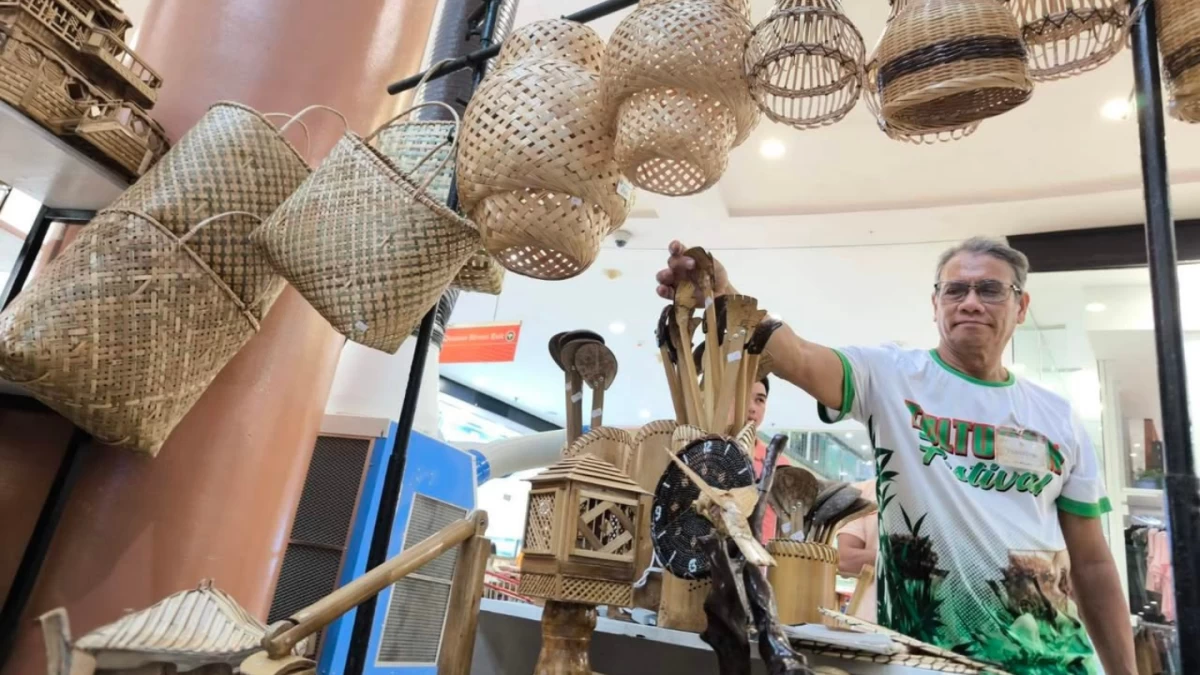
An employee prepares goods at a local family-run workshop. According to FPI Chairperson Beth Lee, MSMEs are the “lifeblood” of the economy, generating nearly 6.4 million jobs and contributing up to 40 percent of the country’s gross domestic product (GDP).
Nine years ago, a mother put up a small merchandising business, carefully lining up goods to earn extra income while her husband worked overseas as an OFW. What began as a way to support her family has since grown into something more—she is now helping power the Philippine economy, one small transaction at a time.
When the pandemic hit, the business was forced to close. But she did not stop. Determined to start again, she rebuilt from a small space and named the venture “Rholghie”—a blend of her own name, her husband’s, and those of their three children.
Over the years, the business steadily grew. From a modest operation, it expanded enough to employ another person, turning a once-personal source of income into a livelihood that now supports more than just one family.
From corner stores to family-run workshops and fast-growing startups, micro, small, and medium enterprises (MSMEs) form the economic engine that keeps local communities alive.
Often called the backbone of the Philippine economy, MSMEs generate jobs, support livelihoods, and sustain industries nationwide. They anchor communities, strengthen local supply chains, and bring opportunities closer to the grassroots, ensuring that economic growth is inclusive rather than concentrated in a few urban centers.
Moody’s Analytics economist Sarah Tan emphasized the crucial role of MSMEs. They make up over 99 percent of registered firms in the Philippines and employ about two-thirds of the workforce, with strong footholds in trade, food and accommodation, and manufacturing.
“These are sectors that underpin domestic demand and link households to broader supply chains,” Tan said. “Collectively, MSMEs contribute an estimated 40 percent of [gross domestic product] GDP and around 25 percent of export revenues, underscoring their importance not only to inclusion but to overall growth.”
Tan noted that supporting MSMEs is a “macroeconomic imperative,” as productivity gains raise household incomes, strengthen consumption, and support broad-based growth, while also improving supply chains and economic resilience.
Beth Lee, Chairperson of the Federation of Philippine Industries (FPI), echoed this sentiment, highlighting the sheer scale of MSMEs in driving the economy. “MSMEs power two-thirds of Philippine jobs and drive inclusive growth across every community,” she said.
She added that MSMEs are the lifeblood of the Philippine economy, making up 99.6 percent of businesses, generating nearly 6.4 million jobs, and contributing 35 percent to 40 percent of national output. Their presence across provinces fuels local activity, sustains demand, and drives inclusive growth.
“From traditional retail and manufacturing to emerging digital ventures, MSMEs embody resilience and adaptability, absorbing shocks and stabilizing local markets,” Lee said.
On Nov. 25 last year, Department of Trade and Industry (DTI) NCR Regional Director Jay A. Acar highlighted the crucial contributions of MSMEs while acknowledging the hurdles they face. He cited limited access to financing, digital adaptation, regulatory hurdles, and shifting market demands as key challenges.
“These challenges highlight the need for strategic, transformative, and inclusive interventions– interventions that are at the heart of the MSME Development Plan 2023-2028,” Acar said.
He described the plan as more than a policy document, calling it a “blueprint for a future where no Filipino entrepreneur is left behind,” anchored on three pillars: digitalization, enhanced financing, and expanded market access.
These pillars, Acar explained, position MSMEs not only to withstand disruptions but to thrive in a rapidly evolving landscape of technology, competition, and consumer behavior.
Digitalization, he added, is the plan’s key strategic focus. “We recognize that technology is the great equalizer– it bridges gaps, expands reach, and transforms even the smallest enterprises into global competitive ventures.”
“DTI will be there every step of the way to help MSMEs take their rightful place in both domestic and international markets,” Acar emphasized.
Michael Ricafort, chief economist at Rizal Commercial Banking Corp. (RCBC), said a larger and more robust MSME sector strengthens the economy by dispersing economic activity and wealth more evenly, rather than concentrating them in the hands of a few. It helps reduce inequality and fosters more resilient and inclusive growth.
“They account for a large number of businesses in the country, employ a lot, and are dispersed across different areas in the country,” Ricafort said. He stressed that policies incentivizing MSMEs—through simpler regulations, lower costs, easier compliance, and expanded market opportunities—would encourage the creation of more enterprises, turning them into a major economic driver.
He also noted that the Philippines’ young and growing population of over 114 million positions MSMEs to further unlock the country’s economic potential and narrow the gap between its population size and GDP ranking—the 33rd largest globally—even as the economy remains among Asia’s fastest-growing.
Robert Dan Roces, group economist at SM Investments Corp. (SMIC), framed MSMEs not just as the “small” side of the economy, but as its operating system.
“They create jobs, anchor local demand, and keep supply chains flexible, much like large enterprises scale capital, technology, and market access,” Roces explained. “When MSMEs are productive, big firms grow more resilient. When large firms invest and expand, MSMEs multiply the impact on the ground. Sustainable growth happens when both move together.”
Jonathan Ravelas, senior adviser at Reyes Tacandong & Co., echoed this sentiment: MSMEs are the backbone of the Philippine economy—not only because they account for over 99 percent of businesses, but because they sustain communities and extend growth beyond major cities.
He said that strong MSMEs make growth more inclusive and resilient, yet many are held back by limited access to affordable financing, high costs, and gaps in digital capability.
“Supporting MSMEs has to go beyond loans—it means simpler rules, digital upskilling, better market access, and stronger links to big firms and government procurement,” he explained. “If we want sustainable growth, we have to stop treating MSMEs as small players. They are the economy.”
From the small shelves of Rholghie to workshops, corner stores, and startups across the country, MSMEs are not just businesses—they are the lifeblood of Filipino communities. Each venture tells a story of resilience and determination, proving that even the smallest enterprise can drive national growth.
As the Philippines navigates a changing economy, these entrepreneurs will anchor livelihoods, foster inclusive development, and shape the country’s future. In every sale, job, and dream realized, MSMEs show that the strength of the nation lies in the courage and enterprise of its people.