






Manila Bulletin
 Philippines
National
NCDA raises concern over low number of PWD offices in local governments
Philippines
National
NCDA raises concern over low number of PWD offices in local governments
Philippines
National
NCDA raises concern over low number of PWD offices in local governments
NCDA raises concern over low number of PWD offices in local governments
Published Feb 21, 2026 12:48 pm


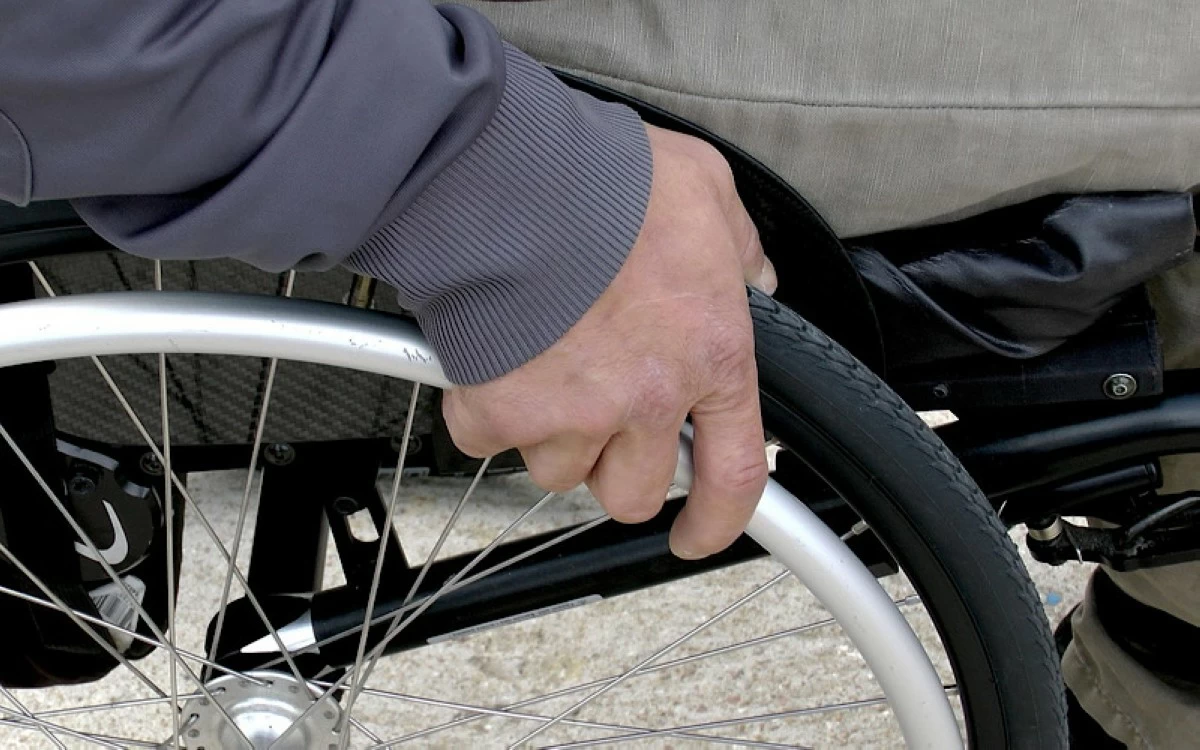
Photo from Pixabay
Only about 400 to 500 out of 1,715 local government units (LGUs) nationwide have established Persons with Disability Affairs Offices (PDAOs), leaving hundreds of municipalities without dedicated offices to register and serve persons with disabilities (PWDs), the National Council on Disability Affairs (NCDA) said.
The NCDA, an attached agency of the Department of Social Welfare and Development (DSWD), described the limited number of PDAOs as an urgent concern, warning that the absence of fully functioning offices hampers the implementation of disability-related laws and the delivery of services at the local level.
Data from the council show that most compliant LGUs are located in urban areas, while many far-flung municipalities remain non-compliant.
“Based on the Philippine registry for persons with disabilities, which can also be seen on ncda.gov.ph, roughly 2.5 to almost 2.6 million persons with disabilities are already registered. These are individuals who have been issued PWD identification cards by different PDAOs and LGUs,” NCDA spokesperson Atty. Walter Alava said in Filipino during DSWD’s media forum on Feb. 19.
Alava said the 2.6 million figure represents individuals registered and issued IDs across provinces, cities, and municipalities.
Under Republic Act (RA) 10070, or the Act Establishing Institutional Mechanism to Ensure the Implementation of Programs and Services for Persons with Disabilities in every Province, City and Municipality, first- to third-class municipalities are mandated to establish a PDAO.
Fourth- to sixth-class municipalities are highly encouraged to designate at least a focal person for disability affairs.
The lack of local offices poses structural challenges for persons with disabilities, many of whom face mobility limitations or require assistance in accessing government services.
“There are physical limitations, and at the same time, there are types of disabilities where when persons with disabilities go out, they really need assistance,” Alava said.
“This includes those who are on the autism spectrum who truly need someone to accompany them. So when it comes to the implementation of their rights, there really has to be someone to push and advocate for them, in most cases,” he added.
Under RA 7277, or the Magna Carta for Disabled Persons, as amended by RA 9442 and 10754, persons with disabilities are entitled to a 20 percent discount and exemption from the 12 percent value-added tax on certain goods and services, as well as an additional 5 percent discount on selected prime commodities.
While some LGUs provide additional support programs, resource constraints continue to limit services in poorer municipalities.
The DSWD, which delivers key social protection programs, works alongside the NCDA and other agencies to advance disability-inclusive policies.
However, enforcement and implementation at the local level remain uneven, particularly in areas without established PDAOs.