






Manila Bulletin
 Philippines
National
Marcos turns over P500 million for Jesse Robredo Coliseum upgrade in Naga
Philippines
National
Marcos turns over P500 million for Jesse Robredo Coliseum upgrade in Naga
Philippines
National
Marcos turns over P500 million for Jesse Robredo Coliseum upgrade in Naga
Marcos turns over P500 million for Jesse Robredo Coliseum upgrade in Naga
Published Feb 21, 2026 01:47 pm


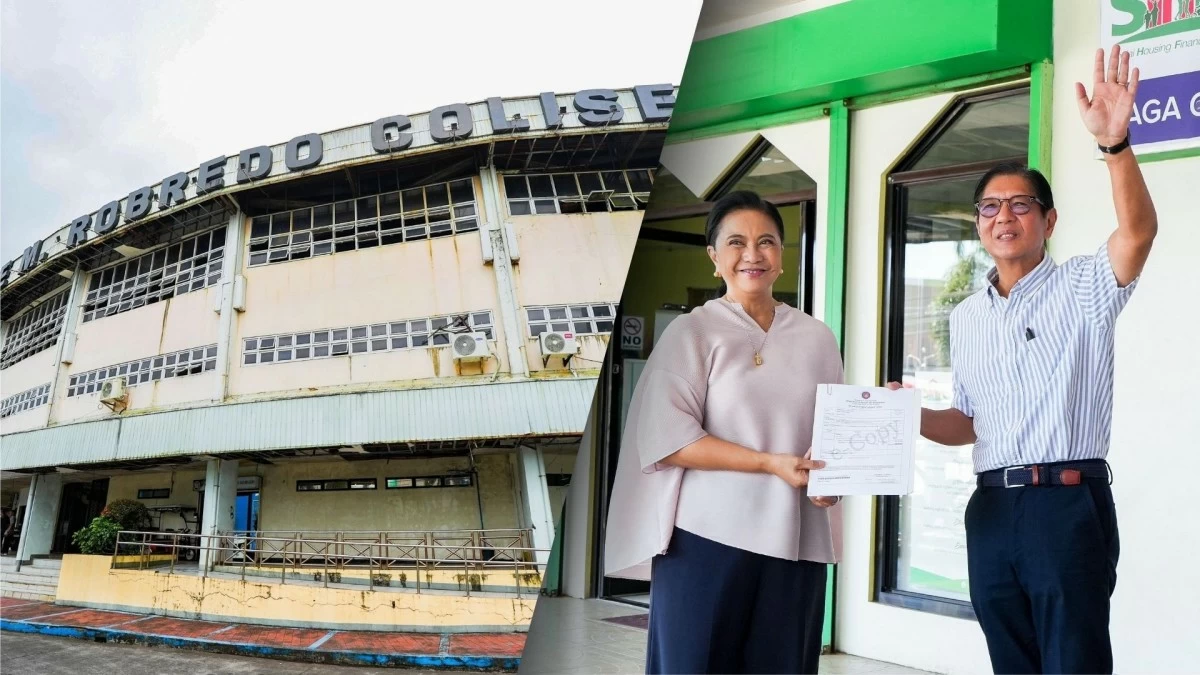
President Ferdinand 'Bongbong' Marcos Jr. turns over a Special Allotment Release Order (SARO) worth P500 million to Naga City Mayor Leni Robredo for the rehabilitation of the Jesse M. Robredo Coliseum on Feb. 21, 2026. (PCO)
President Marcos backed the major renovation and retrofitting of the Jesse M. Robredo Coliseum (JMRC), turning over P500 million to modernize the facility and strengthen its disaster response capabilities.
Marcos personally handed a Special Allotment Release Order (SARO) worth P500 million to Naga City Mayor Leni Robredo to fund the project during his visit to the city, where he also inspected ongoing Oplan Kontra Baha operations.
The coliseum is named after the late former Naga City mayor Jesse M. Robredo, husband of the current mayor.
The P500-million allocation will cover structural retrofitting and modernization works, including the installation of a community kitchen capable of feeding thousands during disasters.
The project will also upgrade sanitation facilities, strengthen the roofing system, and reinforce the structure to ensure resilience during typhoons and earthquakes.
Improvements to the drainage system are also planned to prevent flooding within the complex, along with the establishment of dedicated medical response areas for emergencies.
The initiative seeks to boost the local government’s capacity to respond swiftly and effectively during natural disasters and other crises.
‘Big Dome of the South’
Built in 2010, the JMRC—widely known as the “Big Dome of the South”—can accommodate 12,000 seated spectators and up to 15,000 for standing-room events.
It regularly hosts basketball games, concerts, school tournaments, and major cultural gatherings in the Bicol region.
Over the years, the coliseum has also served as a critical evacuation and relief center.
It withstood powerful typhoons such as Super Typhoon Rolly and Typhoon Kristine, as well as several earthquakes, without sustaining major structural damage.
During Typhoon Kristine, while much of Naga City was inundated, the coliseum remained dry and functioned as a logistics hub for relief distribution across Camarines Sur.
Addressing disaster-era gaps
Despite its resilience, the facility was not originally designed for prolonged use as a shelter.
Recent disasters exposed limitations, including insufficient toilets, showers, and laundry areas, the absence of permanent industrial-grade kitchens for mass feeding, and fixed seating arrangements that make sleeping difficult for evacuees.
The planned renovation aims to address these gaps and ensure that the coliseum remains both a premier events venue and a dependable evacuation center for residents of Naga and nearby provinces.