






Manila Bulletin
 Opinion
International Mother Language Day: Promoting linguistic and cultural diversity
Opinion
International Mother Language Day: Promoting linguistic and cultural diversity
Opinion
International Mother Language Day: Promoting linguistic and cultural diversity
International Mother Language Day: Promoting linguistic and cultural diversity
Published Feb 21, 2026 12:05 am
|
Updated Feb 20, 2026 06:10 pm


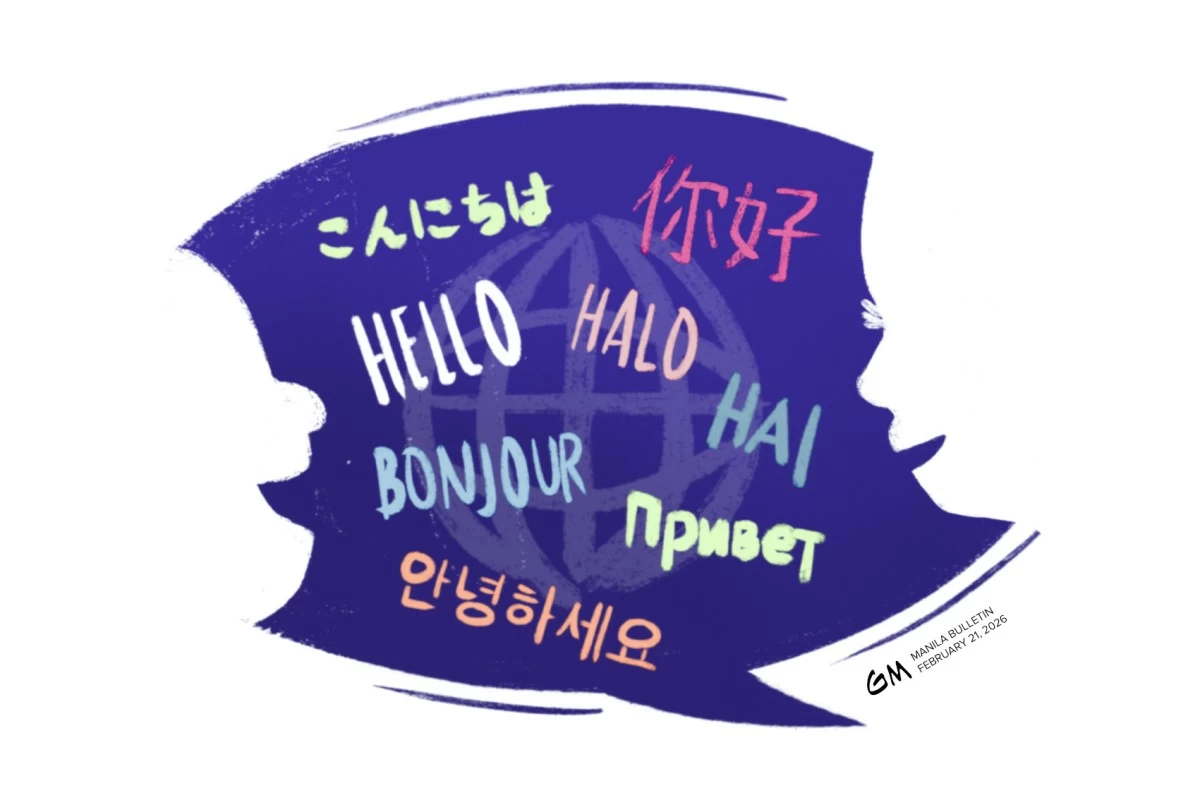
Today, Feb. 21, is International Mother Language Day, a reminder that language is inseparable from identity, memory, culture, and learning.
This is a global observance proclaimed by United Nations Educational, Scientific and Cultural Organization (UNESCO) in 1999 and later welcomed by the United Nations General Assembly.
The day aims to promote linguistic and cultural diversity and multilingualism. UNESCO estimates that of the 8,324 spoken or signed languages in the world, around 7,000 are still in use — yet every two weeks, one language vanishes. When a language fades, an entire cultural and intellectual heritage fades with it. Traditions, stories, ecological knowledge, and unique ways of seeing the world are lost.
International Mother Language Day also draws attention to education. Around 40 percent of learners worldwide still lack access to education in a language they understand best. Indigenous, migrant, and minority youth are disproportionately affected. Research and global experience consistently show that children learn best when taught in a language they speak and understand. Foundational literacy — the ability to read with comprehension and express ideas clearly — is most effectively developed in one’s mother tongue. From this strong base, learners can more easily acquire additional languages.
Language is deeply tied to well-being and belonging. A child who understands the language of instruction is more confident, more engaged, and more likely to succeed academically. When instruction begins in an unfamiliar language, children often struggle to grasp even basic concepts, widening achievement gaps from the earliest grades.
In the Philippines, the debate over mother tongue instruction has evolved significantly. Republic Act No. 12027, enacted in October 2024, discontinued the mandatory use of the mother tongue as the medium of instruction from Kindergarten to Grade 3. Under the law, Filipino and English revert as the primary media of instruction, while regional languages may serve as auxiliary media. Mother tongue-based multilingual education may still be applied in monolingual classes, provided strict requirements are met: the development of an official orthography and vocabulary by the Komisyon sa Wikang Filipino (KWF), the availability of literature and grammar books, and trained teachers fluent in the language. The law also mandates the Department of Education (DepEd), in consultation with the KWF, to develop a language mapping policy to properly classify learners and identify monolingual classes.
In School Year 2025–2026, DepEd shifted to Filipino and English as the primary media of instruction for early grades, with regional languages supporting through translanguaging strategies. This policy acknowledges both practical realities — such as teacher capacity and instructional materials — and the principle that learners develop literacy best in a language they understand. The challenge now lies in implementing a flexible approach that does not sideline local languages but uses them strategically to strengthen comprehension and inclusion.
Efforts to boost literacy continue. Through initiatives like “Bayang Bumabasa,” DepEd has allocated substantial funding to priority schools, particularly in geographically isolated and disadvantaged areas. Schools are empowered to develop localized and contextualized reading programs, including printing storybooks featuring local folklore and mother tongue materials. Such initiatives recognize that literacy is not one-size-fits-all; it is rooted in community, culture, and language.
International Mother Language Day reminds policymakers that multilingualism is a fundamental human characteristic and a powerful educational approach. It urges schools to view linguistic diversity not as a barrier but as an asset. And it challenges societies to protect languages not only in museums or commemorations, but in classrooms and communities.
This year’s theme — “Youth voices on multilingual education” — highlights how young people are not merely passive inheritors of languages but active defenders and innovators, using technology and creativity to keep linguistic diversity alive.