






Manila Bulletin
 Business
Trade & Industry
Philippine antitrust body targets Google, Meta data dominance
Business
Trade & Industry
Philippine antitrust body targets Google, Meta data dominance
Business
Trade & Industry
Philippine antitrust body targets Google, Meta data dominance
Philippine antitrust body targets Google, Meta data dominance
Published Feb 20, 2026 02:54 pm


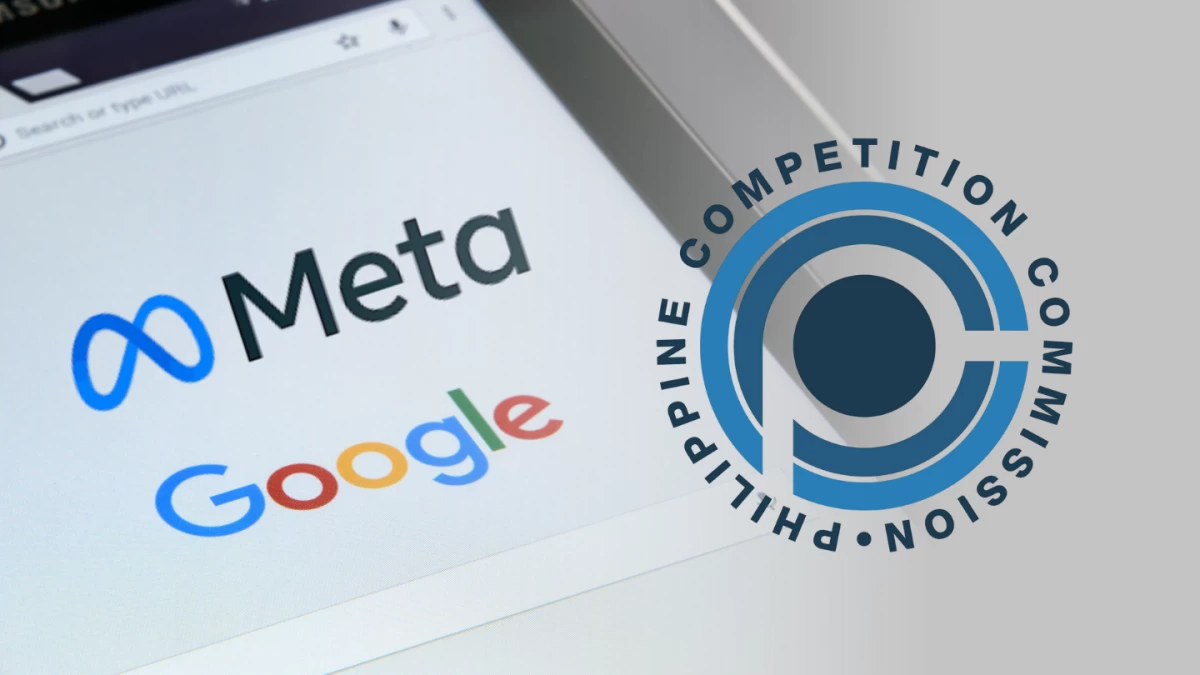
The Philippine Competition Commission (PCC) is considering the integration of data privacy standards into its antitrust framework, a move aimed at lowering barriers to entry for local firms and challenging the market dominance of global technology giants.
In a market study, the antitrust watchdog said Facebook and Google are the two most dominant entities in social media and search engines, allowing them to collect vast amounts of user data.
Facebook and Google collect data from their users as a form of “payment” for access to their platforms, enabling them to determine demographics and preferences for targeted advertising.
Both platforms also enforce “take-it-or-leave-it” schemes that leave consumers with little to no bargaining power over how their data is collected and used.
Facebook consolidates its data across the ecosystem of its parent firm, Meta, including Instagram and WhatsApp, while Google integrates data from the likes of Gmail and YouTube.
“Once a digital platform has reached a certain size, it can be very difficult for potential entrants to effectively compete,” the study read.
To encourage a competitive online platform market, the PCC said it could explore incorporating data privacy provisions into its assessment of the competition landscape by updating its internal processes.
“This can include creating internal guidelines for evaluating competition harm brought about by privacy-related factors in digital platform markets and building staff capacity on data protection issues,” it said.
As a long-term measure, the PCC said legislative amendments to the Philippine Competition Act (PCA) may be considered to keep these guidelines consistent with those of other countries.
The PCC study also recommends evaluating existing and potential initiatives that include data portability as a right of data subjects and impose interoperability requirements.
Data portability refers to the ability of users to transfer their data easily between platforms, while interoperability is the capacity of different systems to work seamlessly together.
At present, data consolidation, as practiced by major players, makes market entry difficult for potential competitors and entrants who cannot aggregate the same volume and breadth of user data.
But, as the study found, while the concepts aim to foster competition, they also raise the risk of data misuse and breach if left unchecked.
“If it is adopted, it is essential to develop specific guidelines on how data portability and interoperability can be facilitated, with careful consideration as to what kinds of data are subject to data portability,” the study said.
Given the global presence of Google and Facebook, which operate in countries with varying regulatory frameworks, the PCC recommends stronger cooperation with foreign competition and consumer authorities to address data mobility and cross-border data flows issues.
By developing cooperation, the study said it could address concerns revolving data privacy, further widening its significance and awareness among daily digital activities.
In addition, the PCC said it recommends building stronger institutional links with local regulators to prevent anti-competitive concerns in digital platforms.
“The PCC can collaborate with other regulatory bodies in many ways, such as through capacity-building, information sharing, discussing strategies, and leading on specific investigations, among others,” it added.