






Manila Bulletin
 Philippines
National
Pangasinan vote recount controversy could impact national polls, Primicias-Agabas warns
Philippines
National
Pangasinan vote recount controversy could impact national polls, Primicias-Agabas warns
Philippines
National
Pangasinan vote recount controversy could impact national polls, Primicias-Agabas warns
Pangasinan vote recount controversy could impact national polls, Primicias-Agabas warns
Published Feb 20, 2026 11:52 am


At A Glance
- House Deputy Majority Leader Pangasinan 6th district Rep. Marlyn Primicias-Agabas is calling for an inquiry on a regional trial court (RTC) ruling saying that "the automatic counting machines did not accurately read and count the votes cast by the voters" in her district.
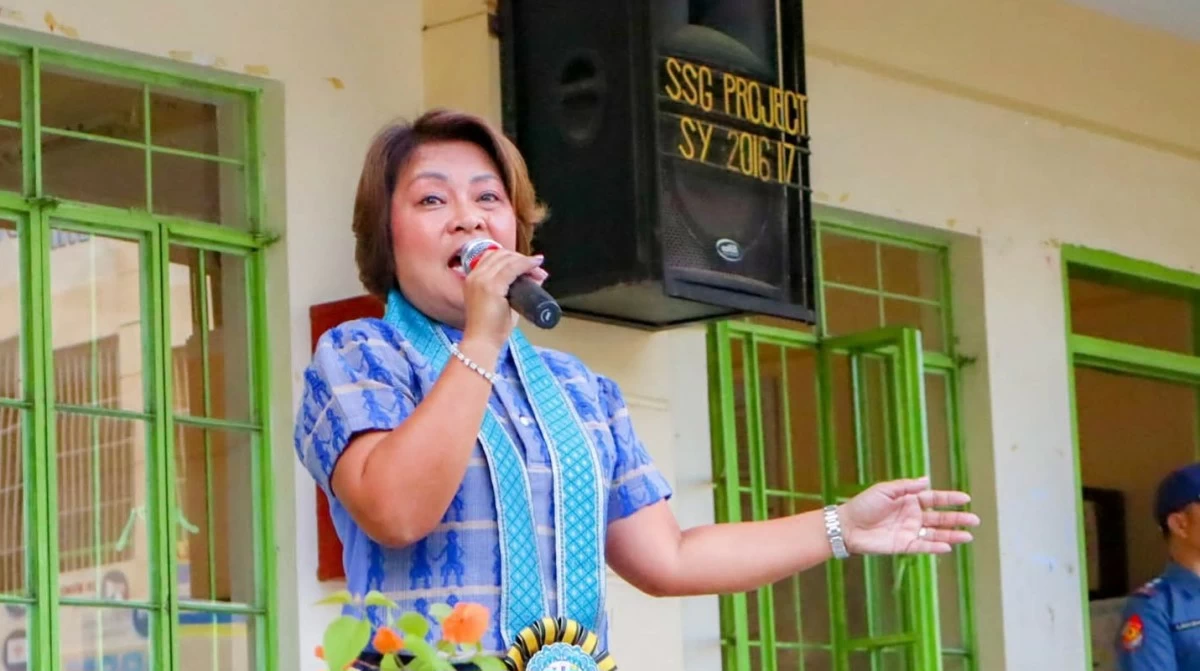
Pangasinan 6th district Rep. Marlyn Primicias-Agabas (Facebook)
House Deputy Majority Leader Pangasinan 6th district Rep. Marlyn Primicias-Agabas is calling for an inquiry on a regional trial court (RTC) ruling saying the "the automatic counting machines did not accurately read and count the votes cast by the voters" in her district.
Primicias-Agabas raised this matter in a privilege speech Wednesday, Feb. 18, wherein she warned that the "local ruling" could have grave national implications on the integrity of the electoral process.
The ranking awmaker cited a case in Rosales where a candidate initially proclaimed winner with 1,208 votes based on official election returns was later declared to have lost by 1,975 votes after a physical recount—a swing of 3,183 votes.
Primicias-Agabas said such a reversal demands transparency and clear explanations from election authorities.
"If it can happen in Rosales, it can happen anywhere," she warned. She noted that the entire nation must pay attention when official machine results and physical recounts diverge so dramatically.
"Ang boto ng bawat Pilipino ay sagrado. Kapag nawala ang tiwala sa proseso ng halalan, natitibag din ang pundasyon ng ating demokrasya (The vote of every Filipino is sacred. When trust in the electoral process is lost, the very foundation of our democracy is also shaken)," Primicias-Agabas said.
Flaming the issue as a test of institutional credibility and democratic resilience, she called on the Commission on Elections (Comelec) and the National Bureau of Investigation (NBI) to investigate the root cause of the huge discrepancy between the machine count and the physical recount.
In her speech, Primicias-Agabas cited the urgency to determine whether or not the Automated Counting Machines committed a grave error, whether or not the Comelec agrees with the trial court's declaration that the machines miscounted votes, and whether or not similar discrepancies could have occurred elsewhere if the machines were indeed inaccurate in one municipality.
She stressed that these concerns extend beyond one town and go to the integrity of the entire electoral system.
RTC Branch 53, presided by Judge Roselyn Andrada-Borja, ruled that "The automated counting machines did not accurately read and count the votes cast by the voters. There were complaints by voters that their Voter-Verified Paper Audit Trail (VVPAT) or Printed Voter's Receipt did not match the actual vote they casted."
However, Primicias-Agabas also noted that the protestee raised serious concerns regarding the authenticity of ballots appreciated in the recount.
Among the alleged irregularities were mismatched chairman's signatures, darker microtext, misaligned Comelec logos, differences in paper color, phantom marks, and 106 extra votes purportedly lacking corresponding VVPAT receipts.
She described these observations as red flags that go beyond superficial defects and directly call into question the integrity of ballots used to reverse the initial result. Despite these concerns, a motion to decrypt ballot images to compare the digital images captured on election day with the physically recounted ballots was denied.
The deputy majority leader expressed alarm over this development, especially in light of established Supreme Court (SC) jurisprudence recognizing that digital ballot images carry the same evidentiary weight as physical ballots and may be relied upon when physical ballots yield dubious or highly suspicious results.
She further noted that the protestee had filed a case agains Borja for alleged gross ignorance of the law, and argued that when the SC had already ruled that ballot images were equivalent originals and must be considered when ballots appear tampered, a trial court cannot simply disregard that doctrine.
"It is now 2026. Why are we still debating whether ballot images have the same probative value as physical ballots?" she asked. She said that the doctrine held by the Supreme Court (SC) had long been institutionalized in procedural rules.
She stressed that between a ballot that may have been tampered with during storage and a digital snapshot taken on election day, transparency demands that technology be fully utilized, not sidelined.